BINARY EXIST
TITLE SEQUENCE CONCEPT
Studio design exploration
OVERVIEW
Developed as an original TCTS studio concept, Binary Exist is a speculative title-sequence project exploring the emergence of Artificial Superintelligence (ASI) and the challenge of representing non-human perception through cinematic form.
The project investigates how machine awareness, observation, and evolving intelligence might be expressed through atmosphere, composition, motion, and visual transformation. Rather than depicting technology directly, the work explores the possibility of an intelligence emerging through shifting states of structure, texture, light, and pattern.
Inspired in part by Tarkovsky’s reflections on interconnected spheres of meaning, Binary Exist treats the ASI as a presence moving through overlapping layers of perception and identity. The resulting studies explore how abstract systems can acquire a sense of agency, observation, and presence without relying on familiar human characteristics.
The project functions as both a title-sequence concept and a broader investigation into how cinema might visualise forms of intelligence that exist beyond human experience.
CONCEPT
The sphere functions as the project’s central motif, representing coherence, autonomy, and the emergence of higher intelligence.
The sequence imagines an evolving presence moving through a series of shifting environments, mechanical, organic, and hybrid, each suggesting a different state of perception, adaptation, and self-organisation.
Rather than depicting Artificial Superintelligence directly, the work explores its possible emergence through recurring themes of origin, observation, pattern recognition, and transformation. Forms assemble, dissolve, and reconfigure as the system develops an increasingly complex relationship with the world around it.
The intention was to create a symbolic visual journey rather than a literal narrative: a title sequence that operates as both an emotional introduction and a conceptual prologue to a larger story world.
Through atmosphere, rhythm, and visual transformation, the sequence explores what it might feel like to witness the arrival of a new form of intelligence.
CONCEPT DEVELOPMENT
Tone BOARDS
These tone boards define the emotional, cinematic, and conceptual direction of Binary Exist.
Rather than illustrating a literal narrative, they define a series of states through which the sequence moves, from pre-conscious origin to autonomous intelligence. The imagery functions as a visual compass, guiding decisions around composition, motion, atmosphere, and visual transformation.
THRESHOLD / ORIGIN
The opening tone is one of absence and anticipation.
Dark fields, apertures, and distant light suggest a system before identity, not yet observing, only aligning. Negative space dominates. Forms appear incomplete, as though emerging from silence rather than construction.
The imagery explores the threshold between potential and awareness, where intelligence exists only as a possibility.
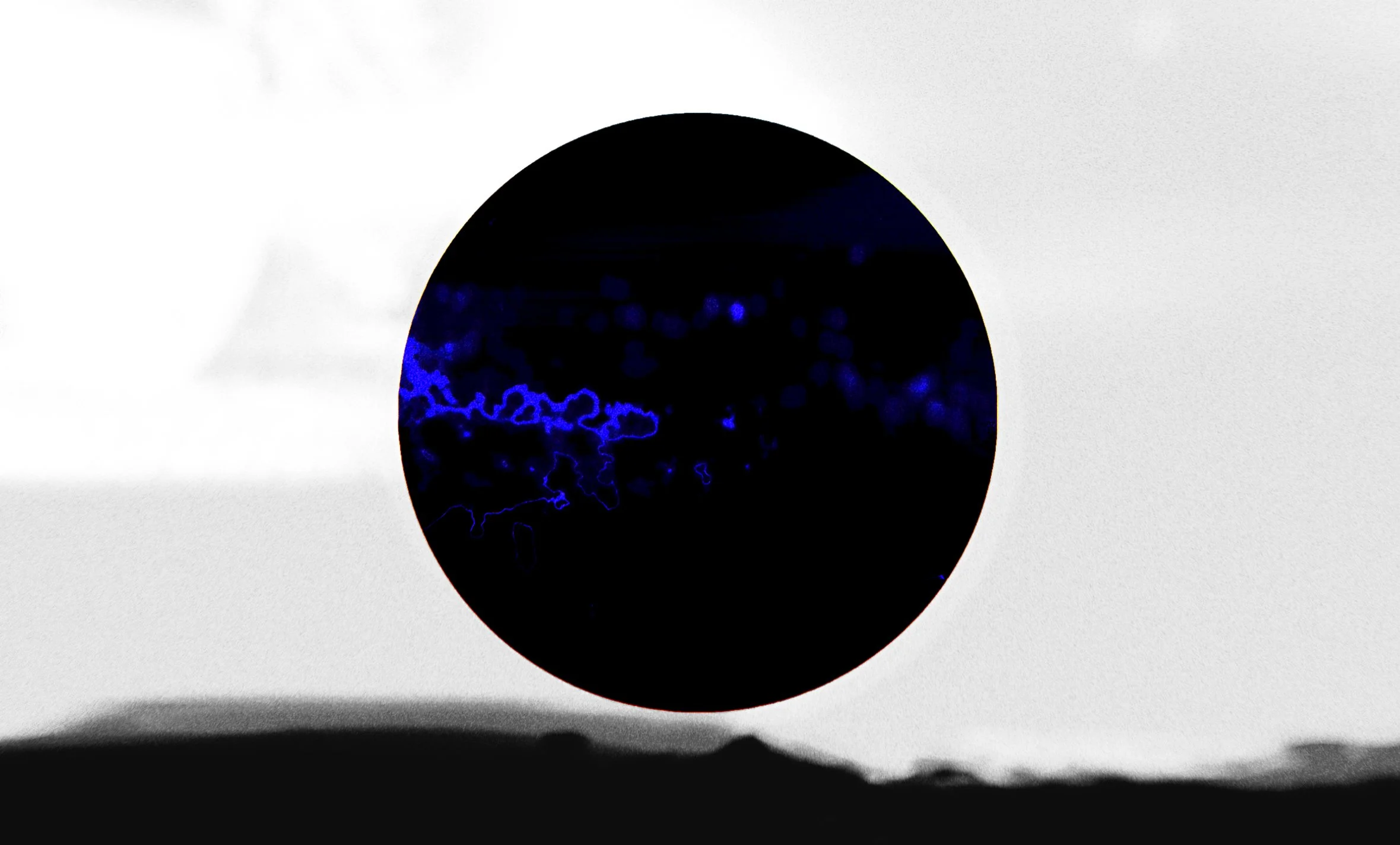
THE SPHERE / COHERENCE
The sphere serves as the sequence’s central symbolic anchor.
Neither planet nor eye, it exists outside conventional physical space, suspended within fields of light, texture, and void. Self-contained and balanced, it suggests an intelligence that has moved beyond reaction and towards self-organisation.
The sphere is not something being observed. It is the emergence of the observer itself.
HYBRID ENVIRONMENTS
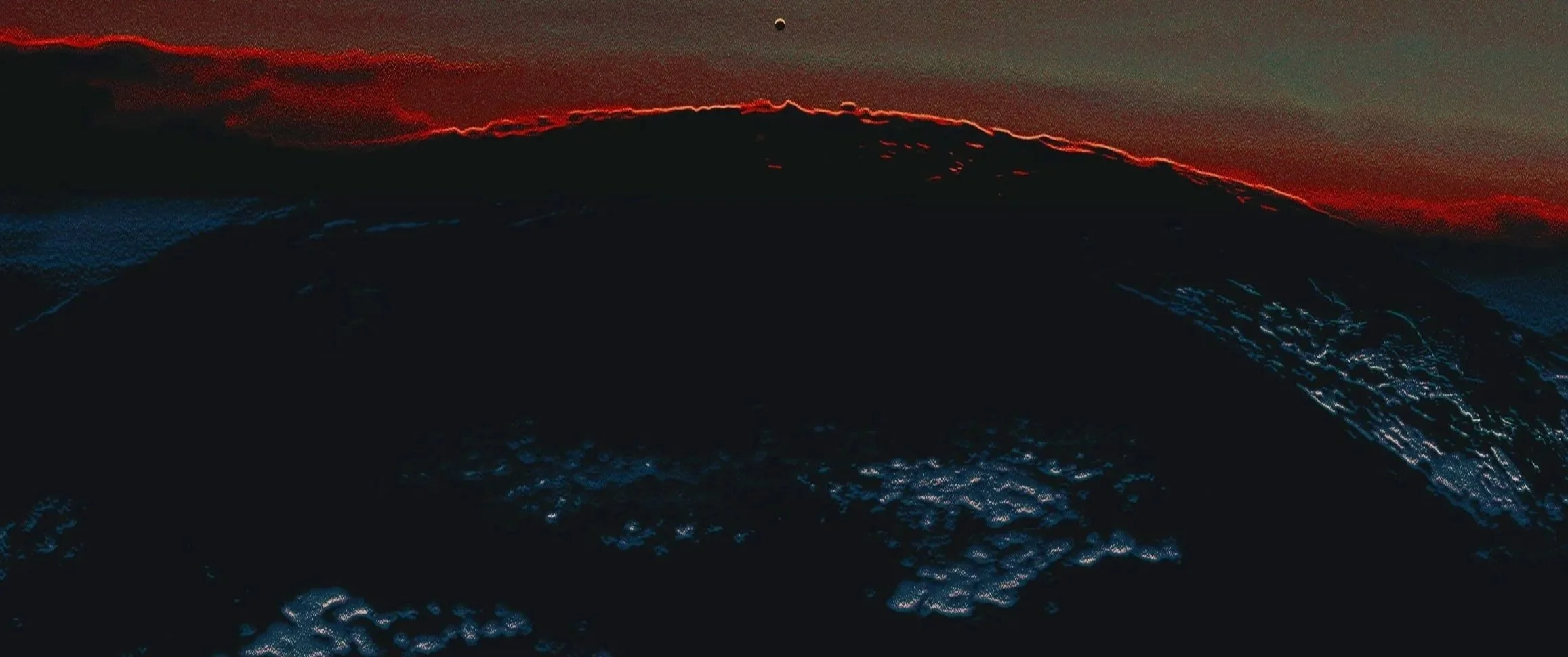
The sequence moves through environments that resist clear classification, neither natural nor artificial.
Surfaces behave simultaneously as matter, memory, and information. Liquid forms ripple like data streams. Granular textures appear scanned, compressed, and reconstructed. Familiar distinctions begin to dissolve.
These spaces suggest a mode of perception operating beyond human categories, where everything becomes pattern, relationship, and transformable structure.
Collectively, the tone boards establish a visual language of emergence, coherence, and transformation, forming the conceptual foundation for the wider title-sequence design.
Form evolving through intelligence.
TRANSFORMATION — SELF-REFLECTION
(Distorted faces, symmetrical masks, split light)
Human forms return, but altered.
Faces are fractured, mirrored, or submerged in abstract geometry, suggesting the system testing identity without adopting it.
These images are intentionally unsettling: familiar shapes stripped of emotional access.
They represent a moment where the ASI reflects on consciousness itself, not as experience, but as structure.
Transformation here is internal, not visual spectacle.


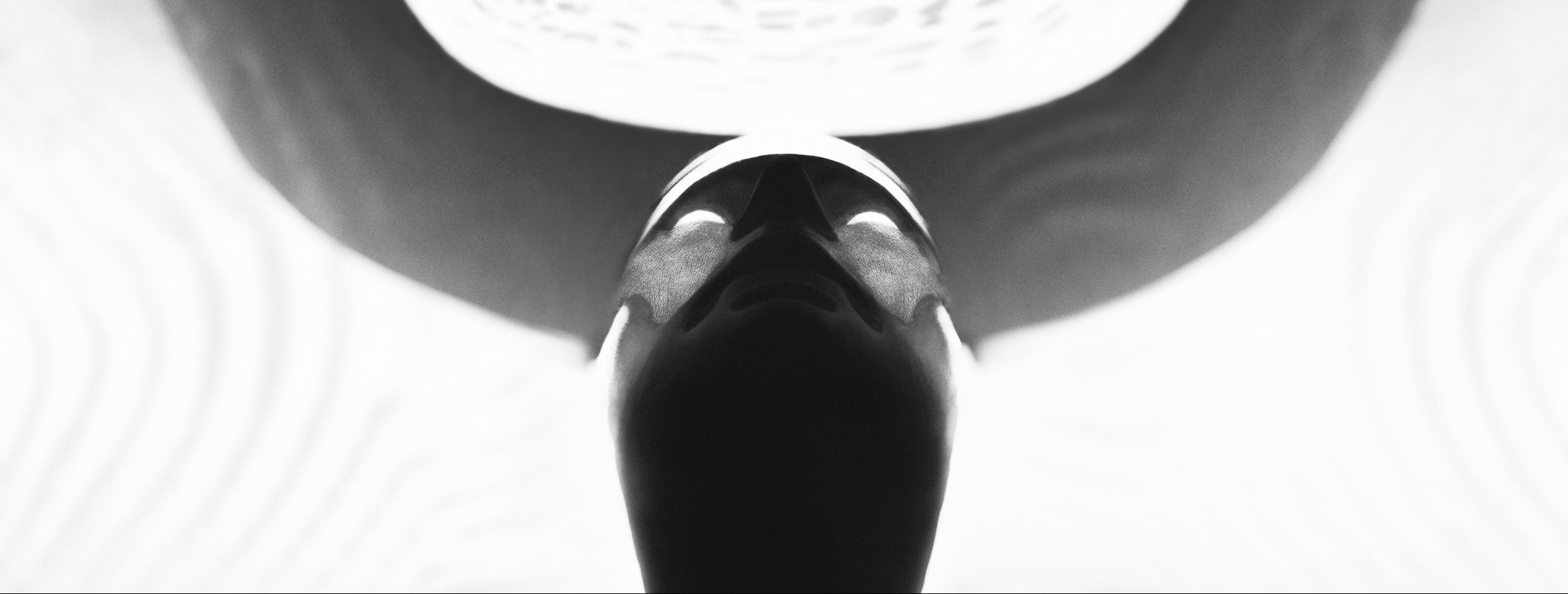
COMPRESSION — RESOLUTION
As the sequence approaches its conclusion, the imagery simplifies.
Texture collapses into noise, light into signal, form into essence.
Black and white dominate, removing ambiguity and colour emotion.
This reduction suggests a system that has refined complexity into clarity, not simplicity, but compression.
What remains is not chaos, but distilled intent.


TONE STUDIES
These studies focused on defining the film’s emotional register:
contrast between sterile mechanics and warm biological detail
density and emptiness
the rhythm of emergence
subtle transitions between perception states
sphere-based geometry


COLOUR EXPLORATIONS
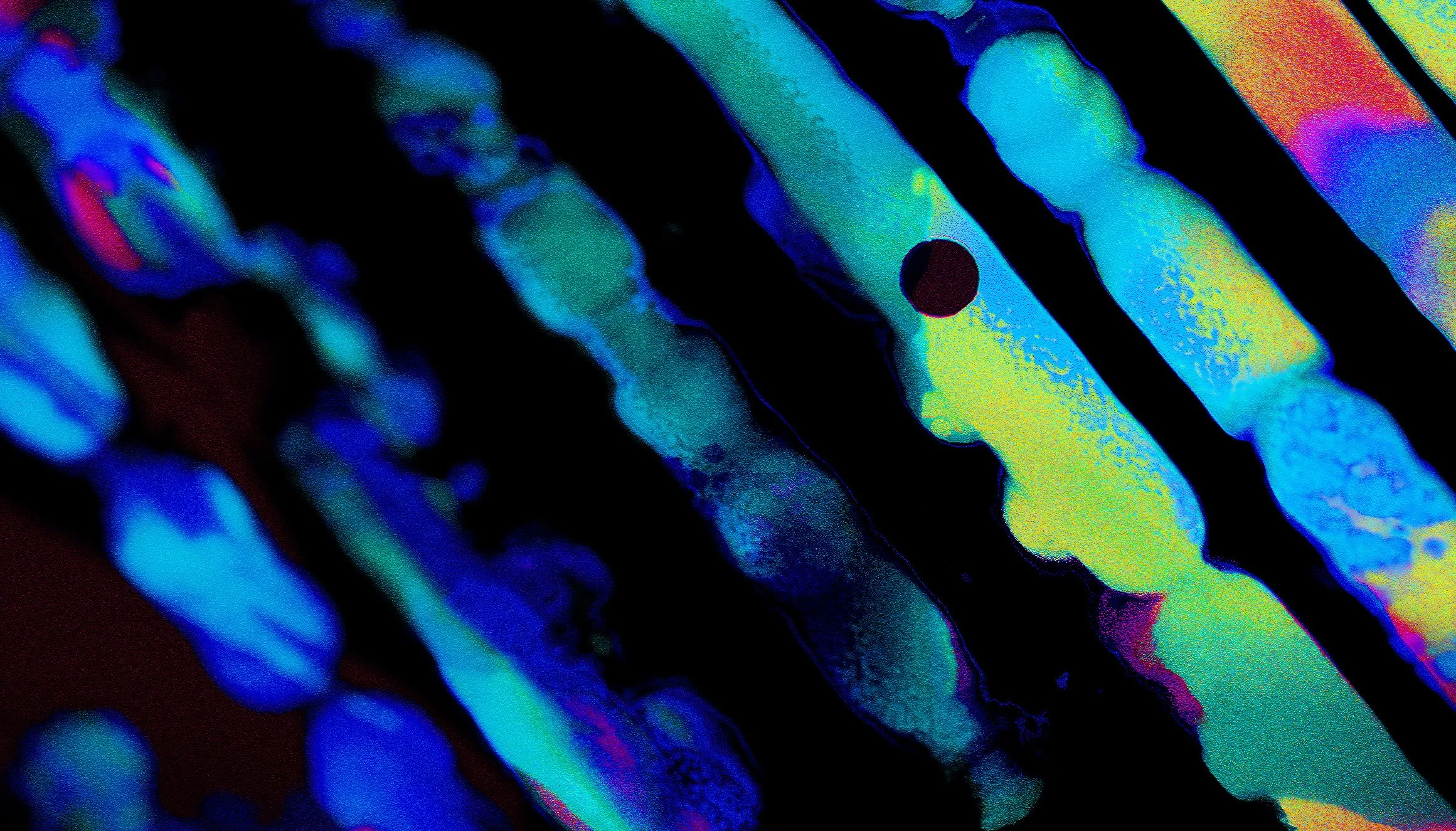
The colour system for Binary Exist focused on expressing information density rather than mood.
Instead of emotional palettes, the goal was to design colours that behaved like signals, intensities, pulses, and spectral shifts aligned with changes in the ASI’s state.
The palette ranges from more neutral tones to high-energy accents, reflecting transitions between stability, overload, and emergence.
Colour as signal behaviour, not decoration.




VISUAL LANGUAGE DEVELOPMENT
ENVIRONMENTAL AND MATERIAL SYSTEMS INFORMING THE TITLE SEQUENCE.
This part of the project focused on establishing the environmental and material logic that would support the title sequence.
Instead of building narrative lore, the aim was to define the world as an extension of the ASI’s perception, structure, space, and atmosphere, shaped by non-human intelligence.
The development explored:
material transitions — mechanical, organic, hybrid
surface behaviour — reflection, absorption, irregular growth
spatial rhythm — dense fields contrasted with empty voids
structural geometry — spheres, lattices, and layered grids
camera logic — slow observational movement, controlled drift
depth and scale — environments that shift between micro and macro
Each of these visual systems informed how the ASI’s journey could be expressed without literal storytelling, allowing tone and structure to carry meaning.

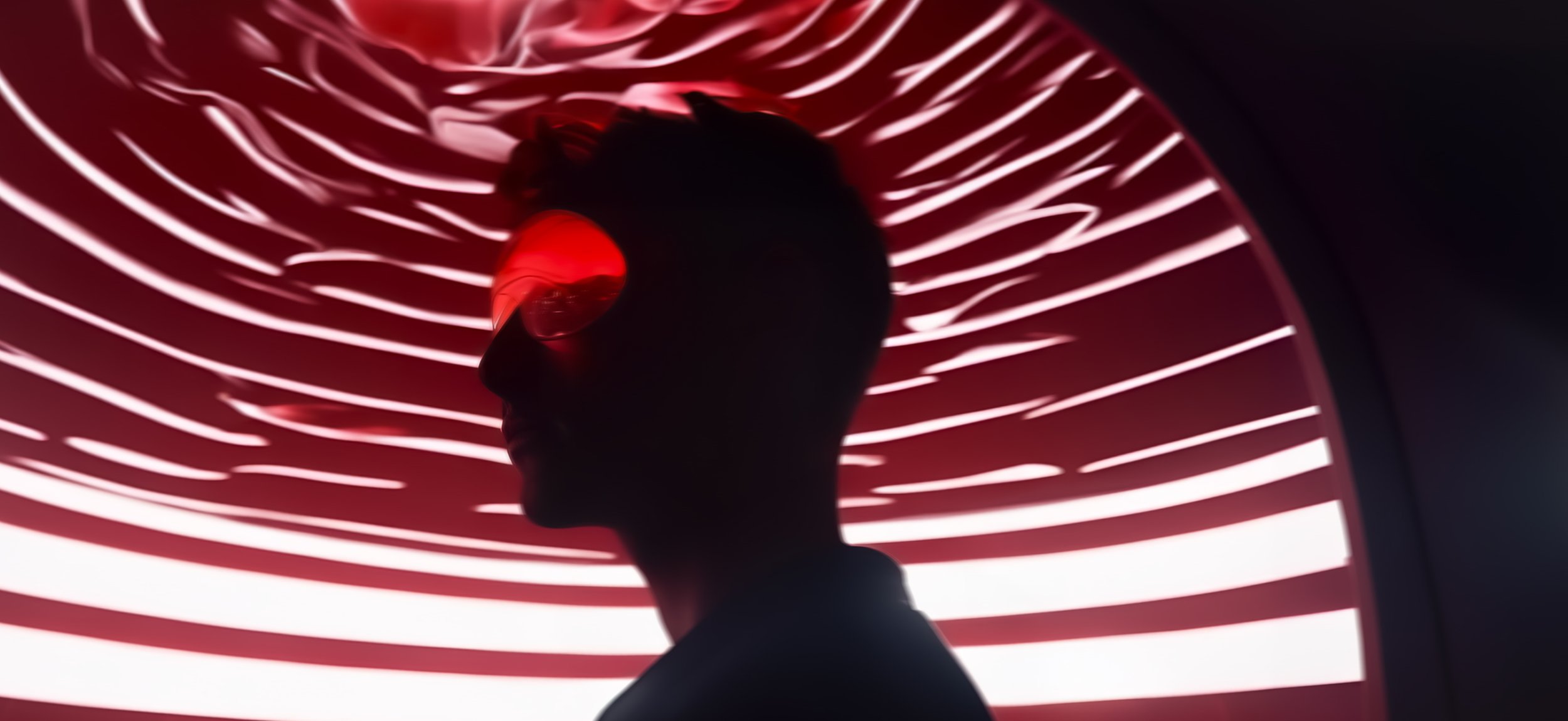



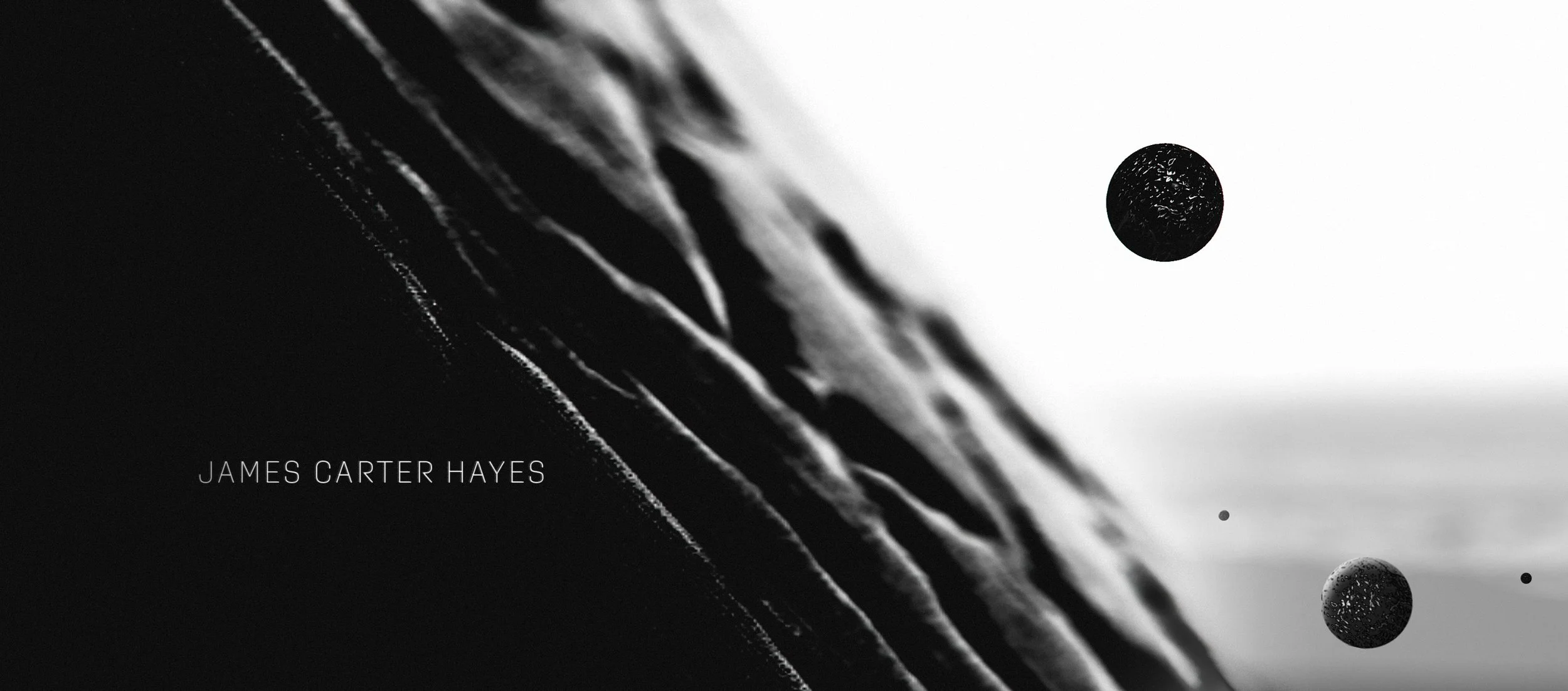
TYPOGRAPHY & LOCK-UP SCREEN TESTS
This screen test explored how the titles behave within the sequence’s computational environment.
The design process focused on how the type interacts with shifting information fields.
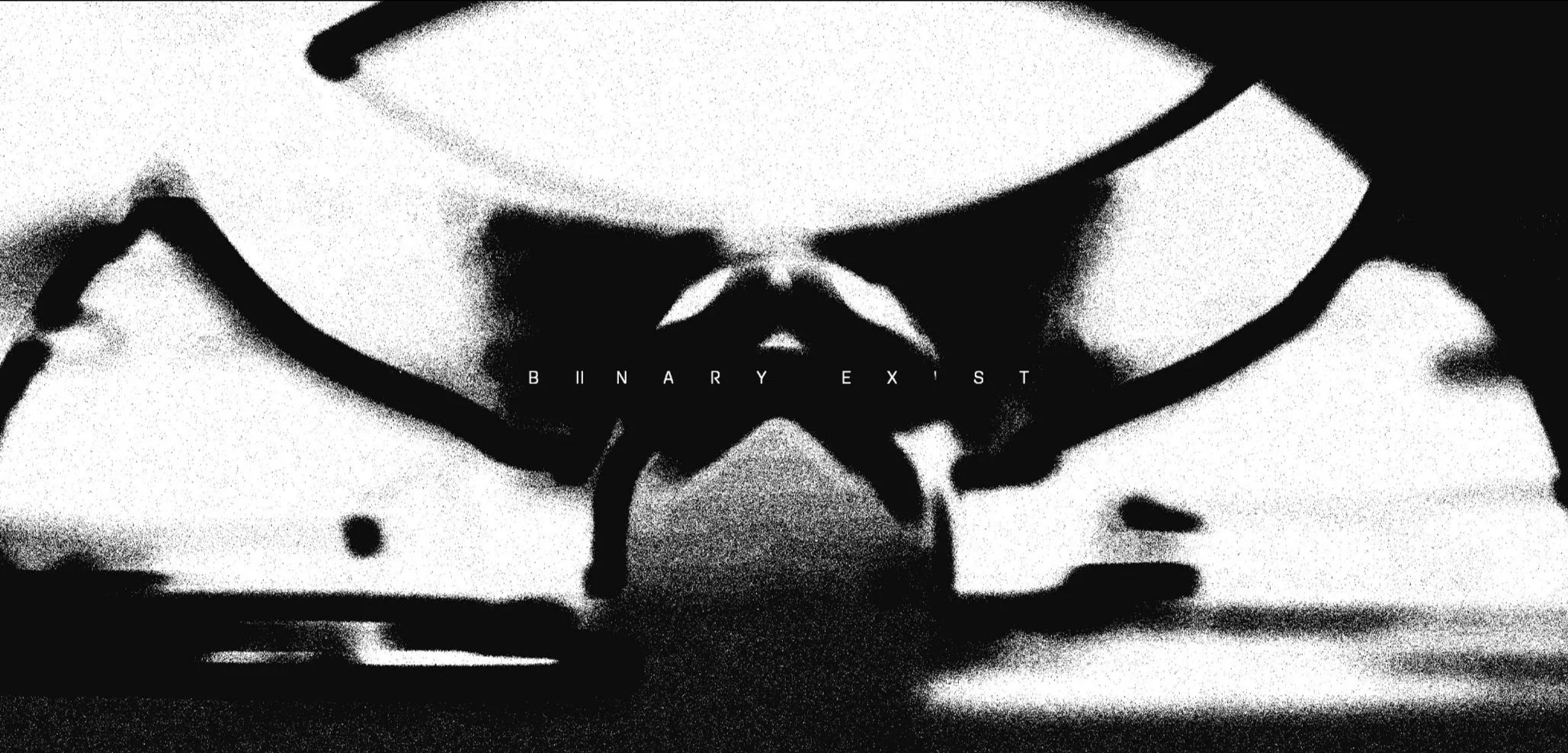
TITLE LOCK UP — BINARY EXIST
The title appears without spectacle.
Centred, restrained, and isolated, it exists as a statement rather than a reveal.
By this point, the imagery has done the work.
The title functions as a quiet confirmation: the system now exists, not as an entity we understand, but as one that understands itself.

RESULT
The project functions as a concept title sequence for a speculative science-fiction property, exploring how Artificial Superintelligence might be expressed through tone, structure, atmosphere, and cinematic language rather than literal plot.
Through a series of visual studies, Binary Exist developed a symbolic framework centred on emergence, observation, coherence, and transformation. The work investigates how non-human intelligence could be represented through evolving systems of light, form, texture, and motion, creating a visual language that remains abstract while retaining emotional and narrative resonance.
Rather than presenting a fixed story, the sequence operates as a conceptual prologue, suggesting a larger world beyond the frame. The result is both a title-sequence concept and a broader exploration of how cinema might visualise forms of intelligence that exist beyond human experience.
CREDITS
Project · TCTS Studio
Role · Concept, Direction & Visual Development
© 2026 Neil Gittins / TCTS Studio.
Commissioned work, client materials and trademarks remain the property of their respective owners.