A GOOD AMERICAN
FEATURE DOCUMENTARY
Collaboration with Up Creatives
OVERVIEW
For the feature documentary A Good American, I helped develop a visual language for the film’s central narrative: the existence of a global surveillance and data-analysis system.
The challenge was to translate invisible information flows, networks, and patterns of observation into a coherent cinematic framework that could support the documentary’s storytelling without overwhelming it.
Working closely with the wider creative team, the visual development process explored how abstract systems could be represented through form, motion, scale, and spatial relationships, creating imagery that felt analytical, atmospheric, and emotionally resonant.
The aim was not to illustrate technology directly, but to make complex ideas visible, allowing audiences to intuitively understand the hidden structures operating beneath the story.
CONCEPT
The approach treated data not as graphics, but as a living environment, an immense, interconnected network shifting between clarity and overload.
The visual system needed to:
communicate complexity
suggest surveillance at scale
reveal patterns without over-explaining
carry emotional weight
integrate seamlessly with real-world interviews and archival footage
The design drew on principles of signal behaviour, rhythmic patterning, and computational architecture.
VISUAL LANGUAGE
TONE STUDIES
A deeper exploration of global data structure, scale, and systemic tension.
These studies examine how a global intelligence network might behave when visualised not as a flat information layer, but as a three-dimensional, planet-scale system.
Each exploration focuses on a different relationship between structure, density, fragility, and collapse, using spherical topology as a metaphor for global interconnectedness.
The imagery tests how data gathers, disperses, fractures, and binds, forming the backbone of the project’s visual logic.
Early explorations focused on:
node-based lattice structures
cascading signal pathways
light pulses travelling through unknown architectures
transitions between micro and macro data scales
density and overload moments reflecting narrative tension
SPHERICAL STUDY 01 — GLOBAL NODE DISTRIBUTION
A structural look at how information points distribute across a spherical surface, forming early logic for node density and network mapping.

SPHERICAL STUDY 02 — SIGNAL WEB TOPOLOGY
Examines how signal paths interconnect across a curved surface, creating a complex web of global communication.
This study informed the system’s behaviour under stable conditions.

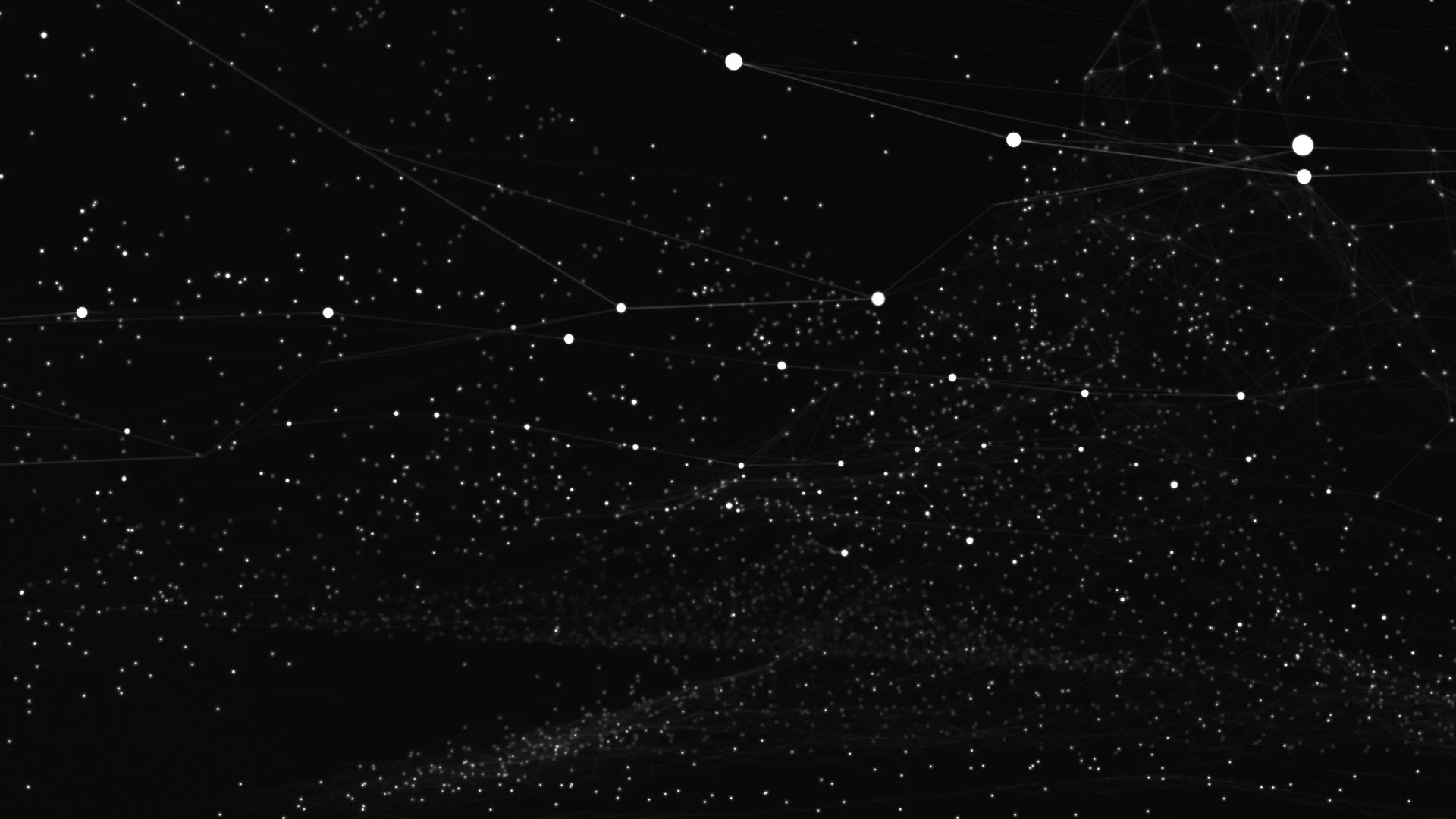
Network Studies
Exploring the structure, density, and behaviour of the visual system.
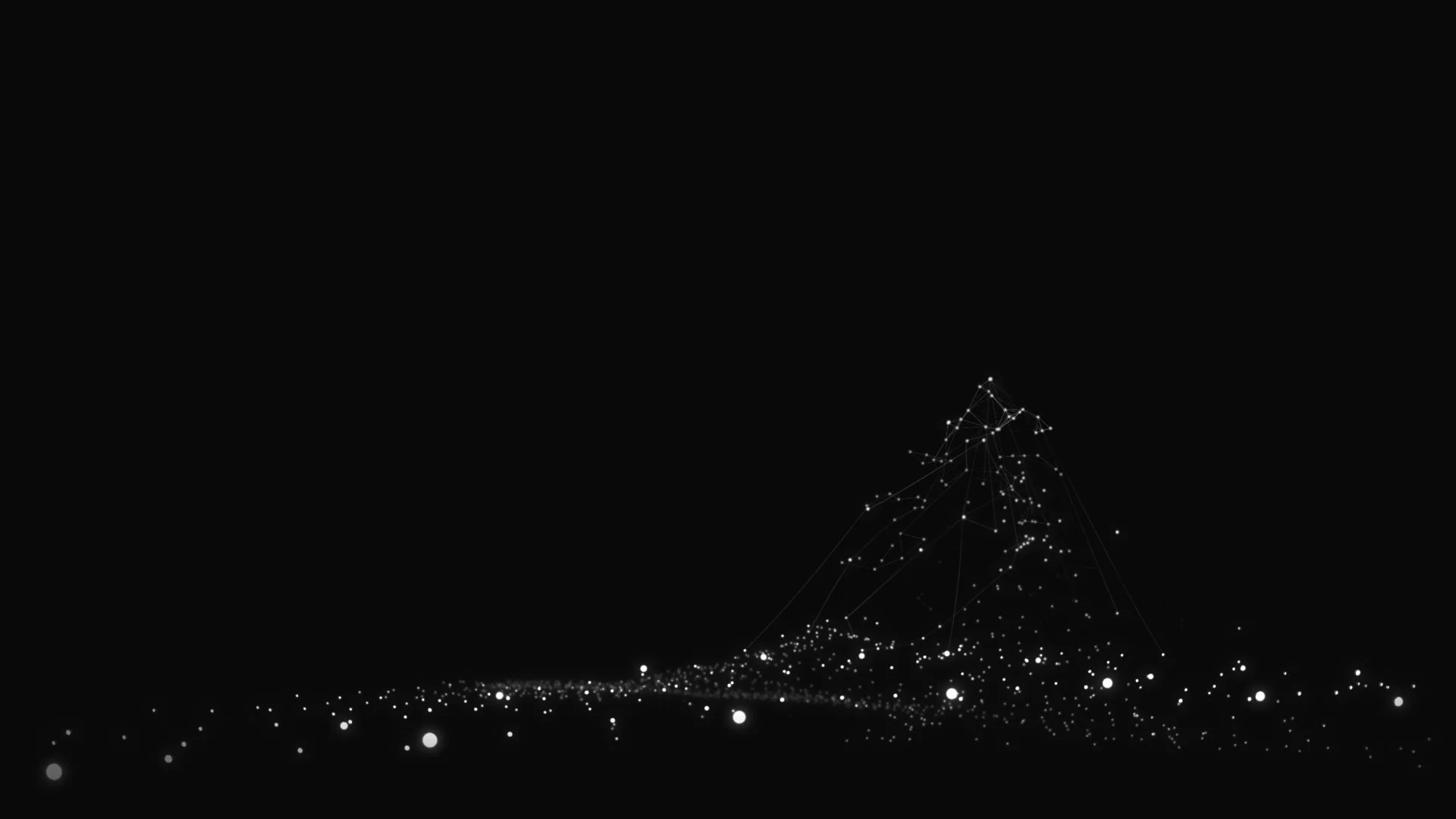
Close-up studies investigating how individual nodes, connections, and particle fields combine to create a coherent visual language. These explorations informed the rhythm, scale, and spatial behaviour of the network, allowing the system to remain both technically precise and visually atmospheric across the sequence.
System Motion Study — Global Network
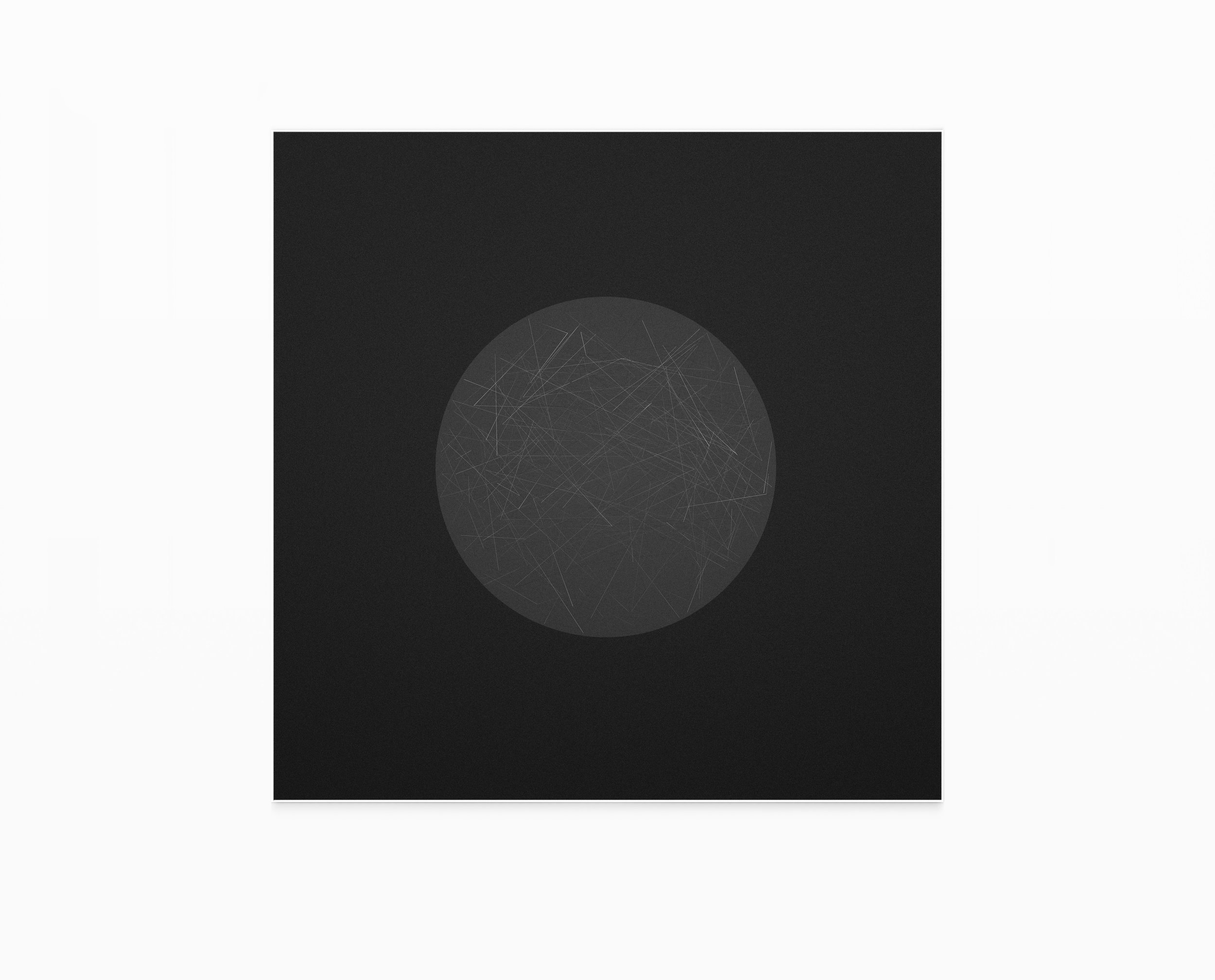
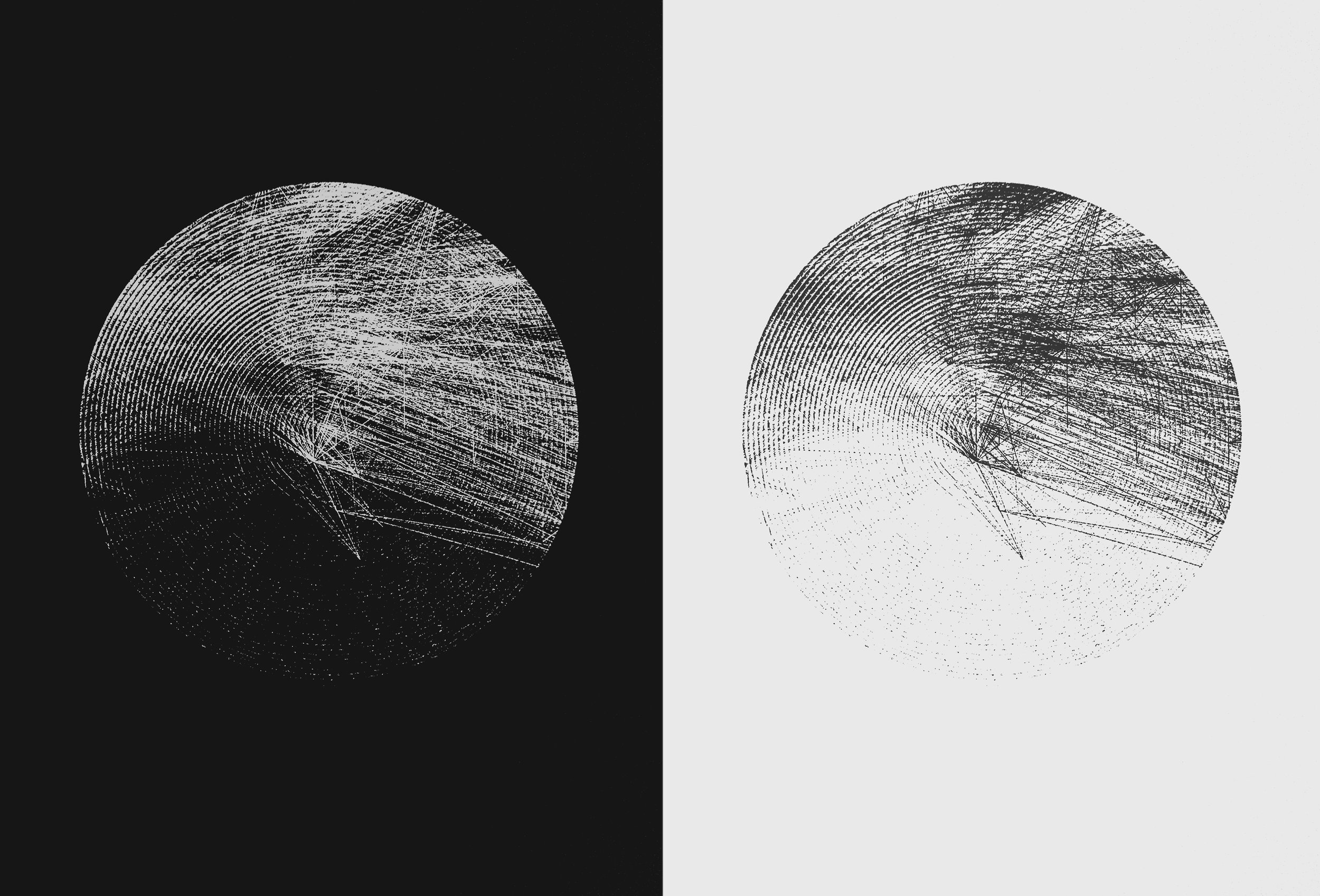
TONE STUDY — SPHERICAL TOPOLOGY TESTS
These studies examine circular and spherical forms as structural metaphors for the global network.
Lines and point clusters behave like signal paths, interference patterns, or collapsed data structures.
Each experiment explores a different relationship between order and noise, forming an early vocabulary for how the system could look when stable, stressed, or breaking down.
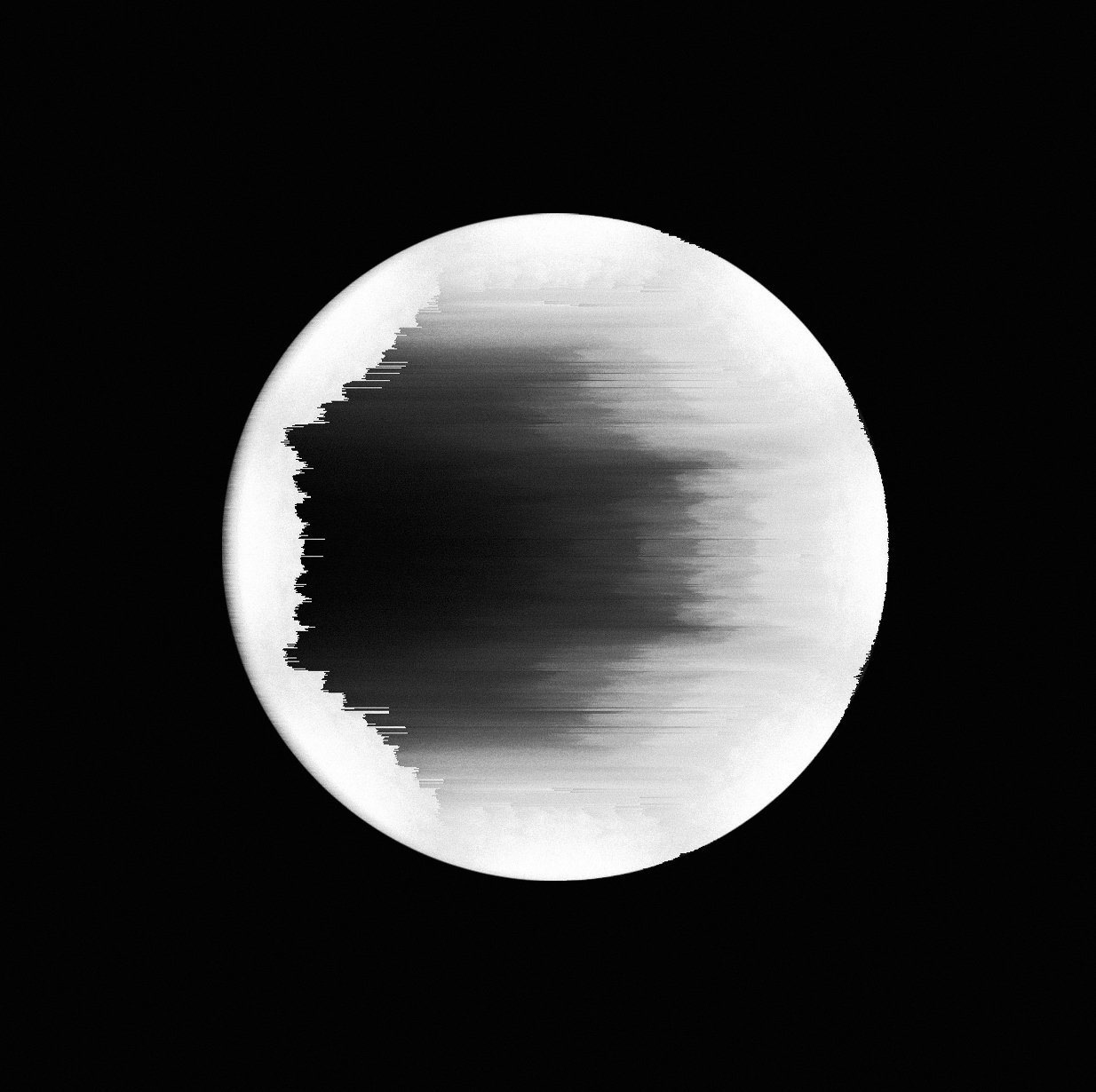
TONE STUDY — LIGHT & FLOW. STRUCTURAL CURVATURE
These explorations focus on how light behaves across curved surfaces, using shadow, falloff, and gradient transitions to evoke the idea of information flowing around invisible architectures.
Rather than depicting literal data, these studies translate the feeling of movement, signal strength, and network curvature into abstract cinematic shapes.




TONE STUDY — MICRO-NETWORK HORIZON
This study explores how information could behave at a macro scale, not as technical nodes or vectors, but as a particulate field stretching toward an unseen horizon.
The low-angle perspective creates a sense of scale and physical presence, suggesting a network that behaves more like weather than graphics.

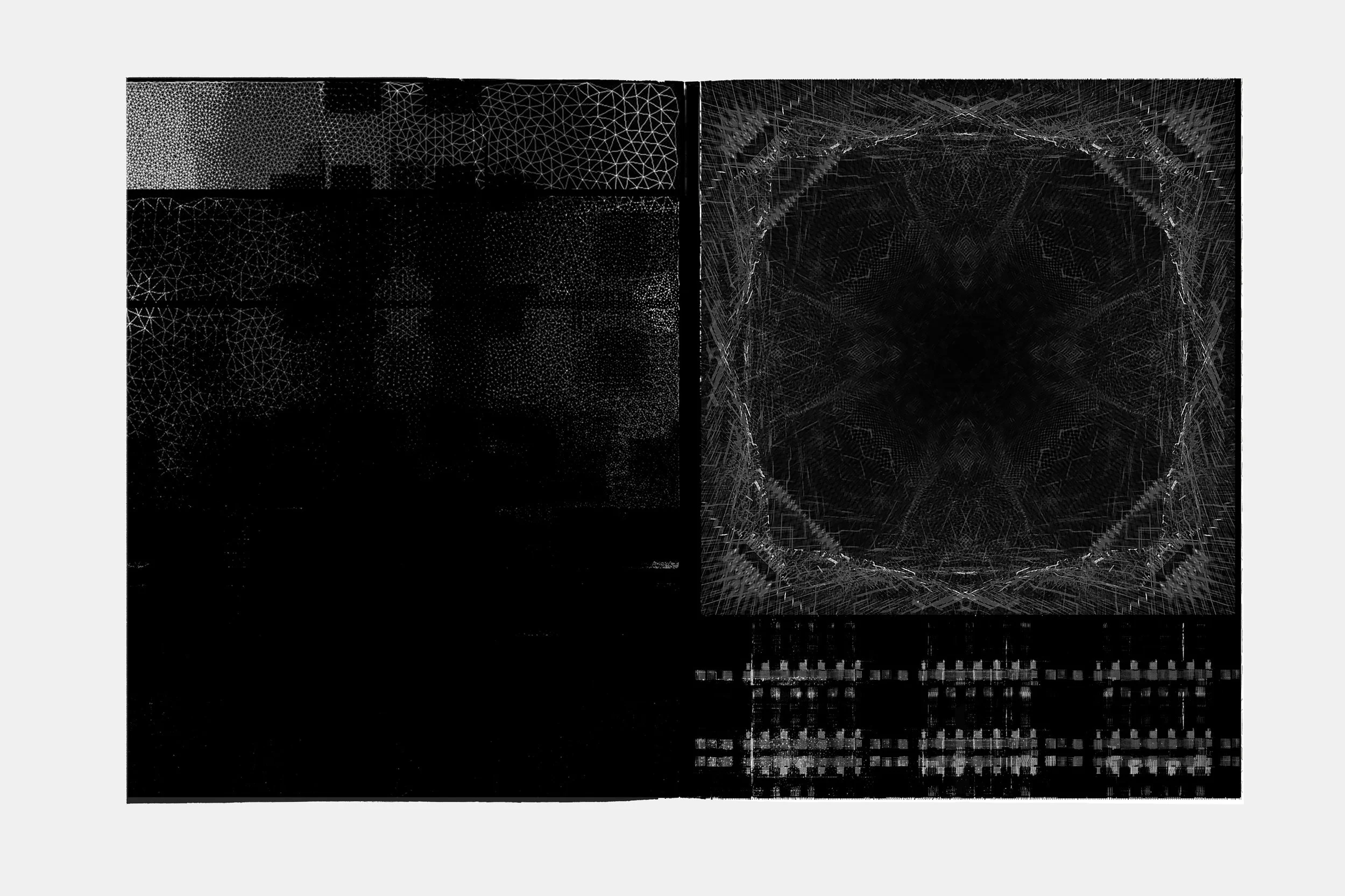
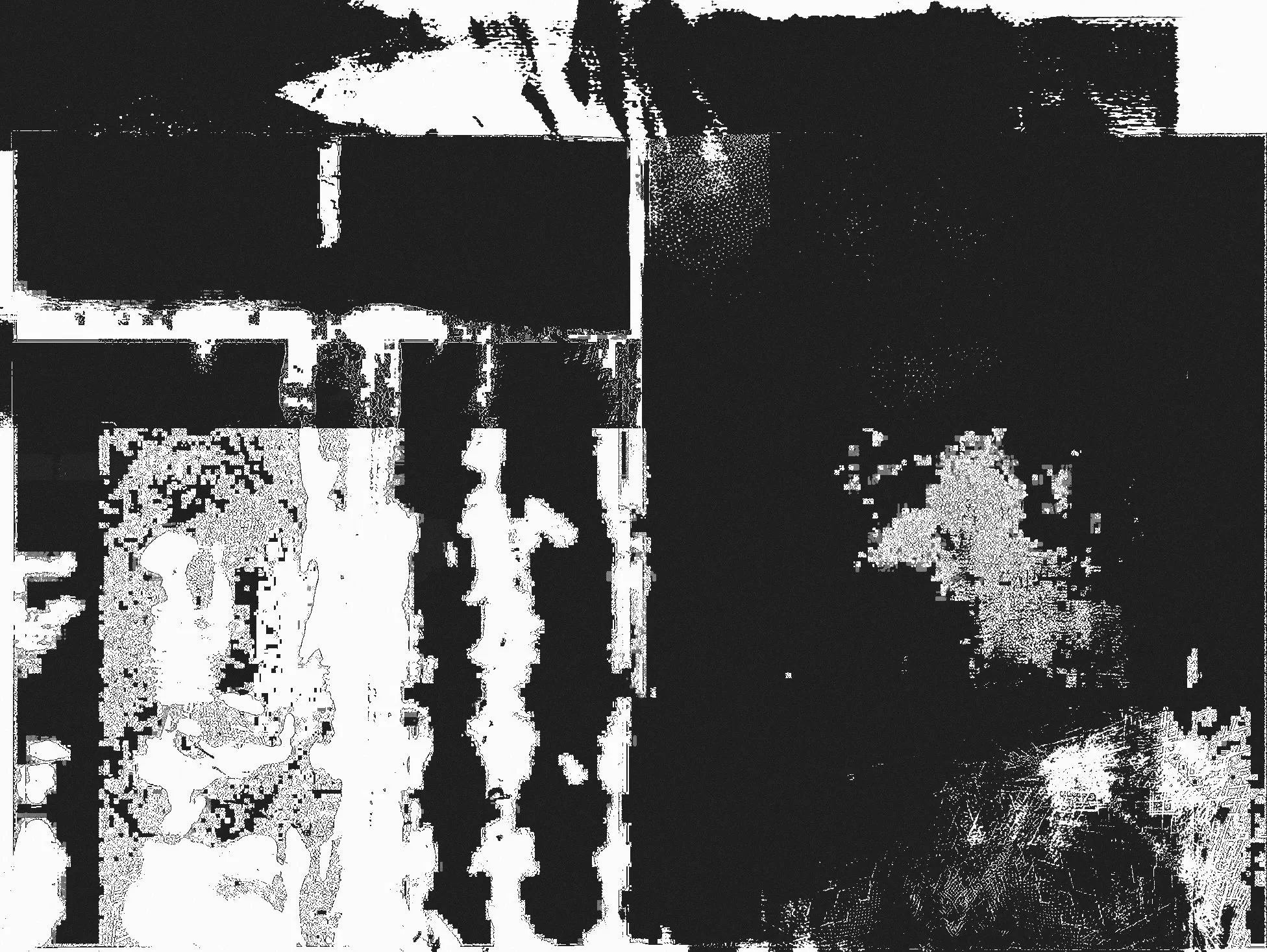
TONE STUDY — SYSTEM FRAGMENTATION & DATA BREAKDOWN
These studies examine how the network behaves under tension: distortion, overload, or structural decay.
The experiments explore breakage patterns, loss of resolution, duplicated structures, and interference noise, all emerging as motifs for moments of narrative stress within the film.
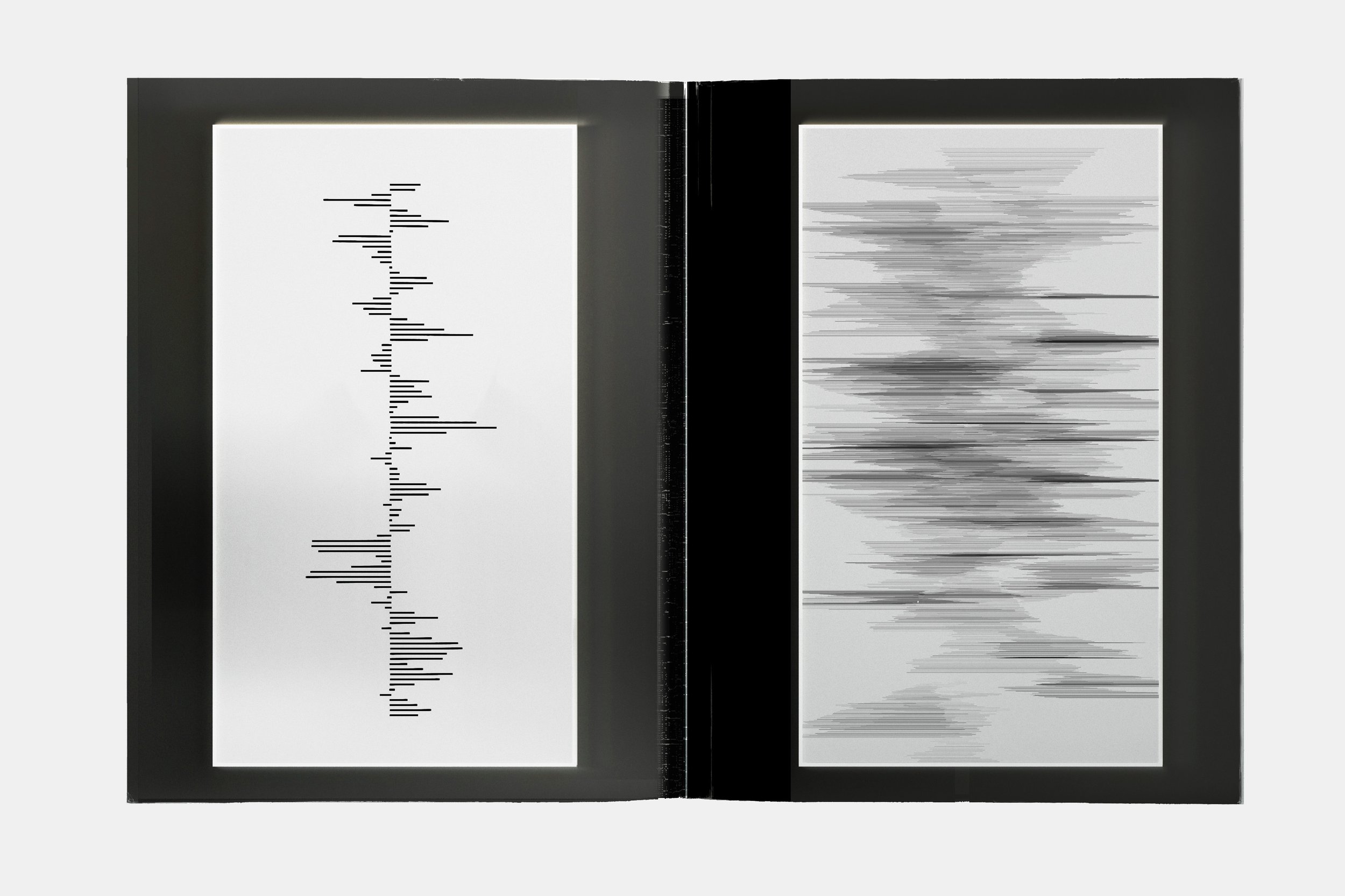
FINAL SYSTEM FRAMES — DOCUMENTARY APPLICATION
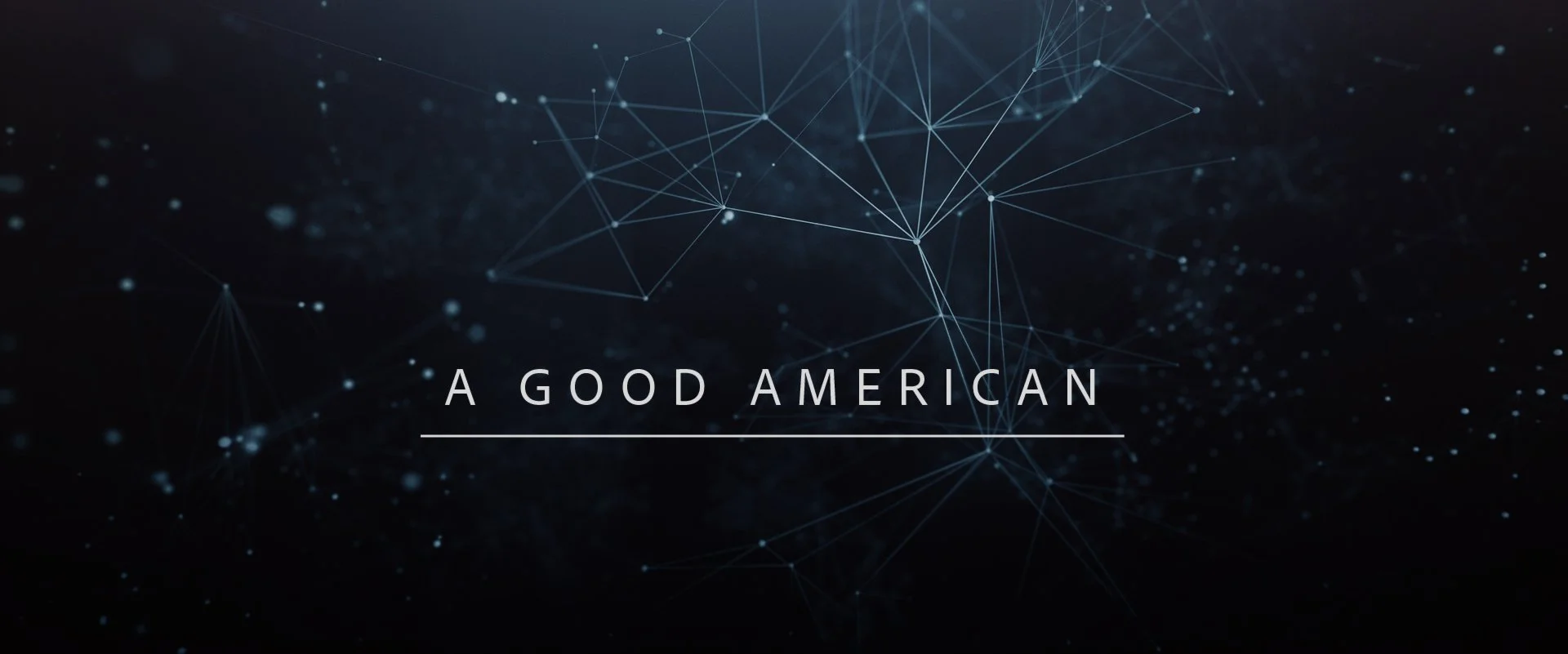
The final system was designed to integrate seamlessly into the documentary, supporting the narrative without overwhelming it.
The goal was clarity, restraint, and a sense of structural intelligence, allowing viewers to understand the presence and scale of the data network while maintaining emotional tension.
These frames represent the applied version of the visual language:
A refined network of nodes, particles, and geometric pathways designed to communicate information flow at both micro and macro scales.
The system emphasises:
readability over spectacle
structural rhythm over density
motion rooting the viewer in scale
transitions between stability and tension
By the time these frames appear in the film, the audience should feel the weight and complexity of the network, even without explicit explanation.
The conceptual groundwork shapes the emotional resonance, the final frames deliver the narrative clarity.






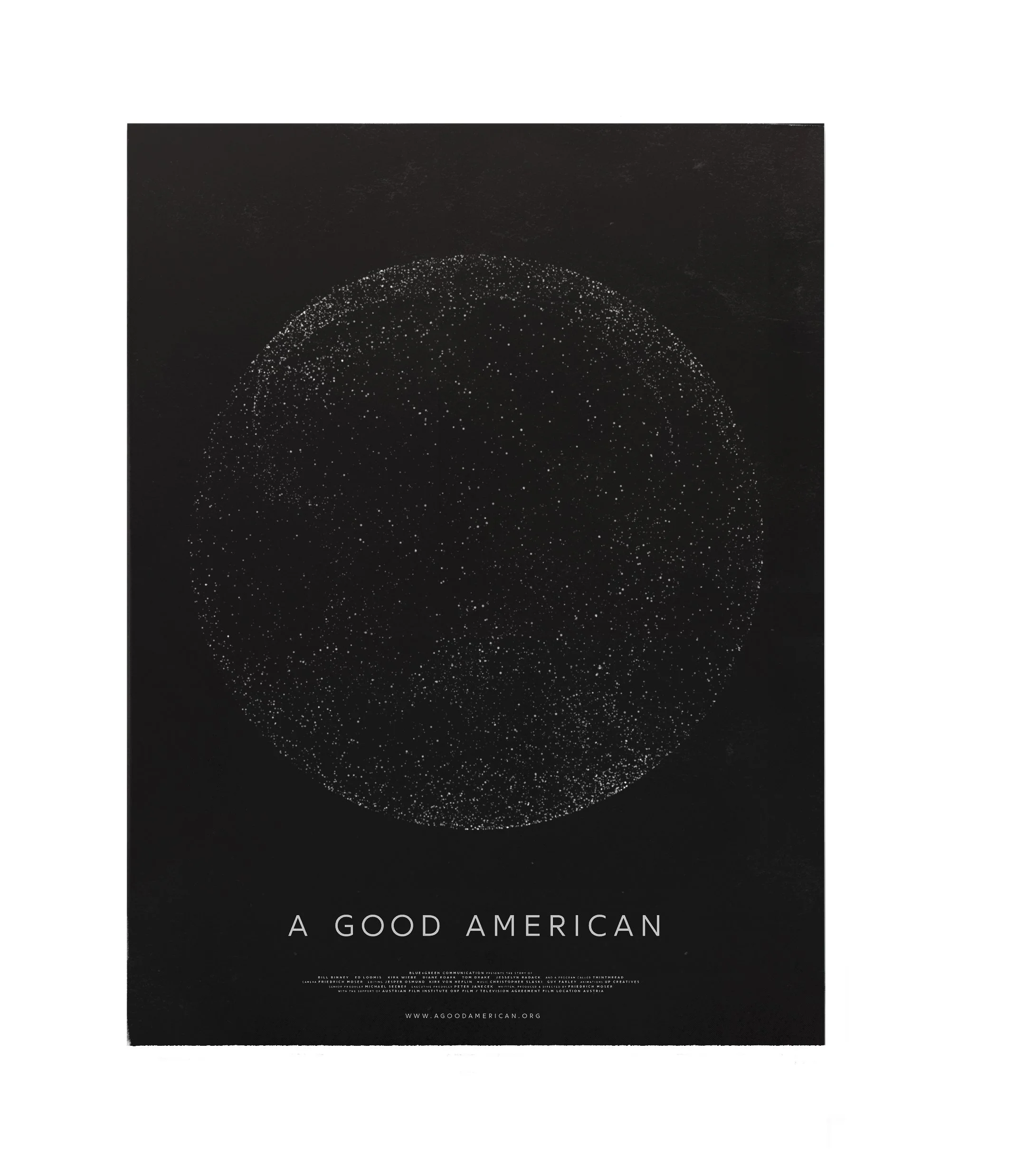
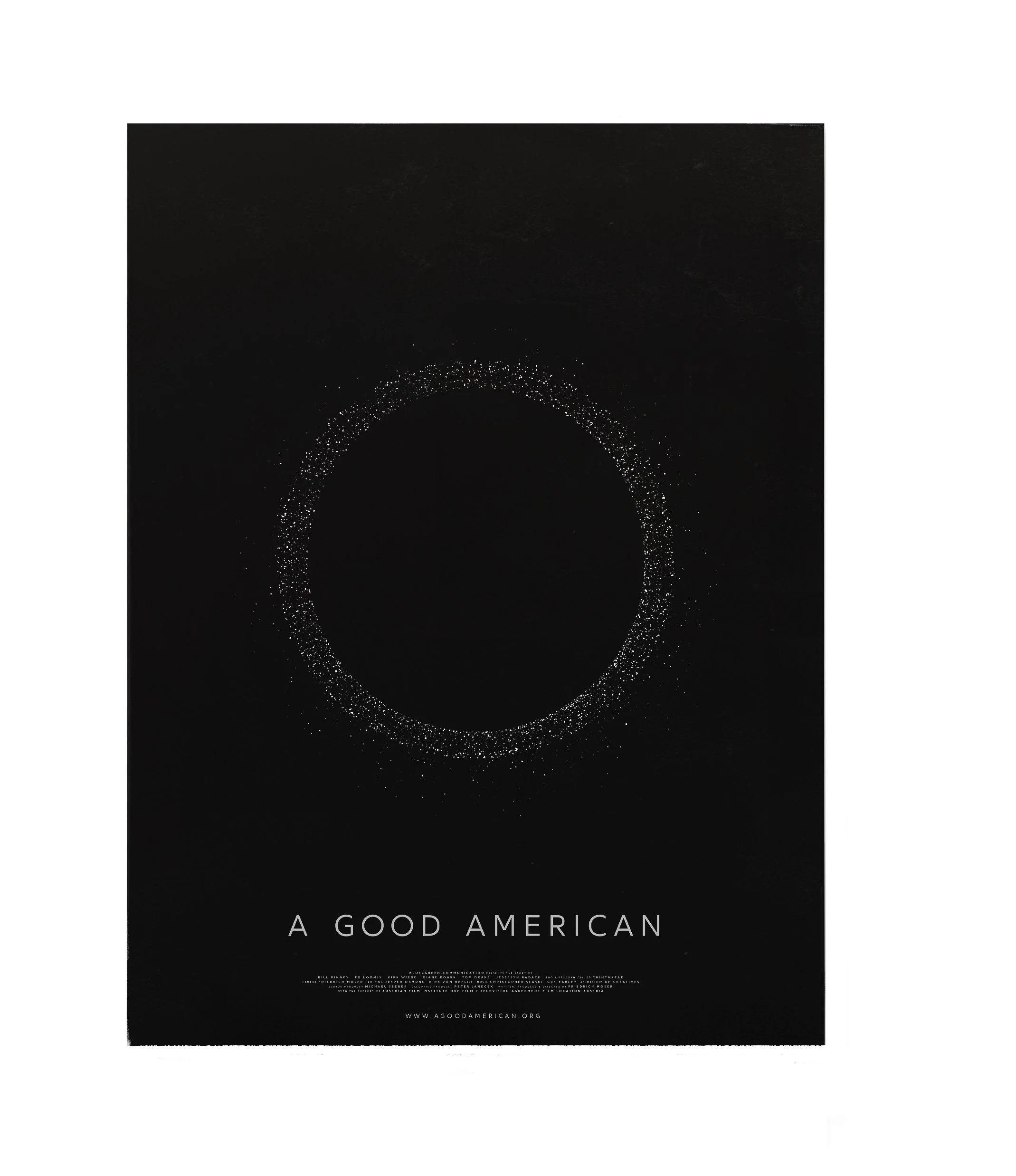
POSTER EXPLORATION
Extending the visual language beyond the screen.
As part of the wider development process, this concept explored how the film’s visual identity could translate into a feature poster. Drawing on the same restrained language of data, signal, and computational architecture established for the wider project, the design investigated how a single graphic form could communicate both mystery and complexity through reduction.
RESULT
The visual system became a central narrative device within A Good American, translating vast, invisible data flows into a coherent cinematic language that audiences could intuitively grasp. Abstract network forms, spatial compositions, and motion principles helped transform complex intelligence concepts into something legible, tense, and humanly comprehensible.
The work supported the film’s investigative structure without overwhelming it, remaining restrained, analytical, and atmospheric. Visuals were designed to feel embedded in the story world rather than illustrative overlays, reinforcing themes of surveillance, scale, and systemic consequence.
The project was well received for its clarity and seriousness of tone, with the visual language extending beyond the film itself. Design elements were adapted for the official poster and promotional materials, ensuring a consistent identity across screen and print.
The result was a visual framework that strengthened the film’s impact, quietly amplifying its questions rather than answering them, contributing to the lasting resonance of A Good American.
CREDITS
Project · A Good America
Studio · UP Creatives
Role · Conceptual Direction & Visual Development
IMDB · https://www.imdb.com/title/tt4065414/
© 2026 Neil Gittins / TCTS Studio.
Commissioned work, client materials and trademarks remain the property of their respective owners.