NERINGA
TITLE SEQUENCE CONCEPT
Studio design exploration
OVERVIEW
Developed as an original TCTS studio concept, Neringa is a title-sequence study for a fictional crime drama set on Lithuania’s Curonian Spit.
The project explores the Spit during deep winter, a landscape defined by fog, snow, frozen coastline, and long stretches of cold isolation.
The aim was to craft a title world where the environment itself carries the psychological weight of the series.
CONCEPT
The central idea was to use the winter landscape as a metaphor for internal tension.
Snow-covered forests and empty shorelines become quiet indicators of unresolved disturbance.
The environment functions as a silent character, observing, withholding, concealing.
Rather than illustrating scenes from the narrative, the sequence conveys the show’s emotional tone through visuals that are surreal in pacing, restrained in motion, and built to reflect a world where beauty and bleakness coexist without explanation.
Silence as atmosphere. Isolation as identity.
CONCEPT DEVELOPMENT
TONE BOARDS
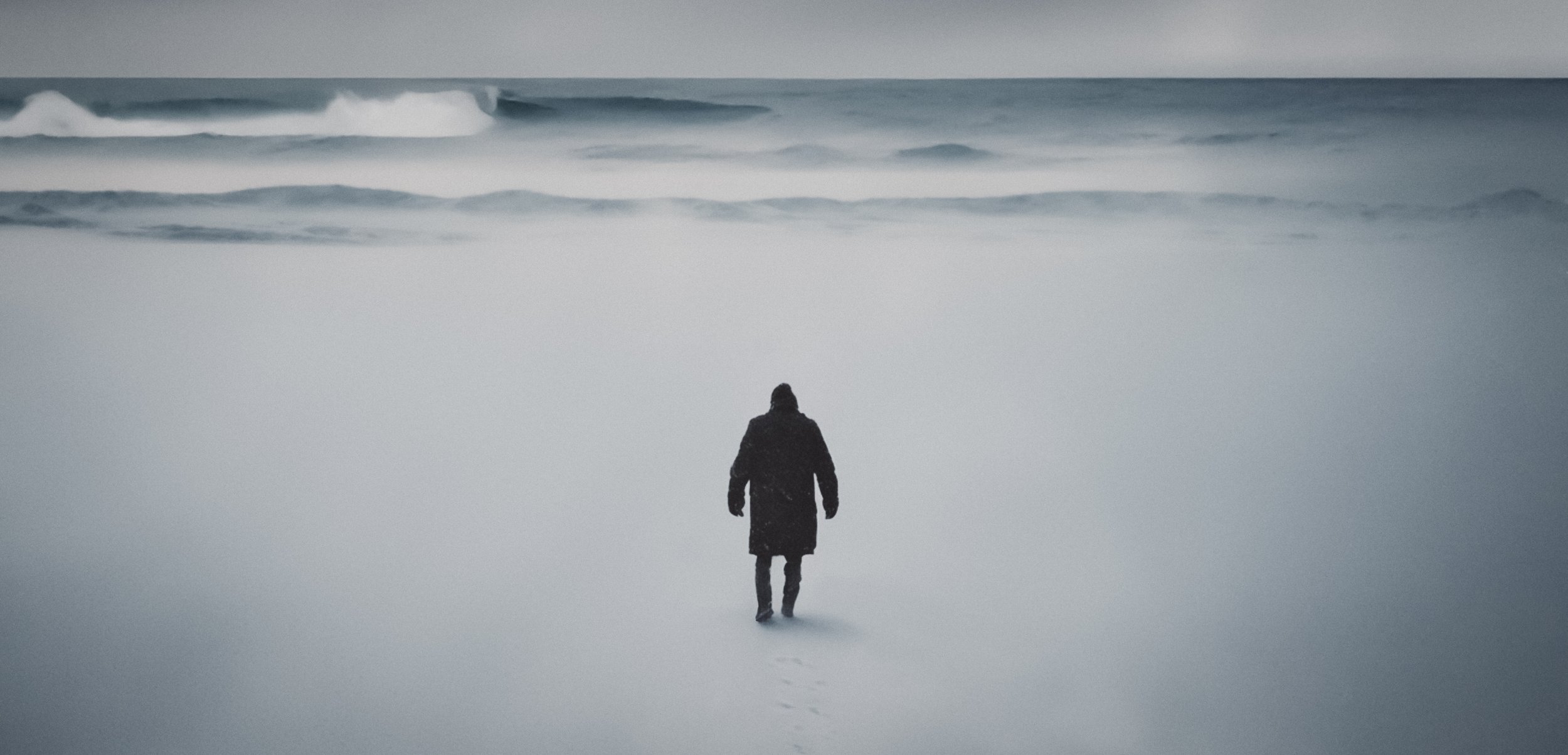
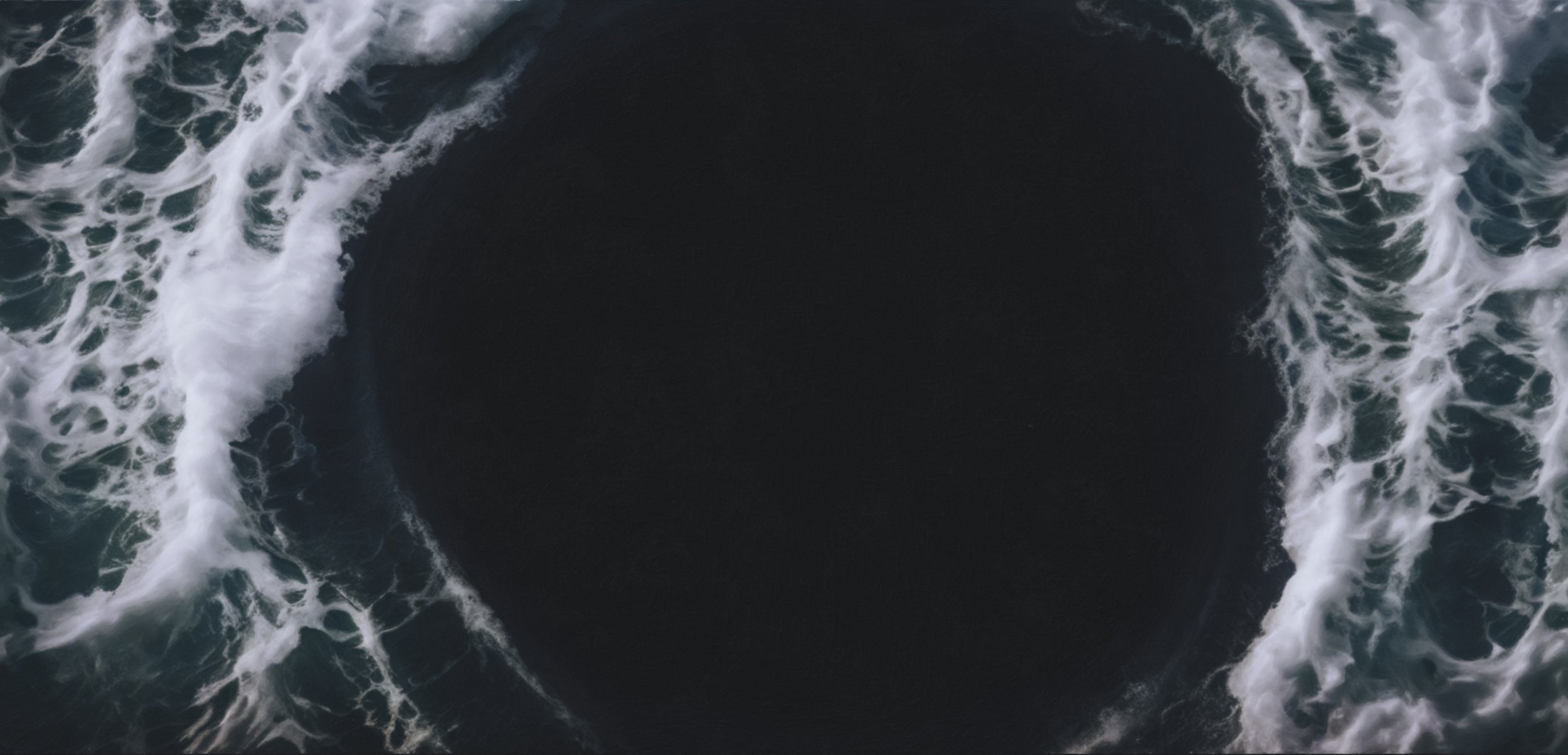
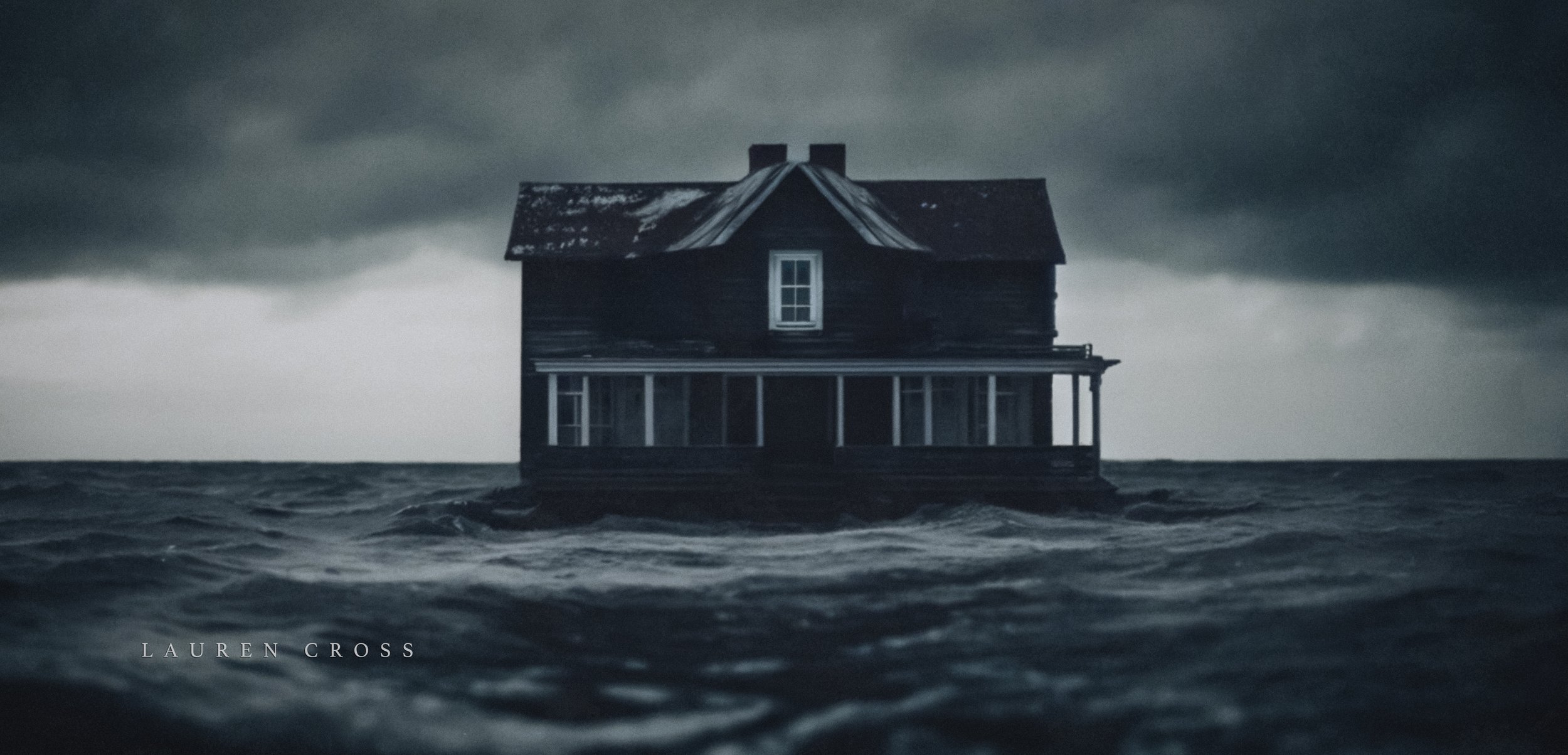
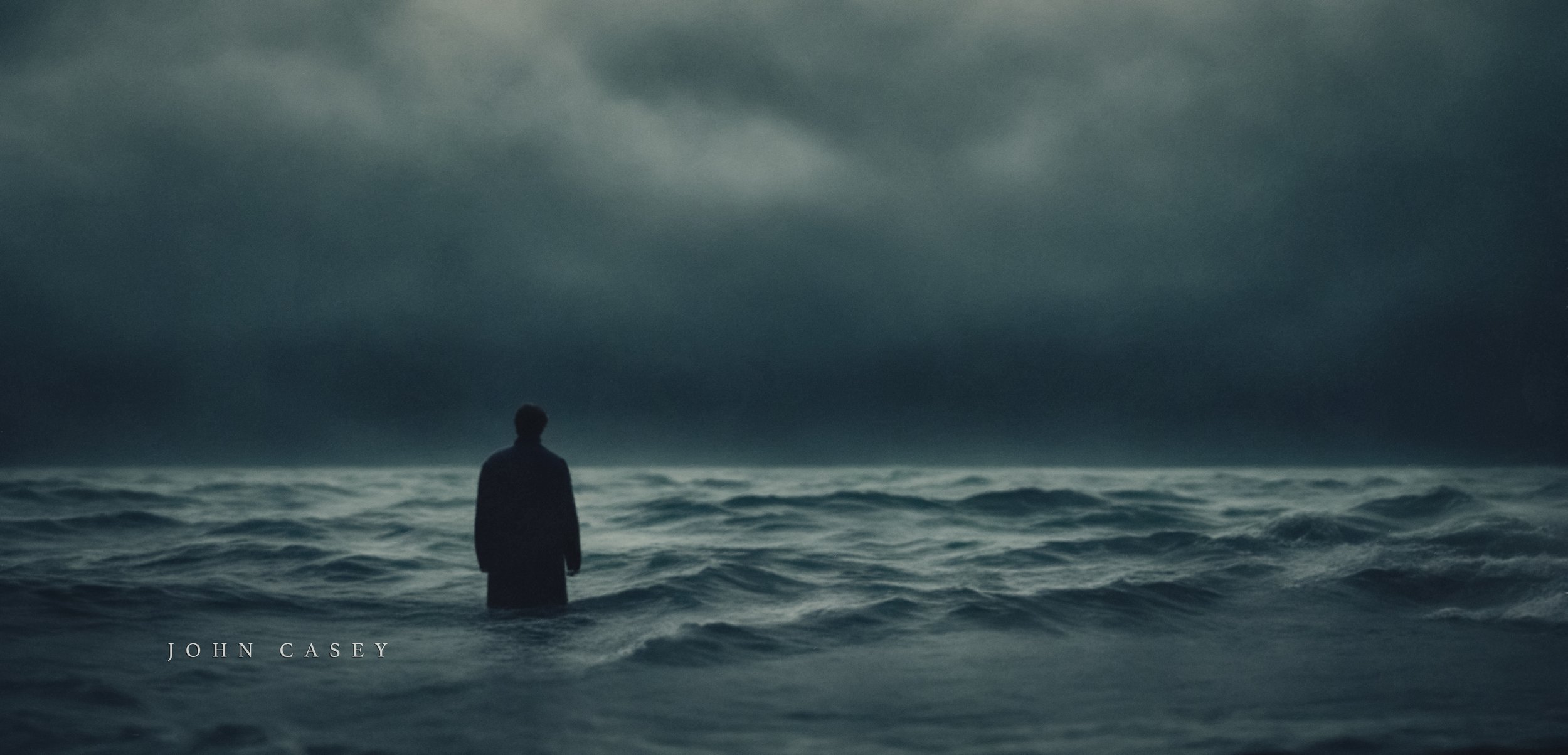
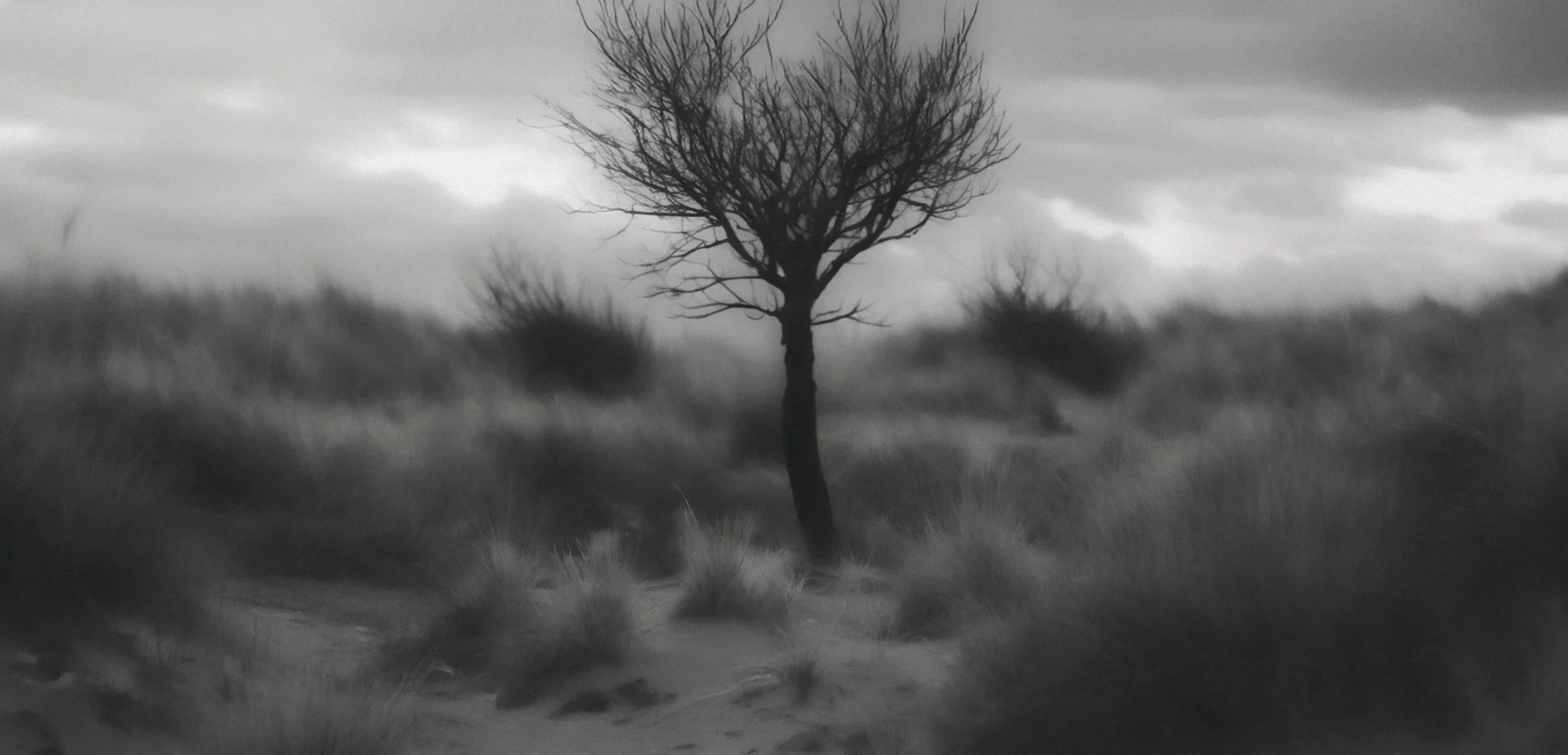
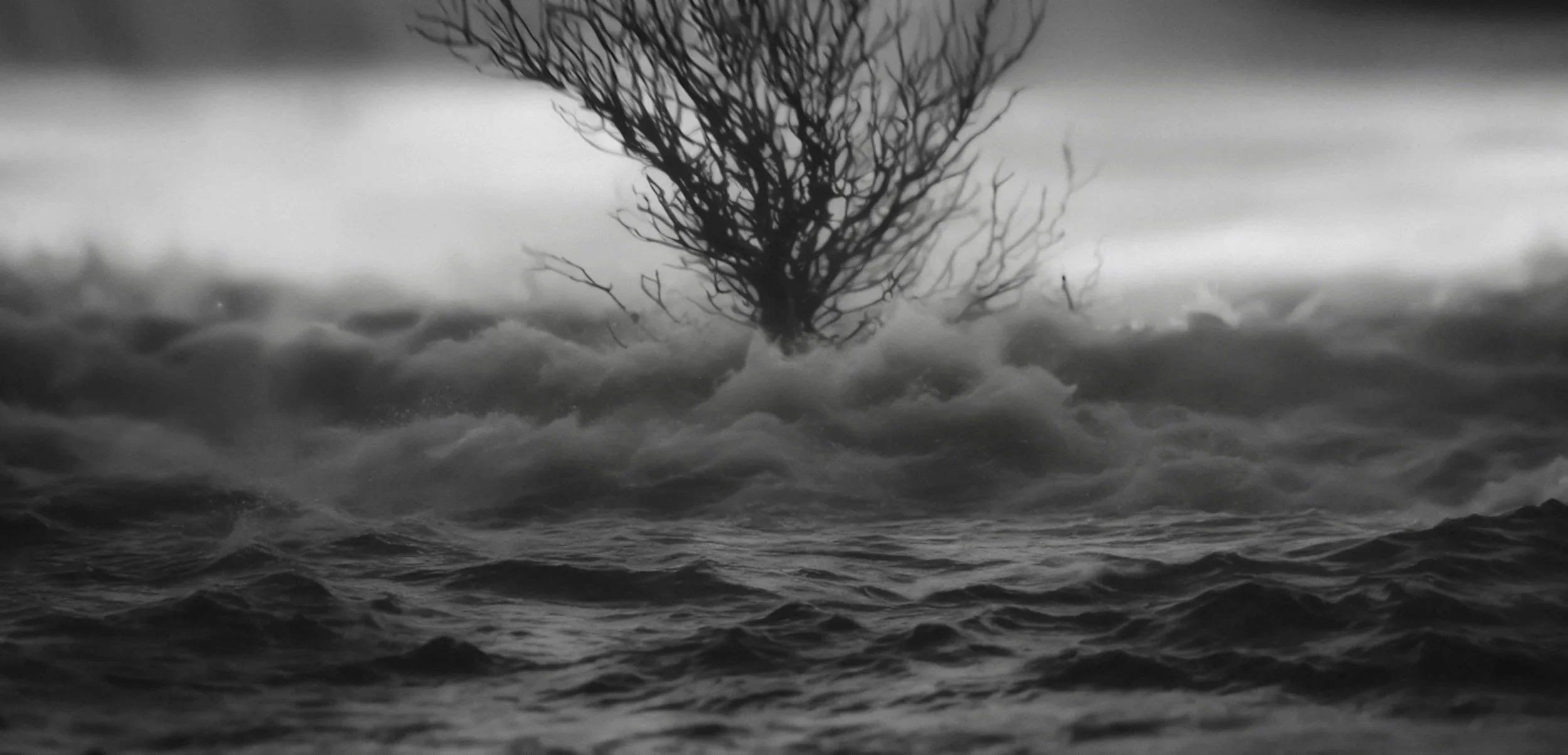
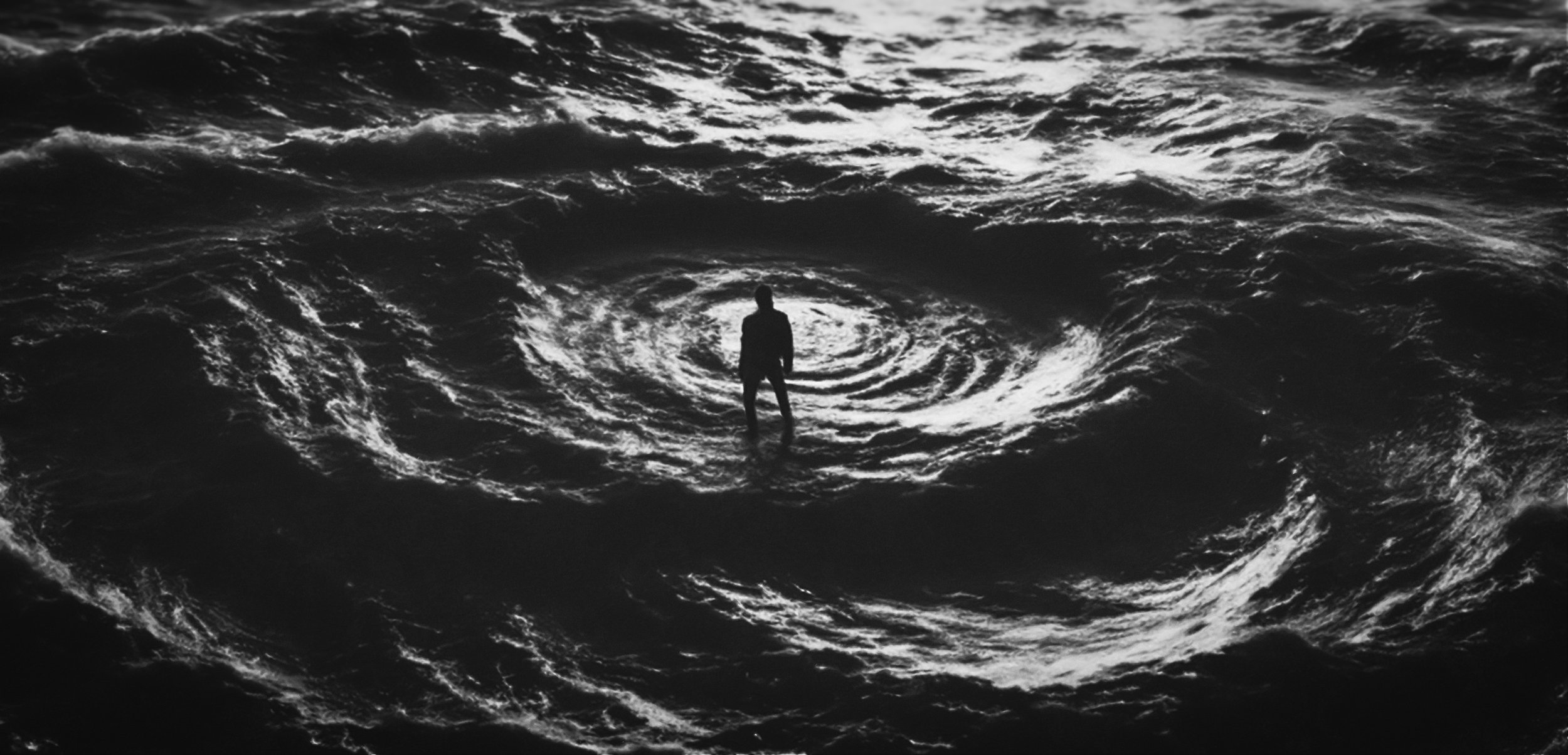
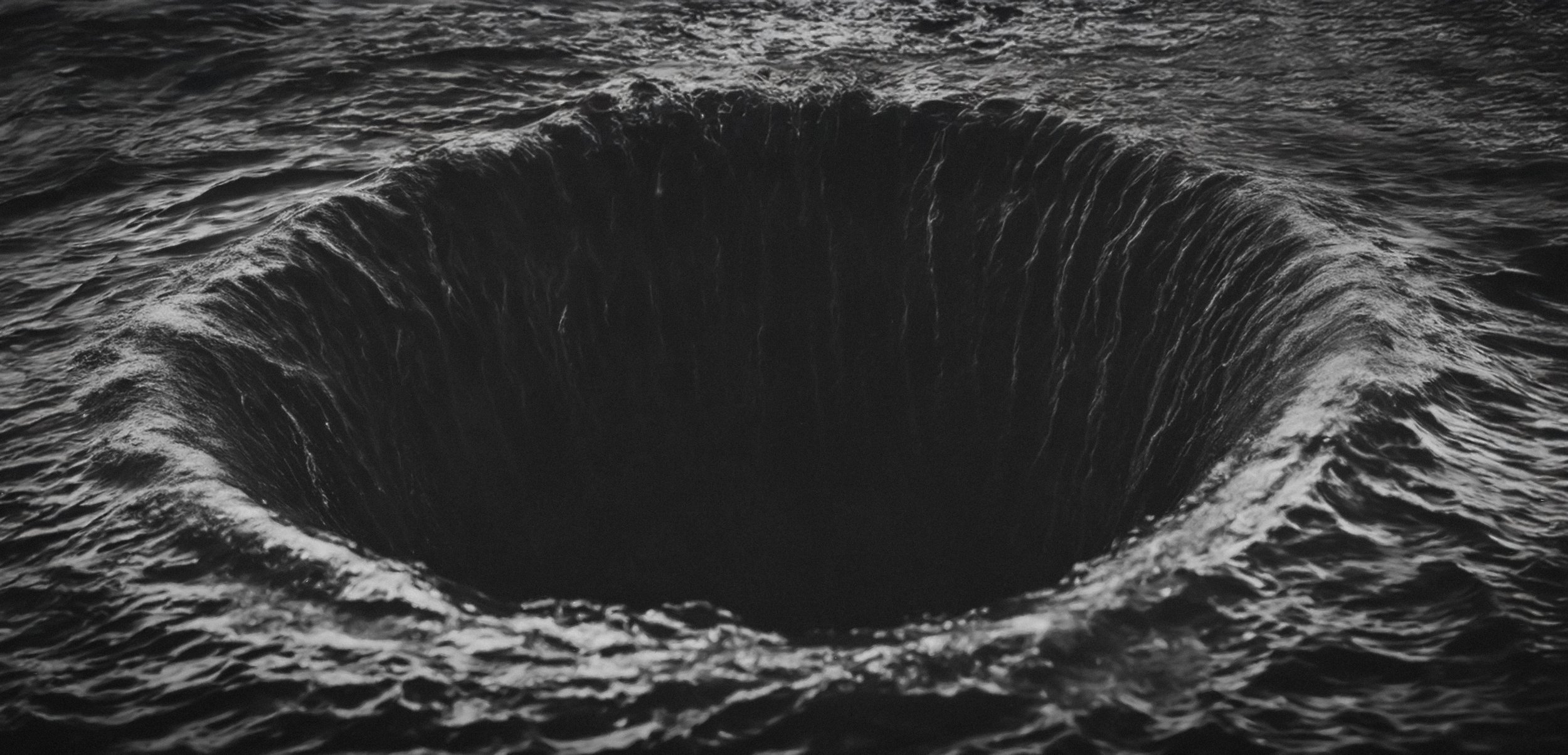
These tone boards explored:
cold, desaturated palette with slight blue-grey bias
shaping objects into abstract forms
merging land with sea
negative space acting as emotional pressure
stark transitions between open dunes and submerged spaces
subtle symbolic details
minimal, slow camera drift
Each study reinforced a sense of emptiness, loss, and slow-building tension.




COLOUR AND LIGHT STUDIES
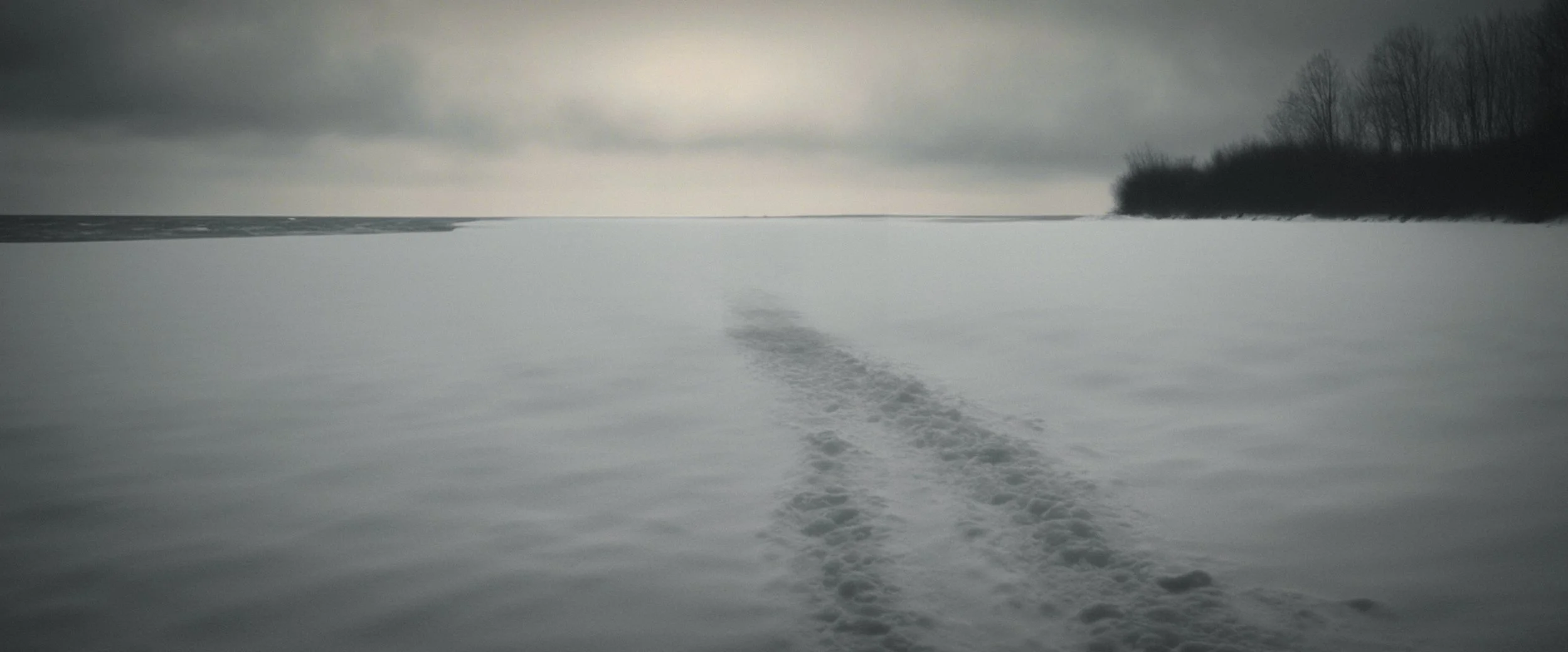
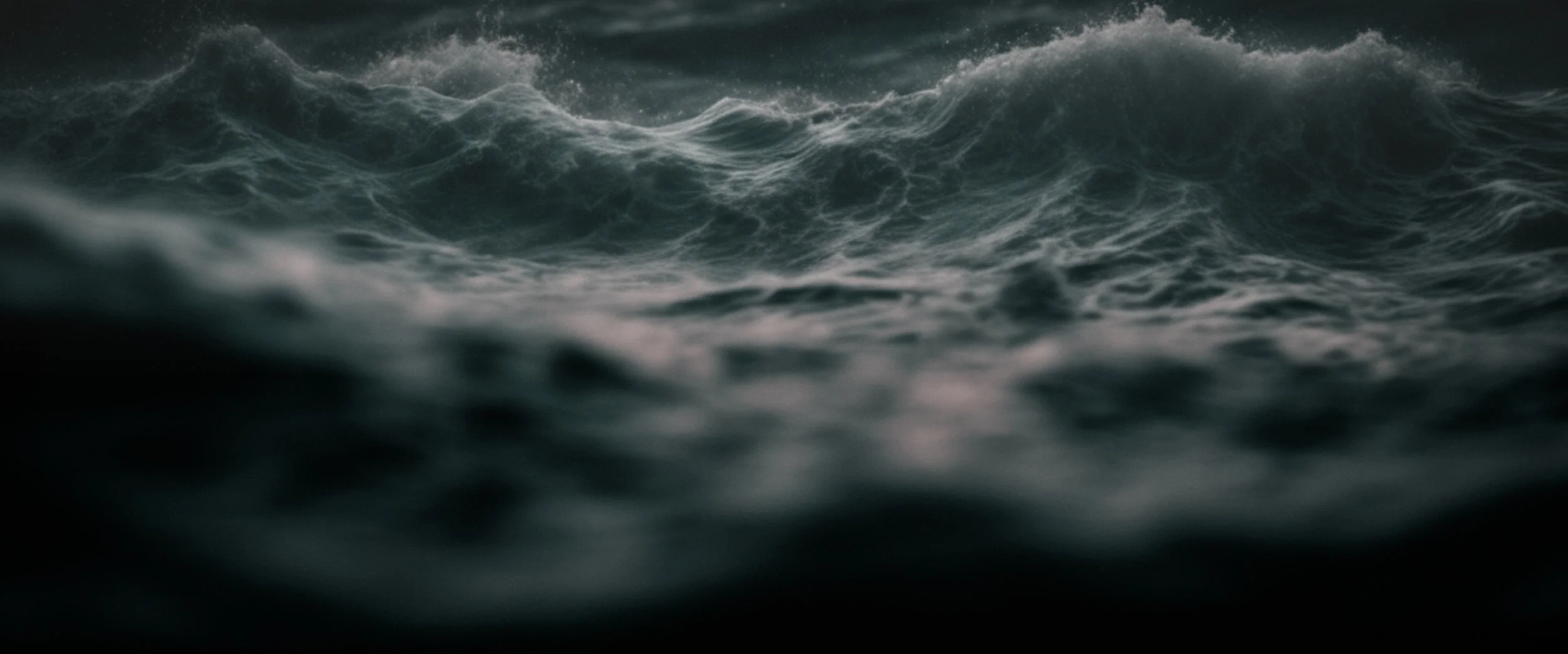
COLOUR & LIGHT STUDIES — ENVIRONMENTAL TONE
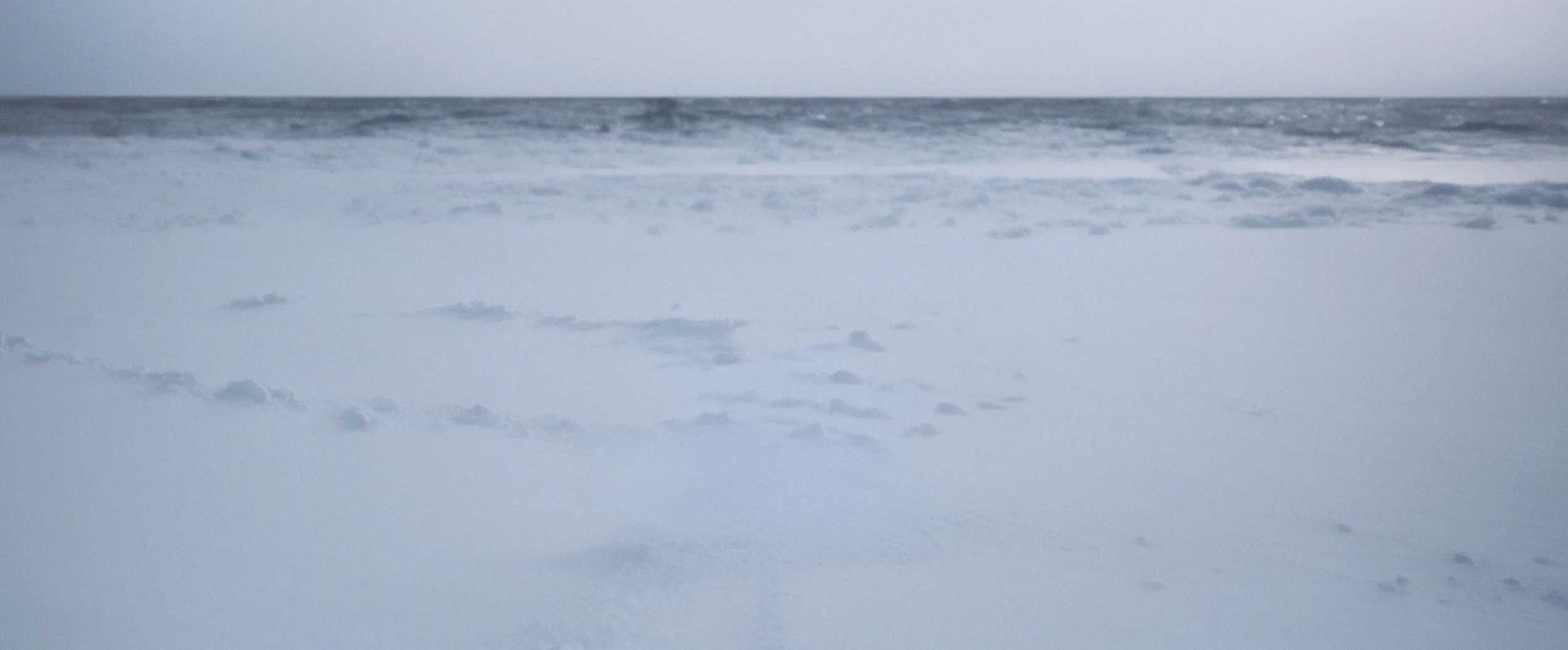
These studies explore the environmental conditions that define the emotional world of Neringa.
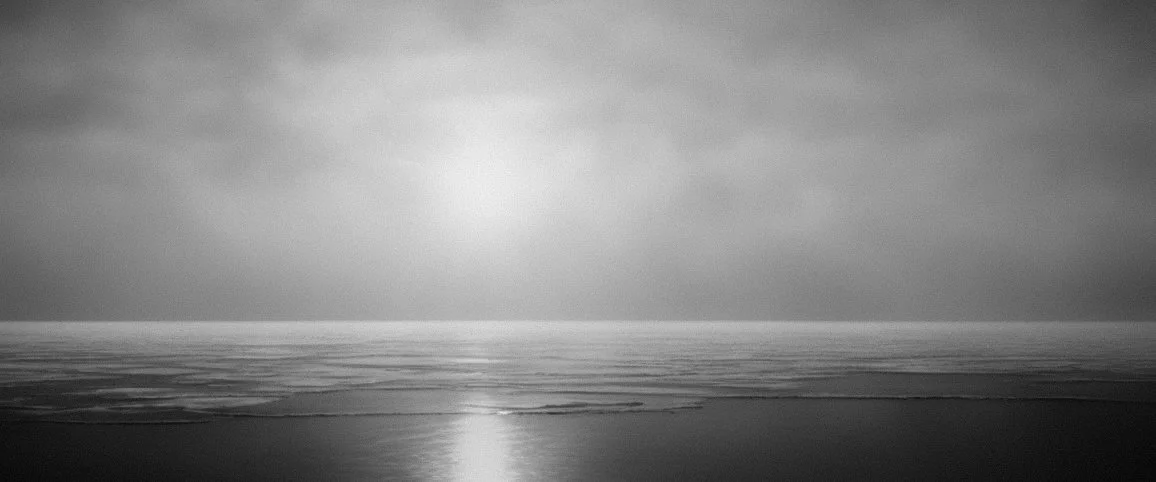
Rather than treating colour as expressive or decorative, the focus was on atmospheric restraint, cold palettes, muted contrast, and natural light that feels distant and unyielding.
The Curonian Spit becomes an emotional landscape as much as a physical one.
Snow, water, horizon lines, and overcast skies establish a sense of isolation, ambiguity, and psychological pressure, themes central to the series.
These frames informed decisions around:
palette limitation
tonal compression
horizon placement
negative space
visual silence
The intention was to create a world where tension is not announced, but slowly accumulates, allowing the title sequence to feel embedded in the environment rather than layered on top of it.

TONE STUDIES — PSYCHOLOGICAL LANDSCAPE
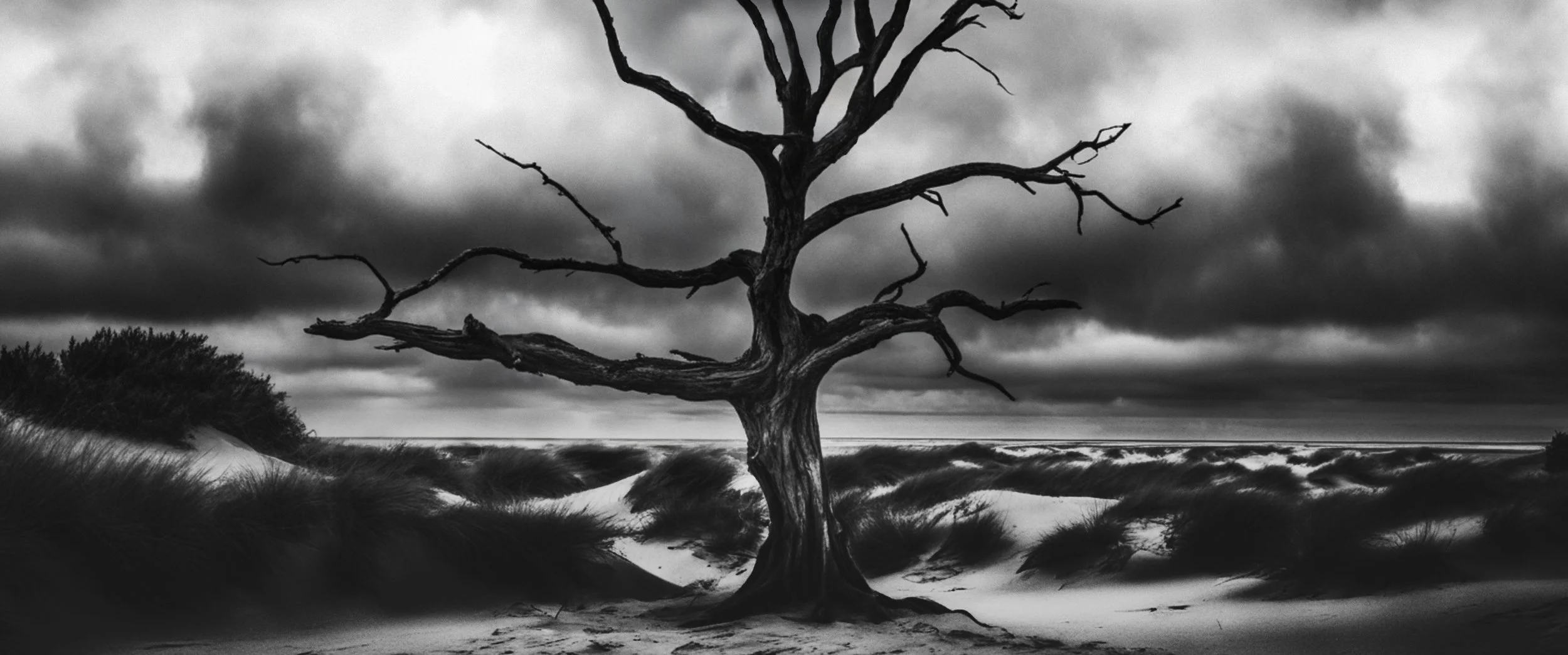
TONE STUDIES — PSYCHOLOGICAL LANDSCAPE
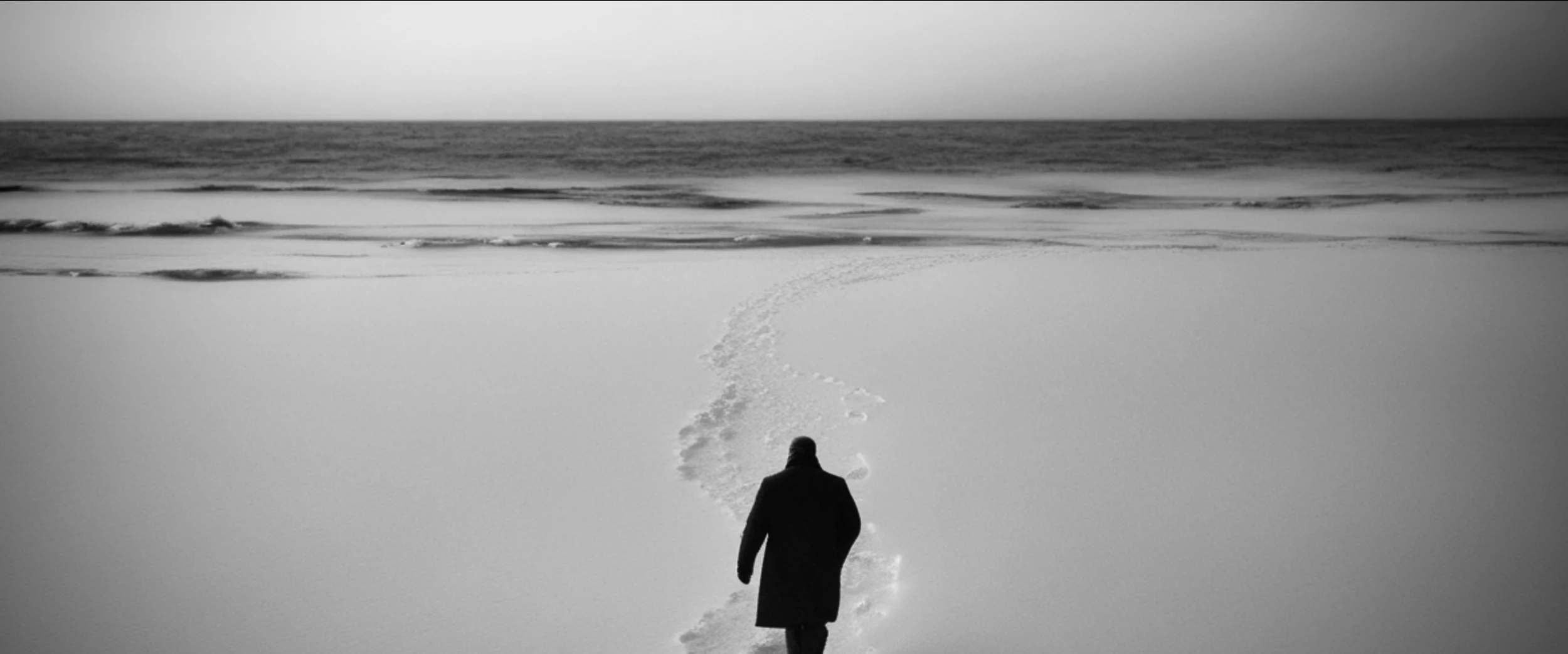
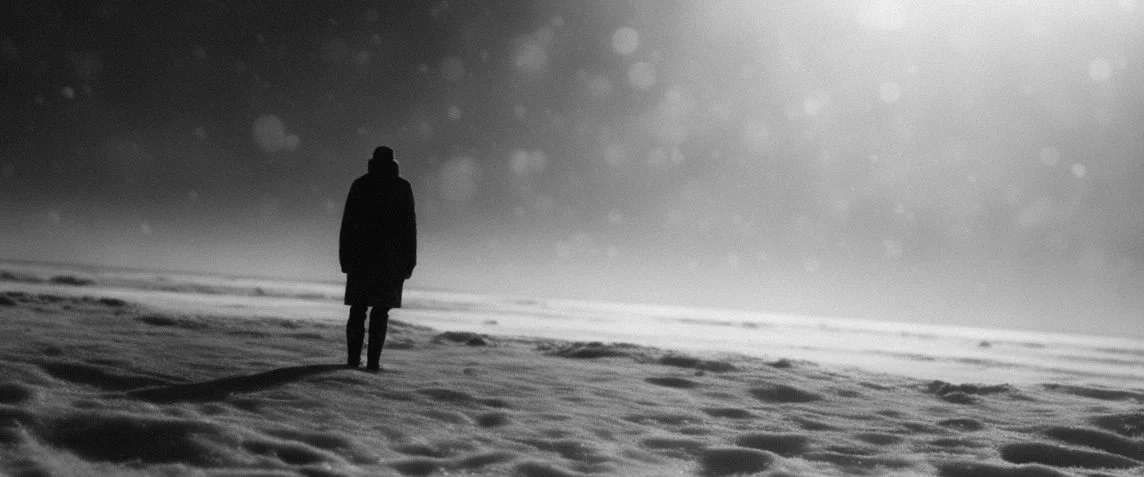
These tone studies explore the emotional and narrative atmosphere of Neringa through image, scale, and absence.
Rather than illustrating story events, the focus is on psychological state, isolation, distance, uncertainty, and the quiet pressure of place.
Human presence is reduced to a single figure or implied through traces: footprints, paths, silhouettes.
This restraint allows the landscape to dominate the frame, positioning the environment as an active force rather than a backdrop.
The imagery tests how tone is carried through:
negative space
horizon placement
scale imbalance between figure and landscape
low-contrast monochrome
softened detail and atmospheric diffusion
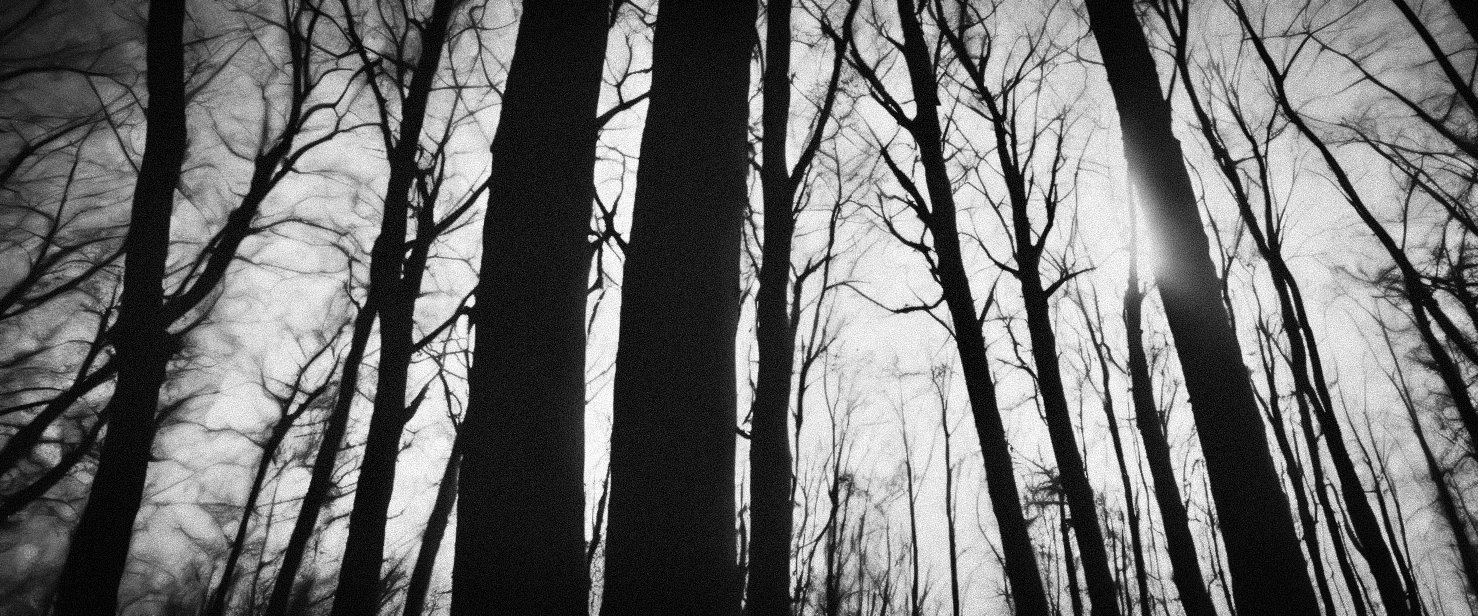
Forests, shorelines, dunes, and snowfields become metaphors for internal states, obscured truth, emotional fatigue, and moral ambiguity.
The intention was to create a visual language where tension accumulates slowly, without overt signals, mirroring the internal experience of the central character.
These studies informed the pacing, framing, and symbolic logic of the title sequence, ensuring that the titles feel psychologically embedded within the world of Neringa, rather than imposed upon it.
Rather than treating colour as expressive or decorative, the focus was on atmospheric restraint, cold palettes, muted contrast, and natural light that feels distant and unyielding.
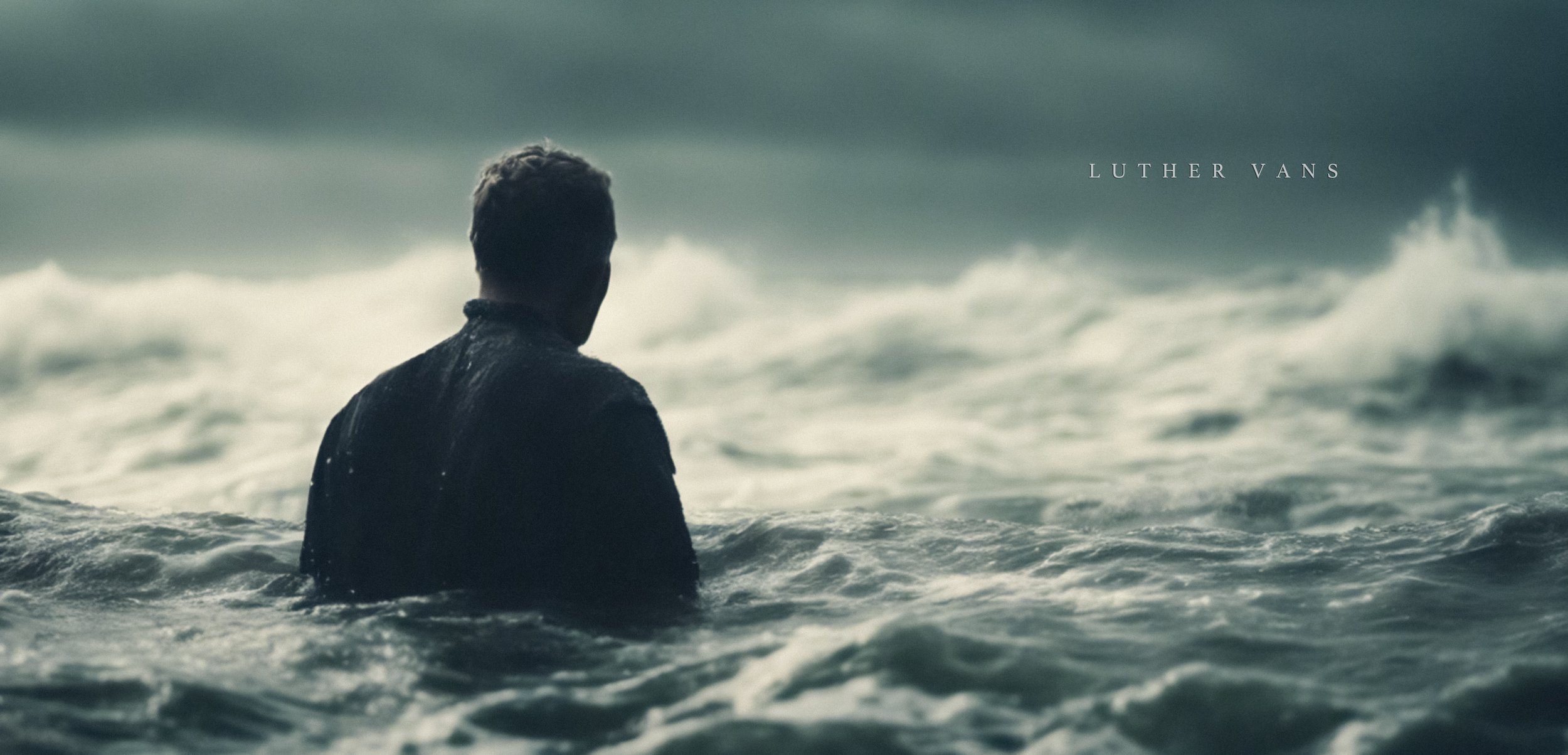
TONE STUDY — SOLITARY FIGURE / SCALE & DISTANCE
PSYCOLOGICAL STUDY — HORIZON & UNCERTAINTY
TONE STUDY — TRACKS, TRACES, ABSENCE

ATMOSPHERIC STUDY — FOREST AS COMPRESSION
LANDSCAPE STUDY — EXPOSURE & SILENCE
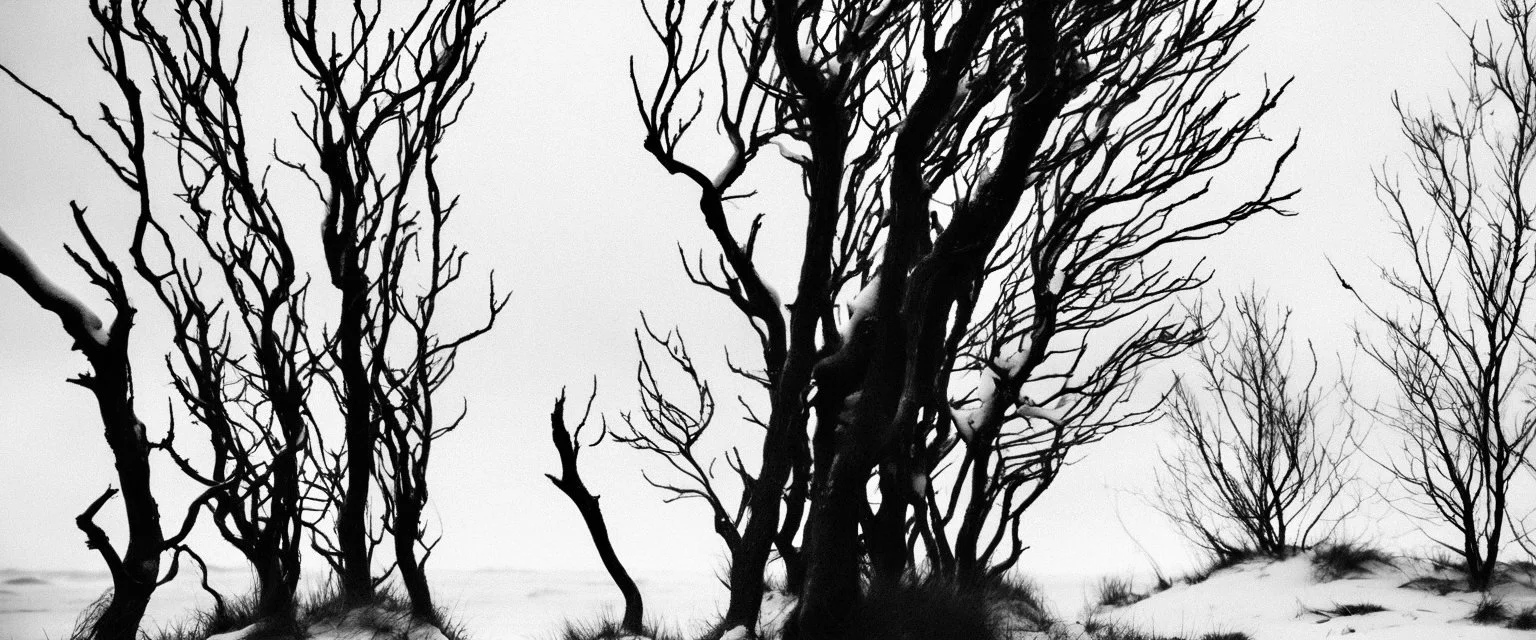
ENVIRONMENTAL METAPHOR — THRESHOLD & VOID
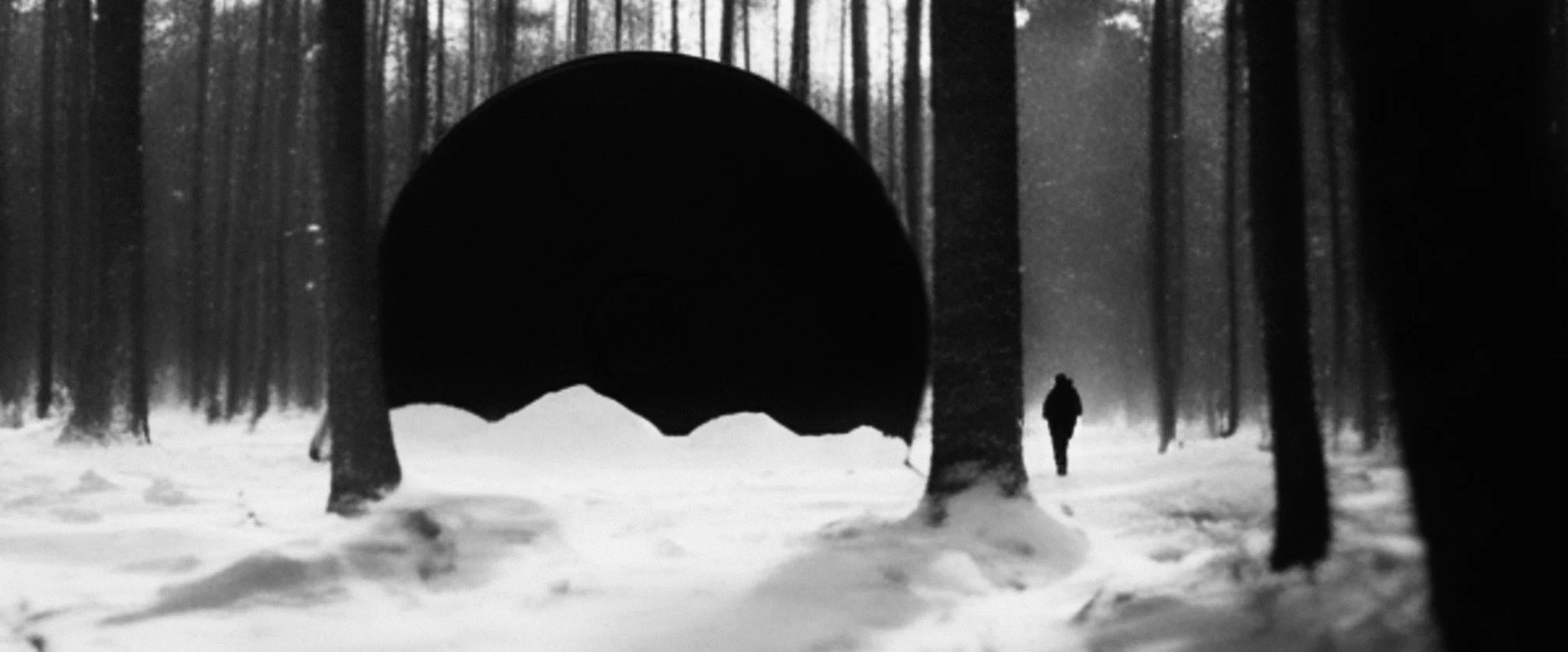
SOURCE MATERIAL. ATMOSPHERE GENERATION STUDIES
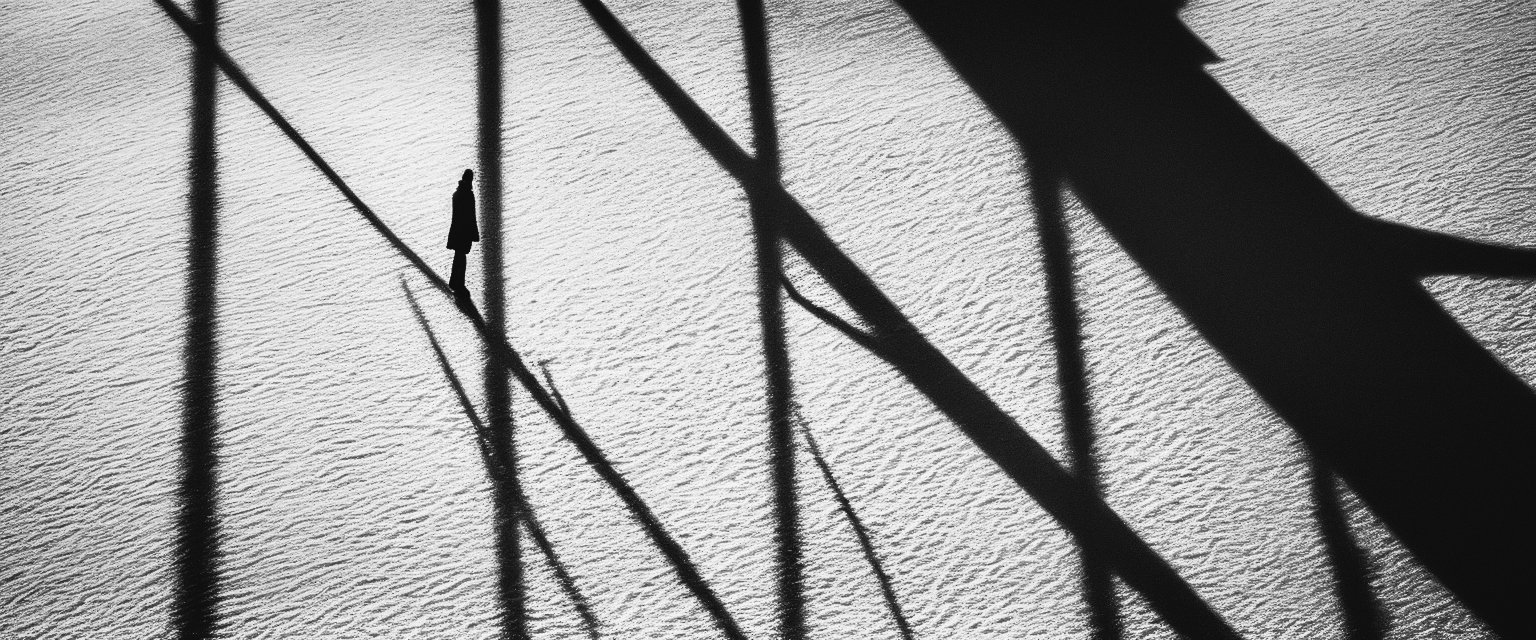
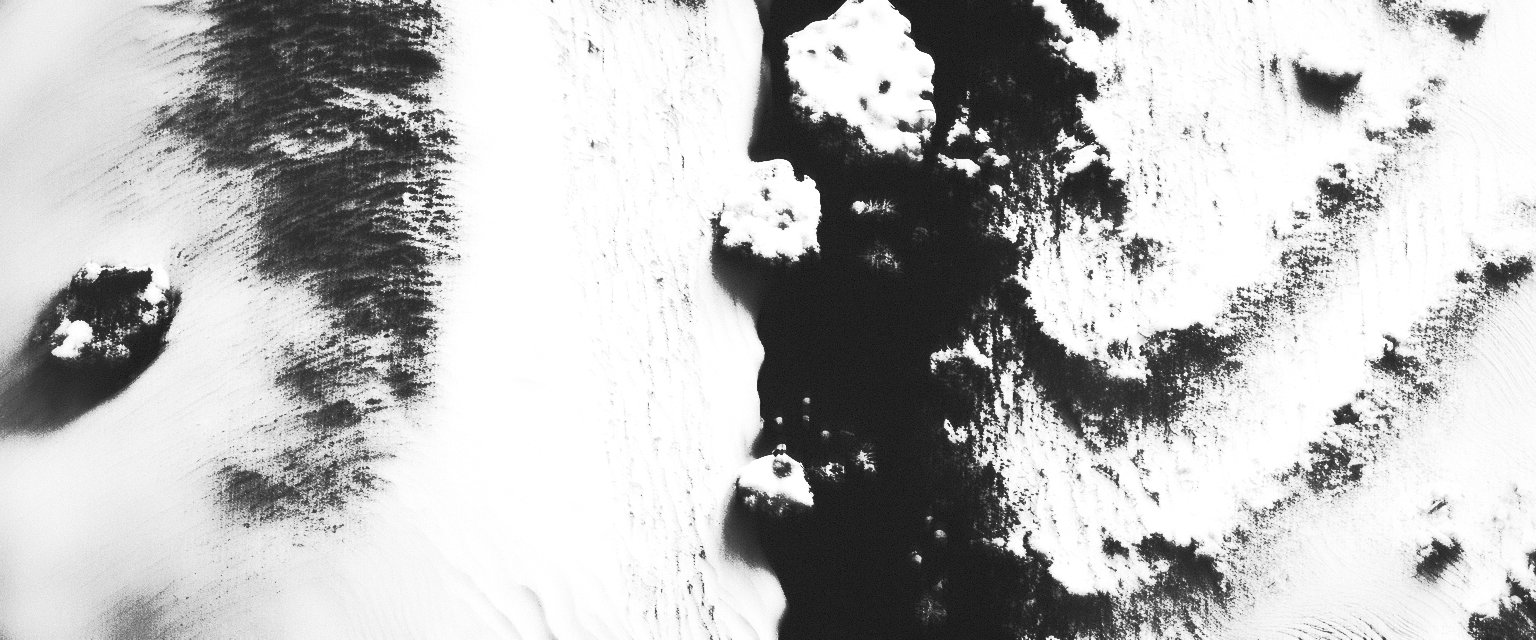
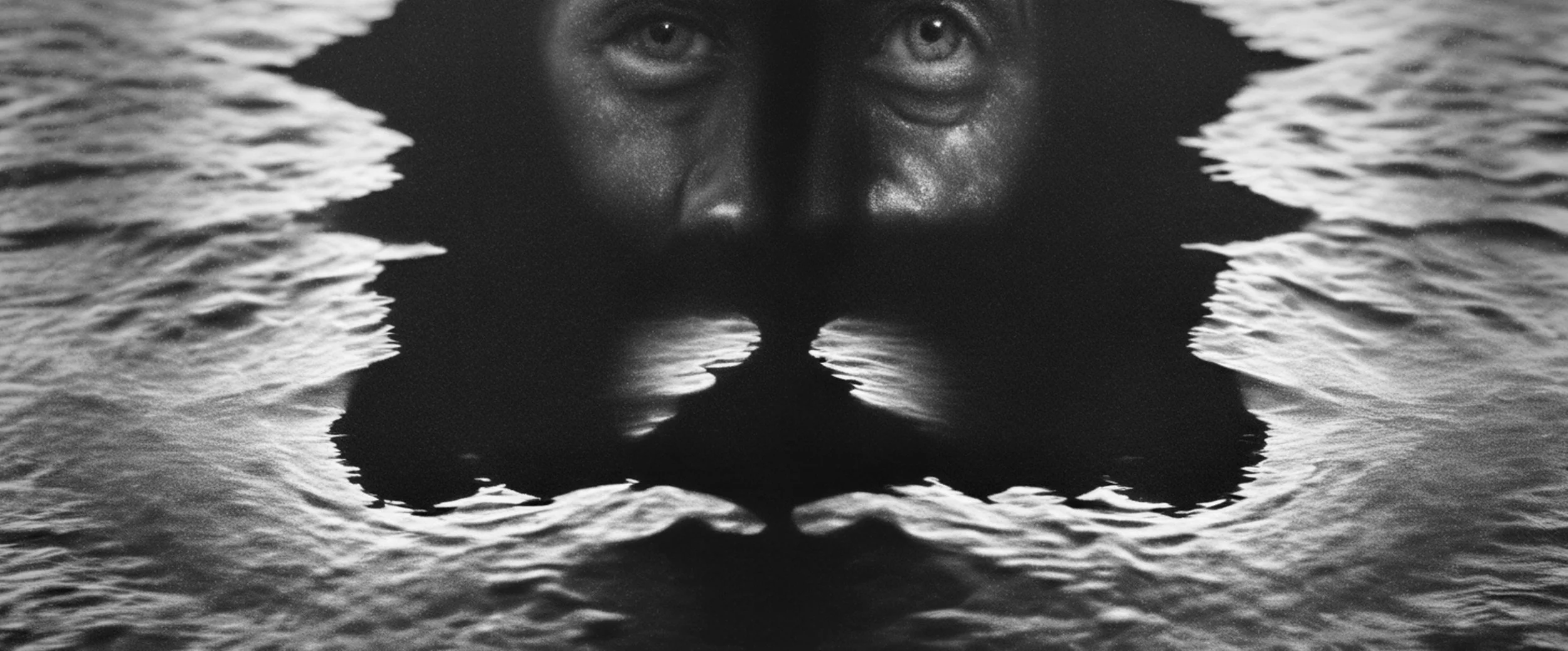
This early phase used AI as a concept development tool to explore winter atmosphere, and surrealist abstract forms referencing imagery from the Curonian Spit.
The objective was not to create final imagery, but to generate raw visual fragments. I curated a large number of generated frames down to a small selection that carried the right emotional tone.
AI provided fragments.
Authorship came through selection, and direction.
Using AI in this way allowed for rapid exploration of environmental tension, negative space, and the abstracted shapes winter creates.
These studies helped define the emotional boundaries of the project before moving into handcrafted visual development.

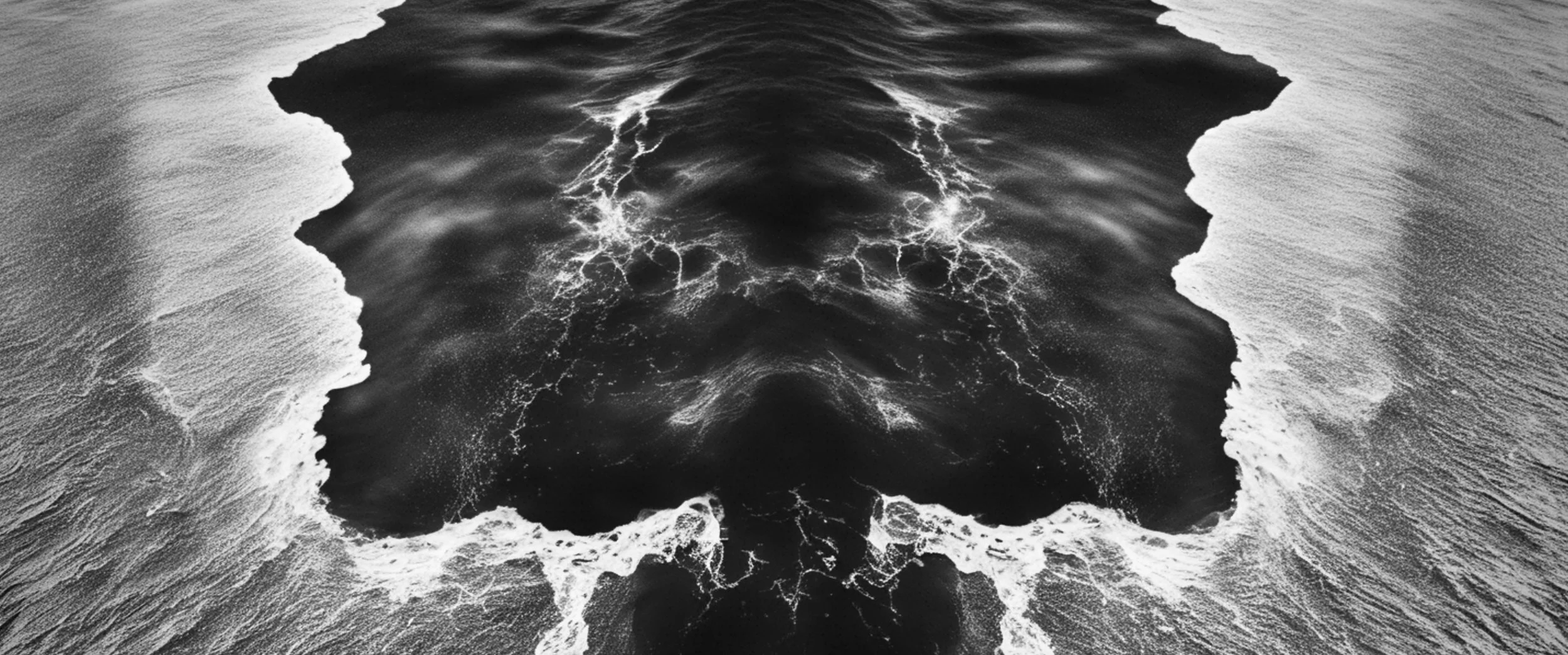
RESULT
A visual exploration of how a title sequence can express the emotional core of a narrative through atmosphere rather than plot.
Developed as an original TCTS studio concept, Neringa investigates how landscape, season, and environmental conditions can function as storytelling devices in their own right. Through restrained motion, fragmented visibility, and psychologically weighted imagery, the sequence establishes a world defined by isolation, ambiguity, and quiet tension.
The result is a title-sequence concept built around silence, absence, and atmosphere, a visual identity for a story that feels both starkly beautiful and quietly unsettling.
CREDITS
Project · TCTS Studio
Role · Concept, Direction & Visual Development
THE FISHERMAN
OVERVIEW
Commissioned by the BBC as an early-stage development project, The Fisherman explored an original animated short-film concept centred on themes of isolation, memory, endurance, and belonging.
Working across story development, visual language, and title-sequence exploration, the project investigated how atmosphere, symbolism, and landscape could shape the emotional identity of the film before production.
Set within a stark monochromatic world of sea, shoreline, and silence, the work used visual restraint, scale, and negative space to express the psychological and emotional conditions of the story.
Through narrative development, character exploration, environmental studies, and cinematic worldbuilding, the project established a coherent visual framework designed to guide both the story and its visual direction from the earliest stages of development.
ANIMATED SHORT FILM
Collaboration with BBC & Easy Animal
CONCEPT
The story centred on a solitary fisherman living at the edge of the sea, a figure suspended between the physical world and an interior landscape shaped by memory, longing, and imagination. Rather than functioning purely as a character, the fisherman became a symbolic presence through which larger themes of isolation, resilience, and hope could be examined.
Visual development focused on creating a world that felt both intimate and mythic. Stark monochromatic imagery, simplified forms, and expansive negative space were used to emphasise emotional atmosphere over literal realism. The coastline, sea, weather, and surrounding environment were conceived as extensions of the protagonist’s internal state, allowing landscape and character to become inseparable.
The project explored how visual language could carry narrative meaning through mood, symbolism, and composition. Character design, environment studies, and title-sequence concepts were developed in parallel to establish a coherent emotional identity for the film from its earliest stages.
The resulting work formed a visual framework built around absence, scale, and quiet observation, investigating how an animated film might communicate complex emotional experiences through atmosphere as much as story.
VISUAL DEVELOPMENT
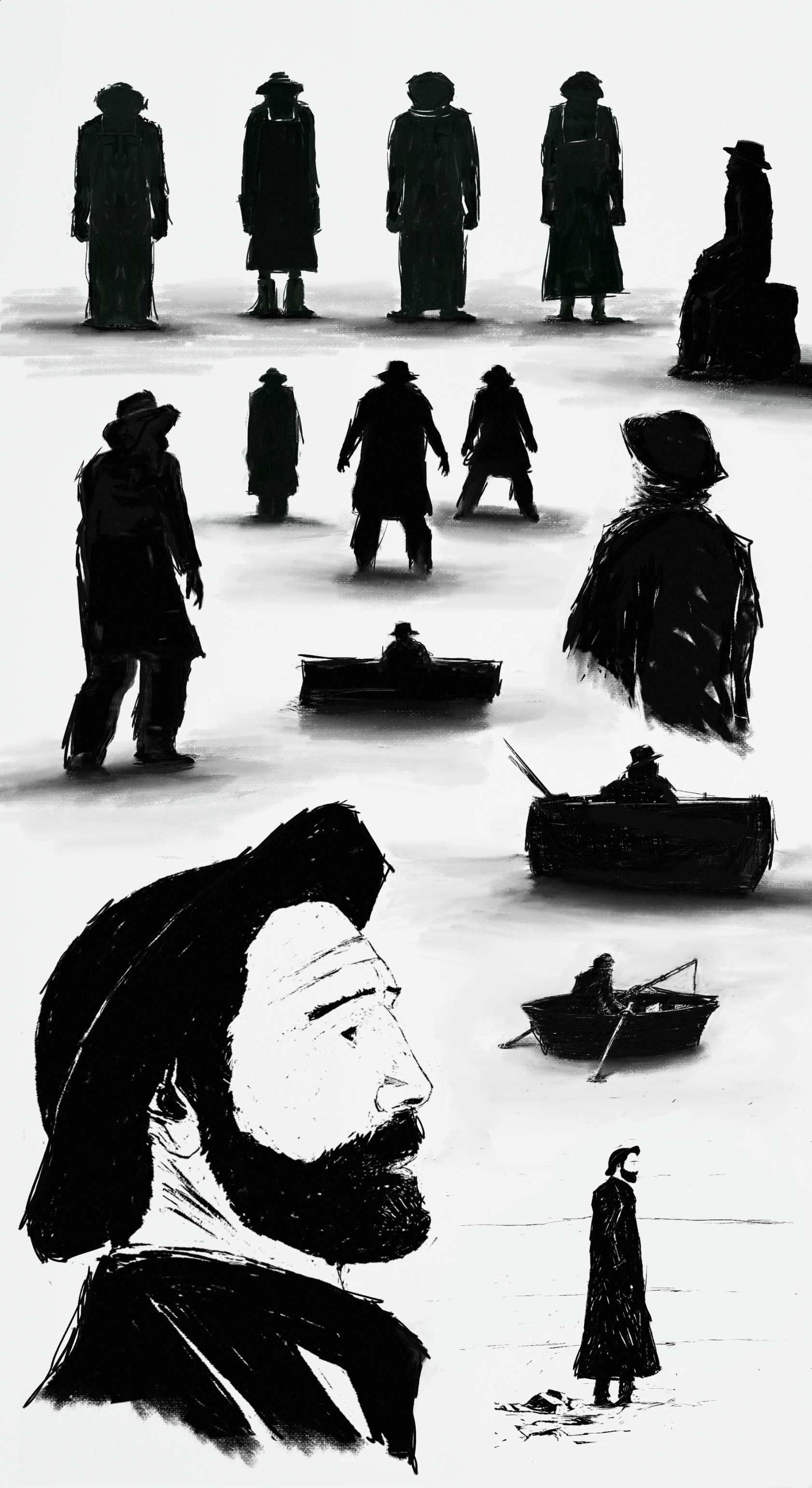
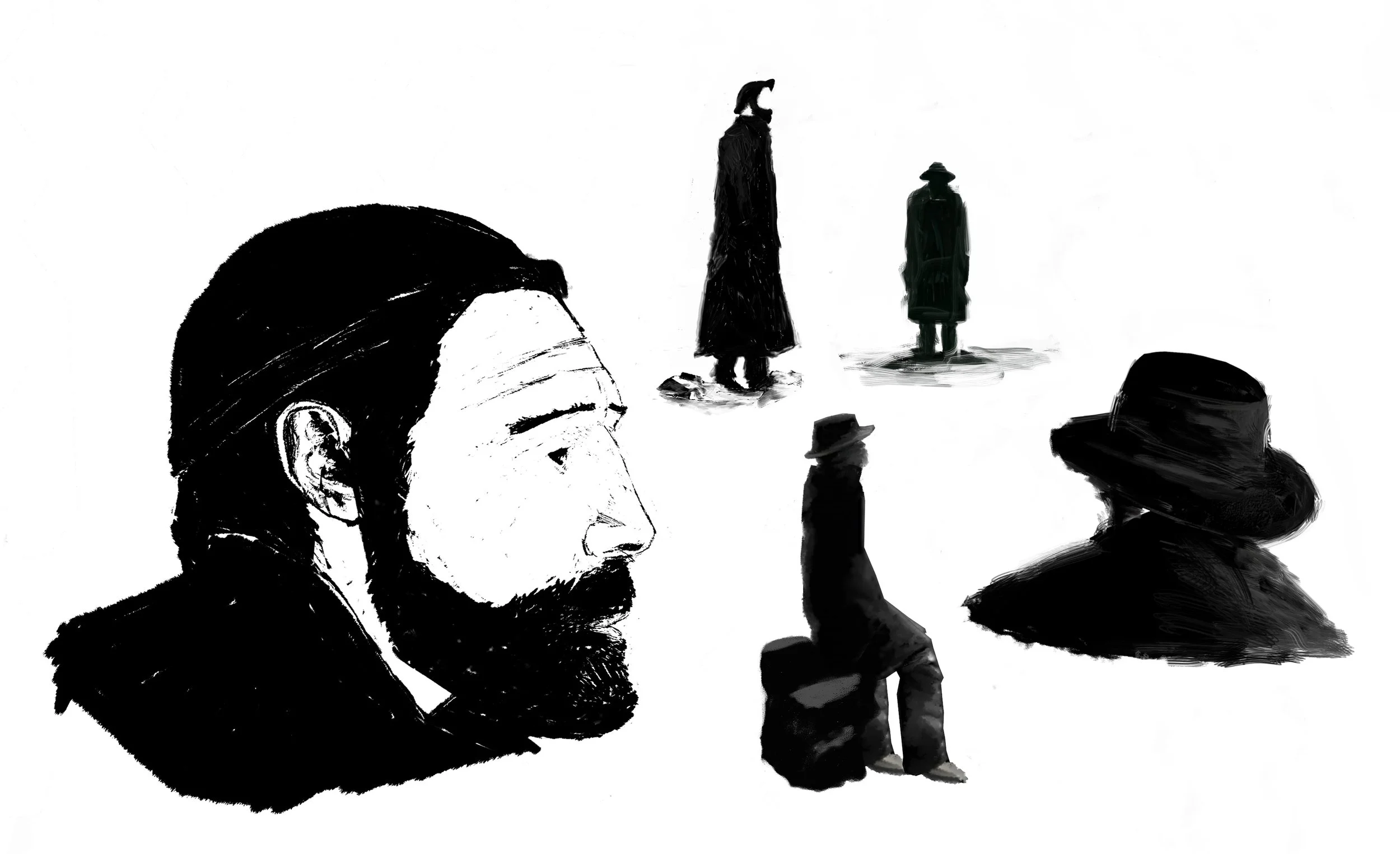
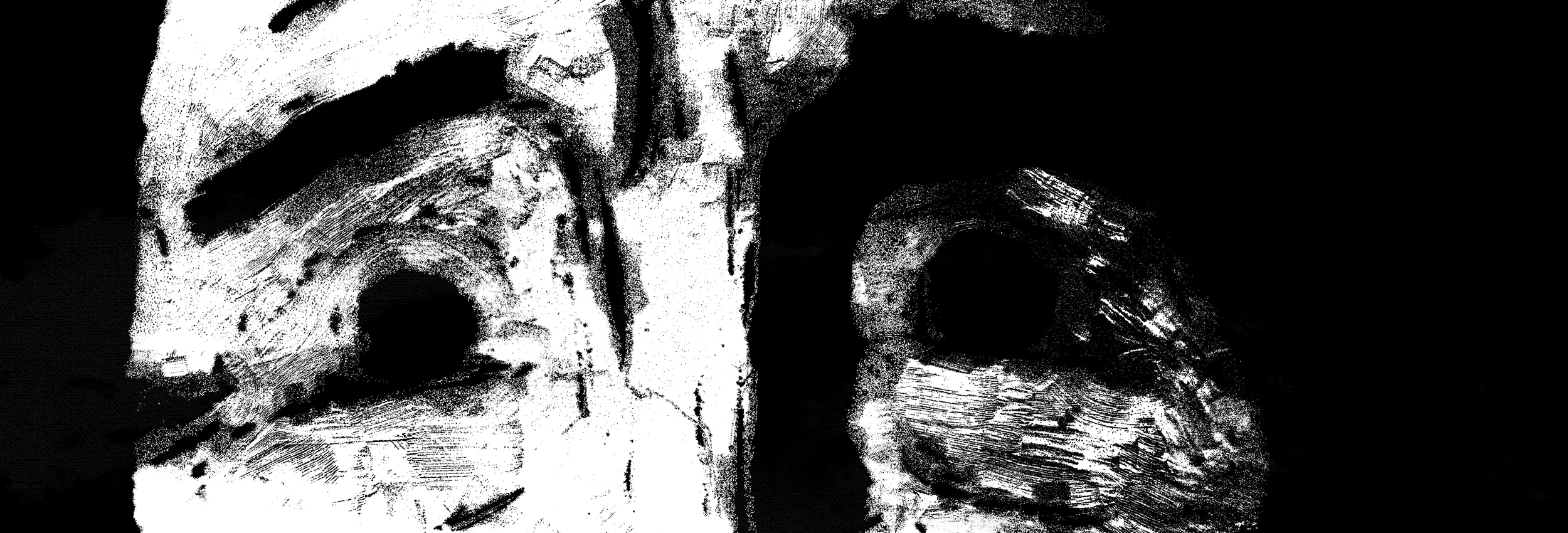
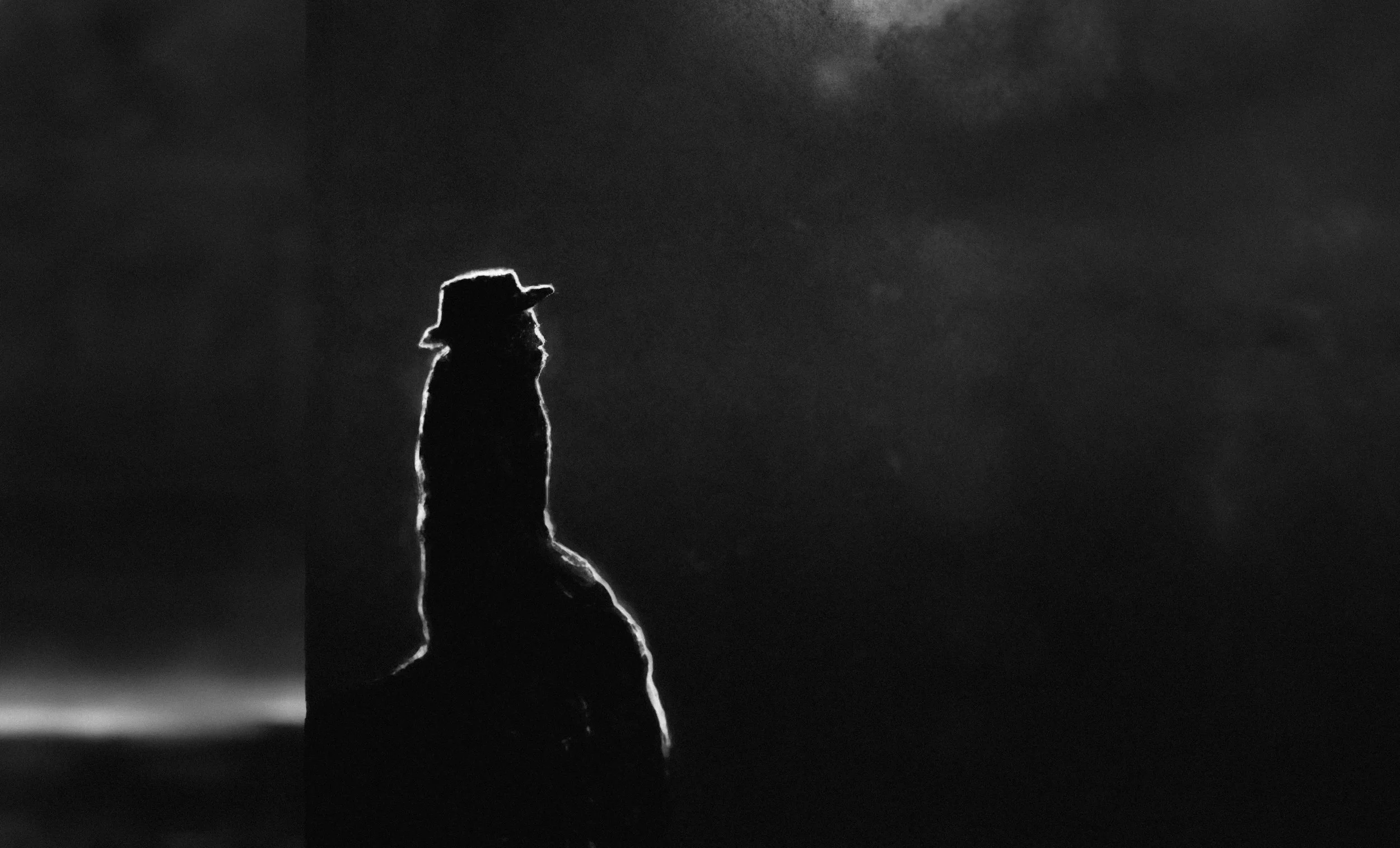
Character — Visual Development
Explorations of form, silhouette, expression, and emotional presence for The Fisherman.
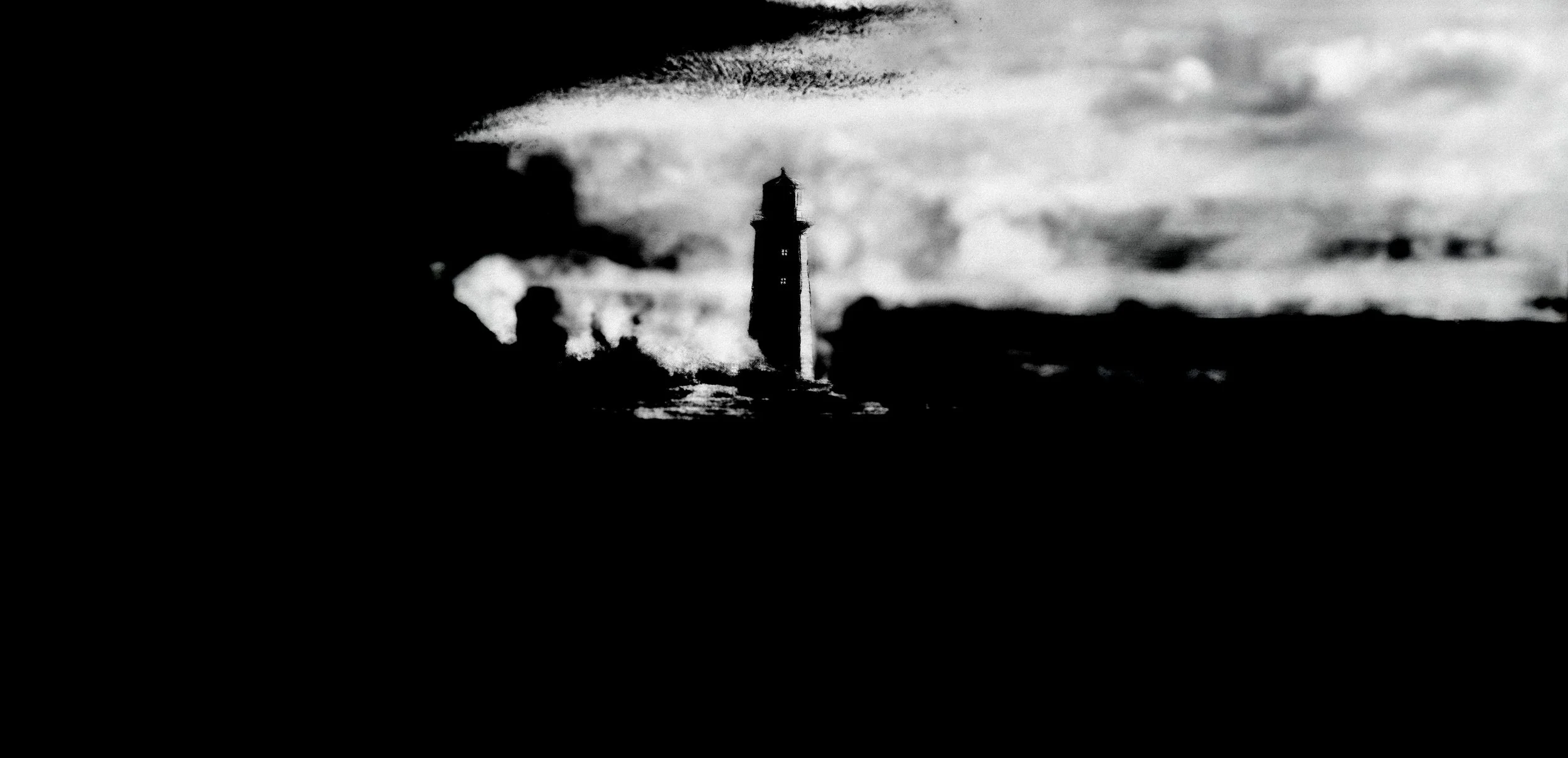
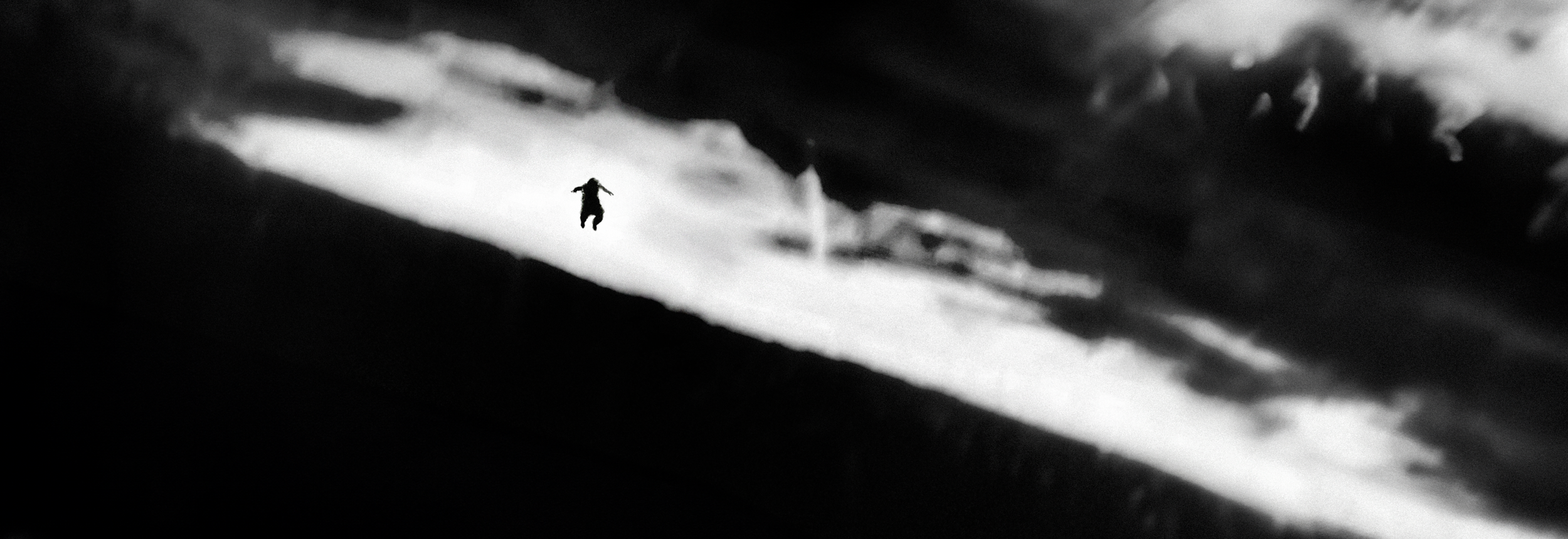
Environment & ATMOSPHERE — Visual Development
Early studies investigating mood, isolation, and environmental presence, aswell as landscape, setting, and narrative world-building.
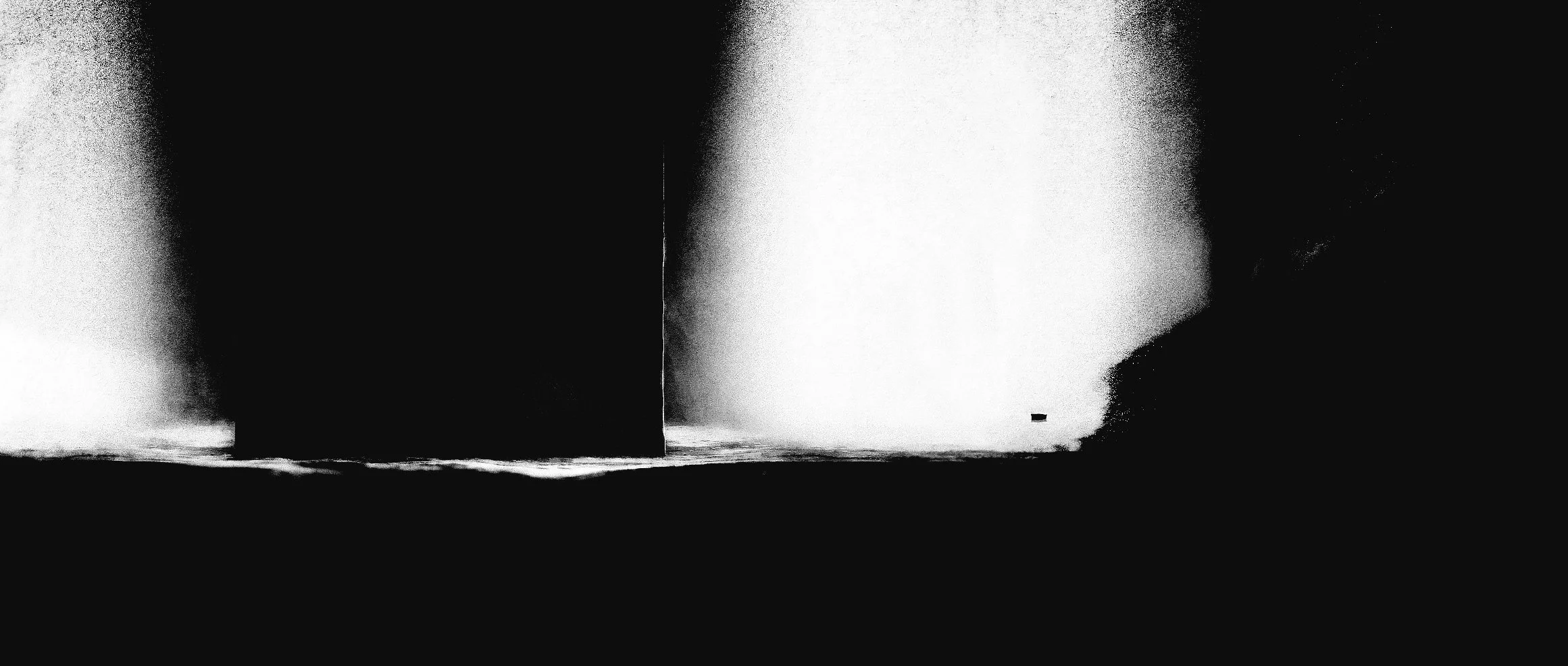
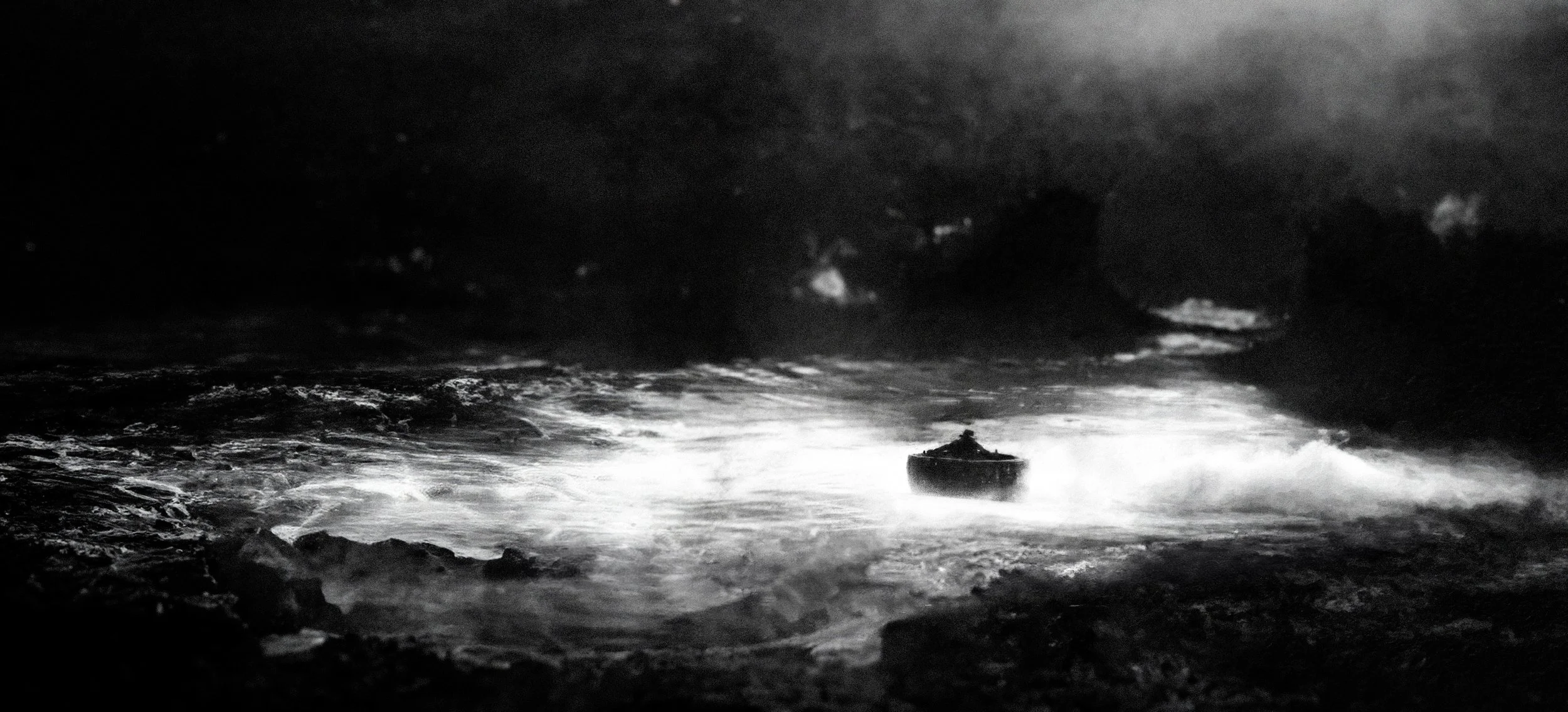
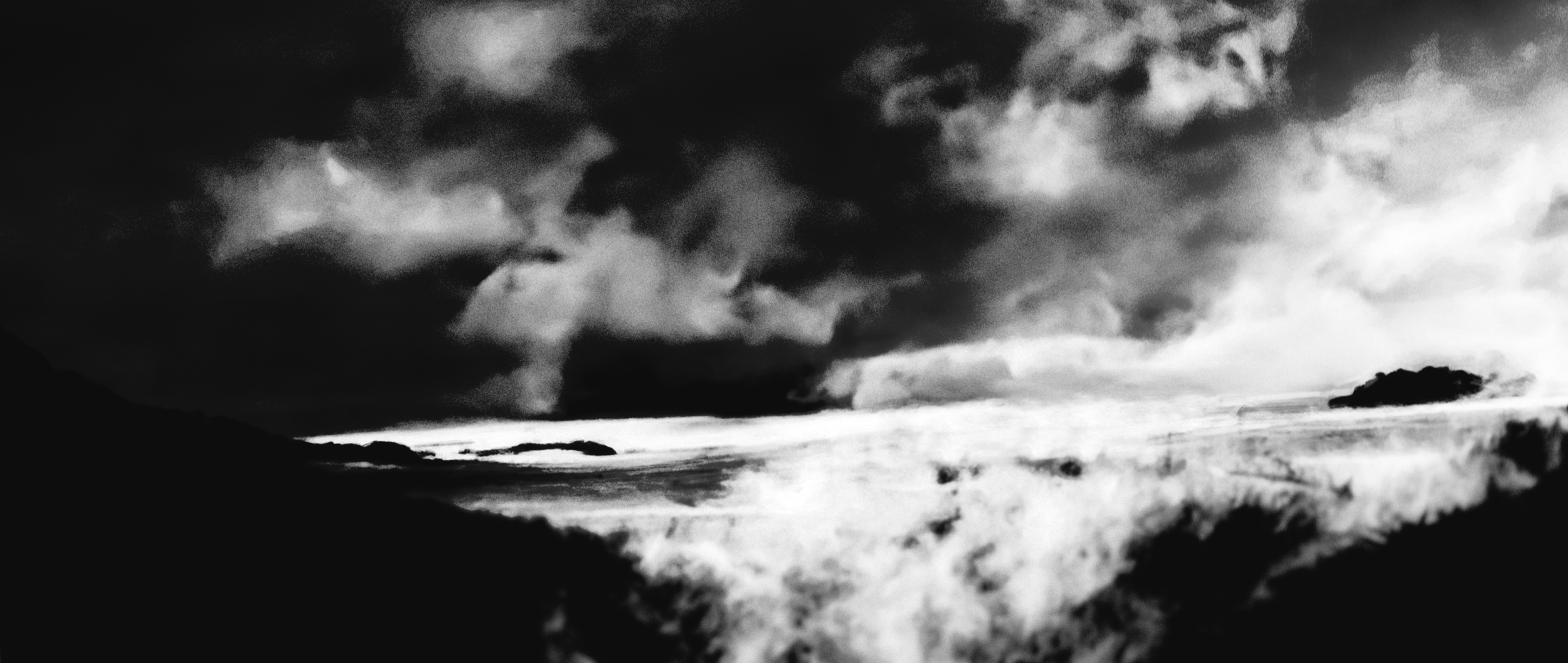
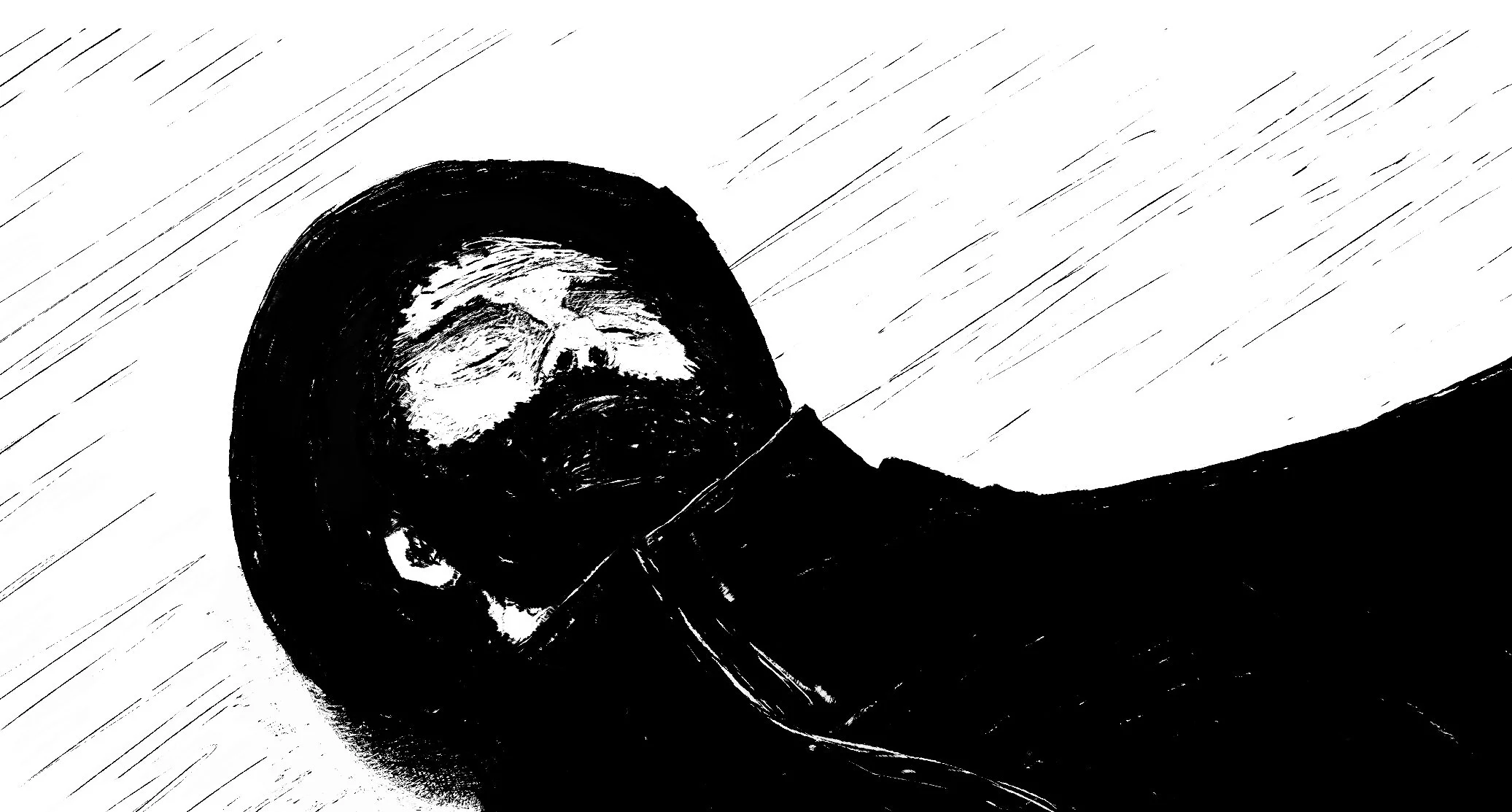
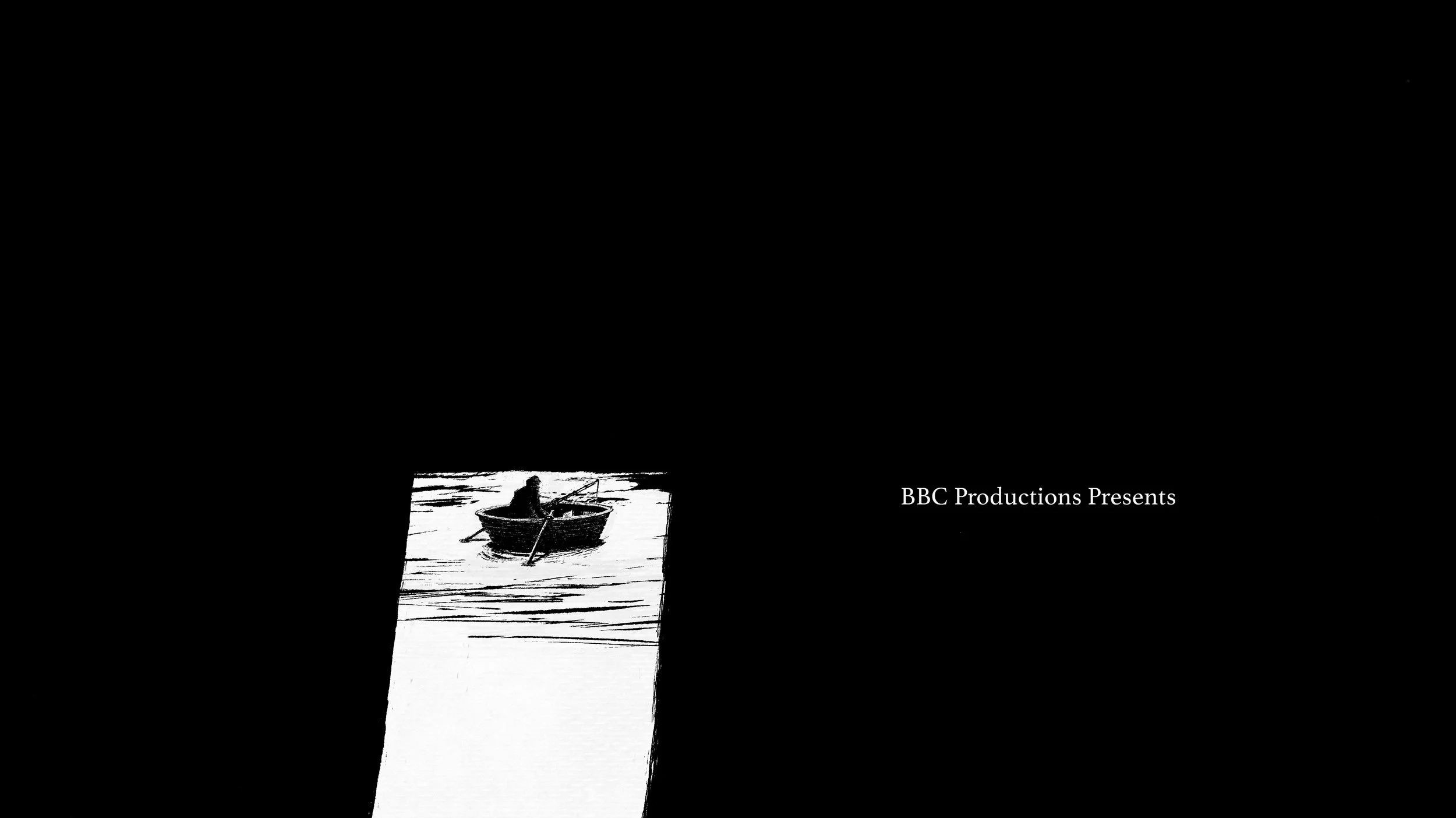
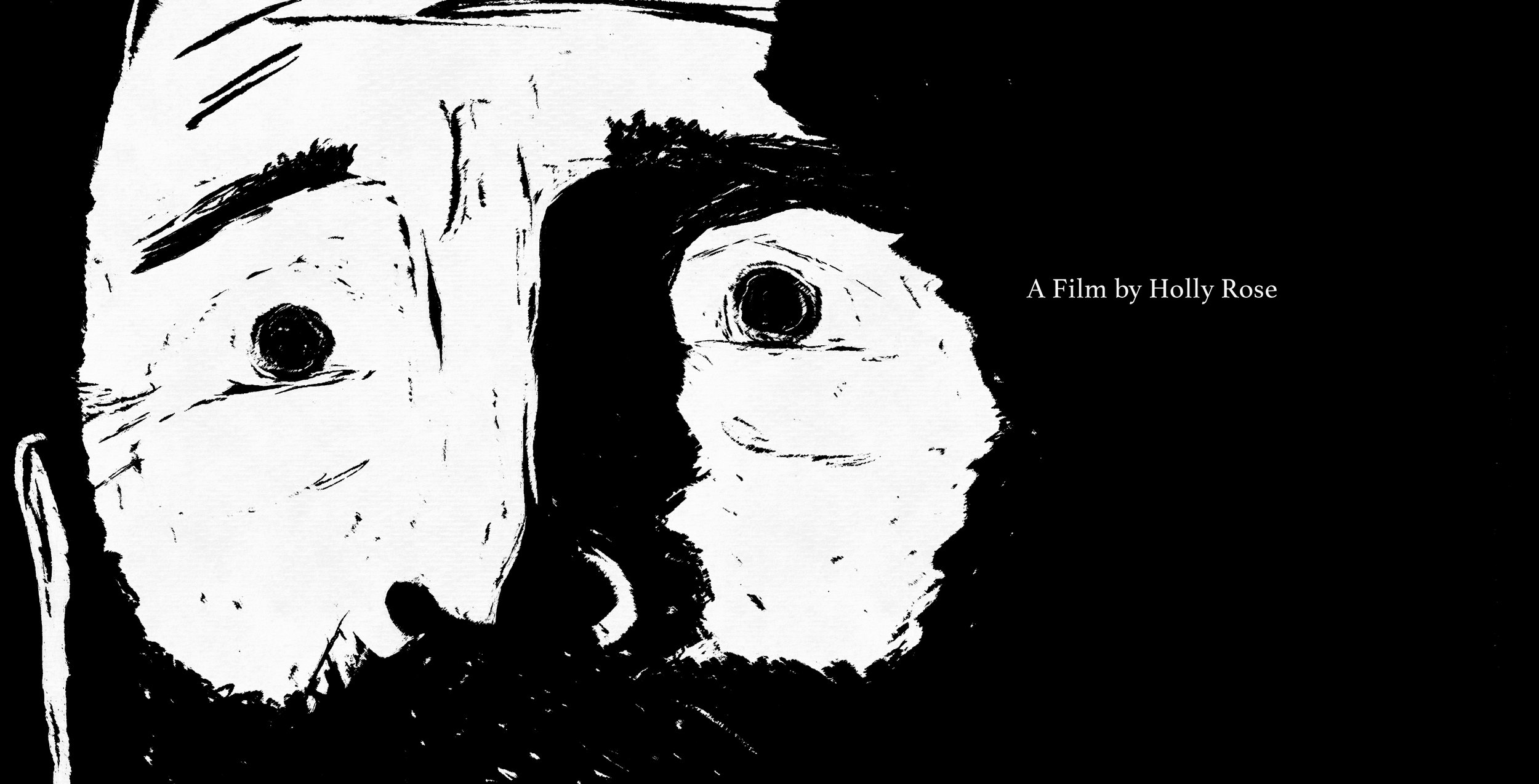
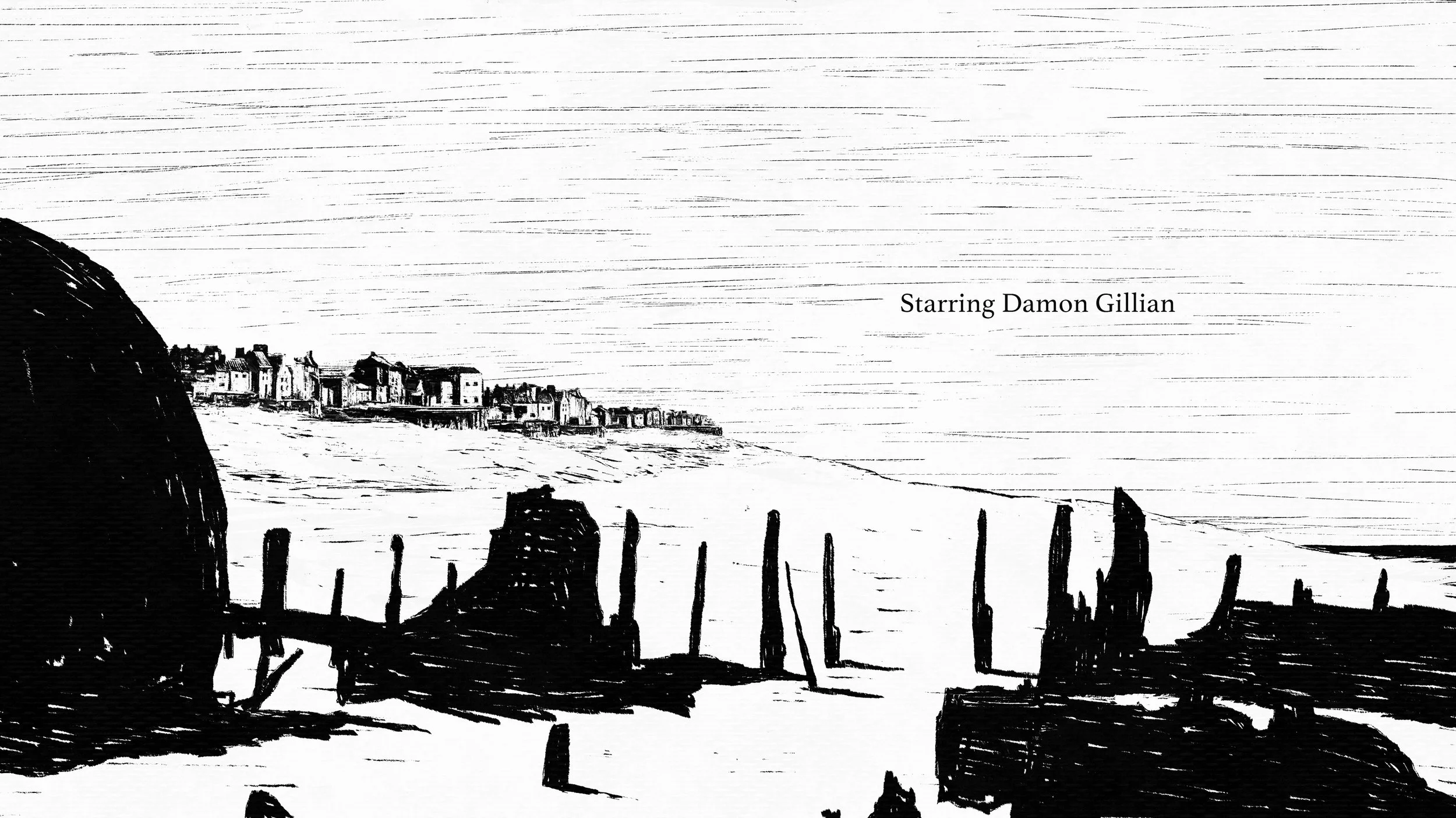
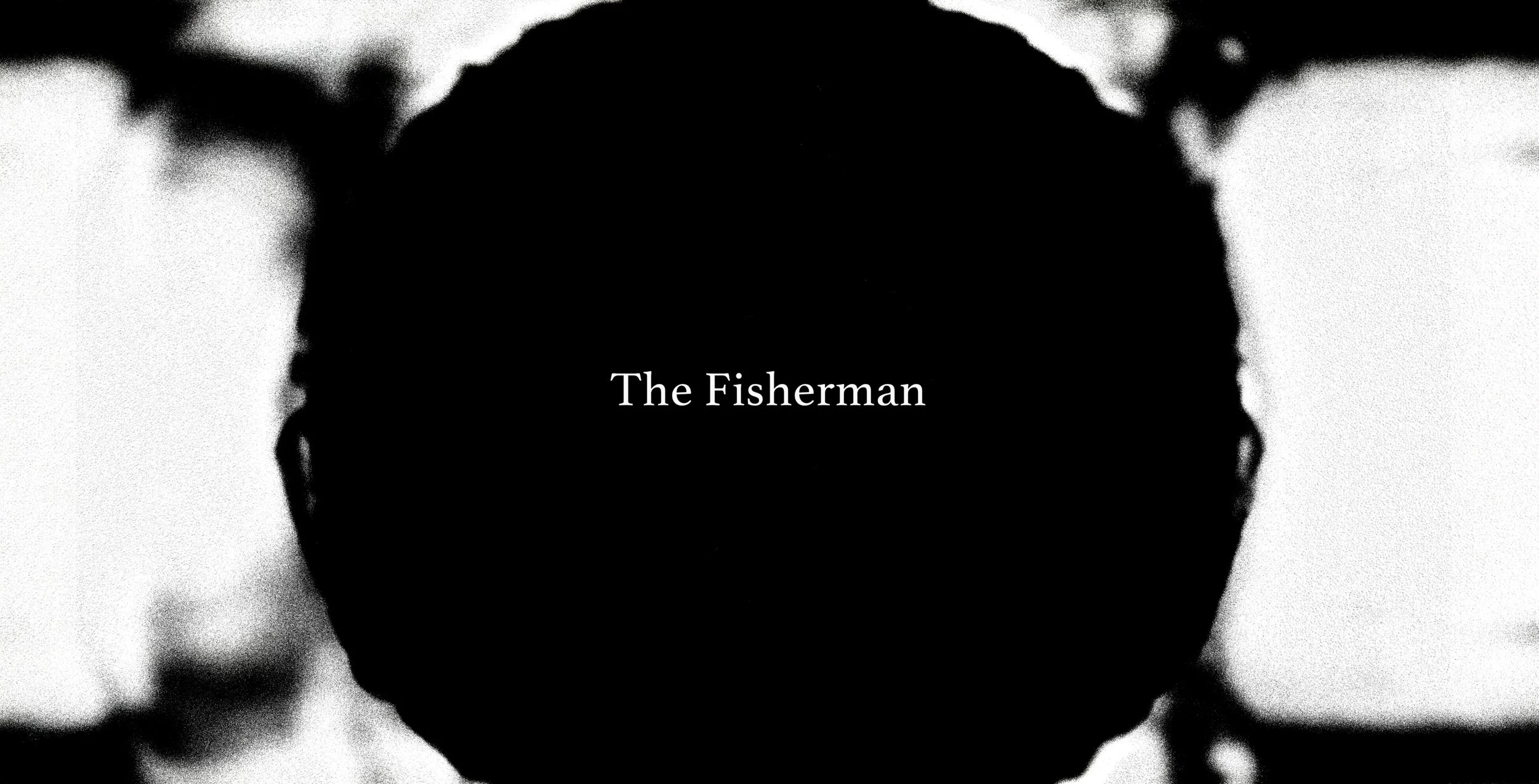
Title Sequence — Concept Frames
Studies in atmosphere, symbolism, and emotional tone.

RESULT
The project established a coherent narrative and visual framework for an original animated short-film concept, defining its emotional tone, symbolic language, and cinematic identity during early development.
Through story creation, character exploration, environmental studies, and title-sequence concepts, The Fisherman investigated how atmosphere, landscape, and visual restraint could function as primary storytelling tools. Rather than relying on exposition, the work explored how silence, scale, and imagery might communicate themes of isolation, memory, endurance, and belonging.
The resulting body of work demonstrated how narrative development and visual development can evolve together, using atmosphere and symbolism to shape a story world from its earliest stages.
Commissioned by the BBC as a development project, The Fisherman remains a strong example of concept-led storytelling, where visual language was used not simply to illustrate a narrative, but to help discover and define it.
CREDITS
Project · The Fisherman
Studio · BBC / Easy Animal
Role · Story Development, Visual Development & Title Design
A GOOD AMERICAN
OVERVIEW
For the feature documentary A Good American, I helped develop a visual language for the film’s central narrative: the existence of a global surveillance and data-analysis system.
The challenge was to translate invisible information flows, networks, and patterns of observation into a coherent cinematic framework that could support the documentary’s storytelling without overwhelming it.
Working closely with the wider creative team, the visual development process explored how abstract systems could be represented through form, motion, scale, and spatial relationships, creating imagery that felt analytical, atmospheric, and emotionally resonant.
The aim was not to illustrate technology directly, but to make complex ideas visible, allowing audiences to intuitively understand the hidden structures operating beneath the story.
FEATURE DOCUMENTARY
Collaboration with Up Creatives
CONCEPT
The approach treated data not as graphics, but as a living environment, an immense, interconnected network shifting between clarity and overload.
The visual system needed to:
communicate complexity
suggest surveillance at scale
reveal patterns without over-explaining
carry emotional weight
integrate seamlessly with real-world interviews and archival footage
The design drew on principles of signal behaviour, rhythmic patterning, and computational architecture.
VISUAL LANGUAGE
TONE STUDIES
A deeper exploration of global data structure, scale, and systemic tension.
These studies examine how a global intelligence network might behave when visualised not as a flat information layer, but as a three-dimensional, planet-scale system.
Each exploration focuses on a different relationship between structure, density, fragility, and collapse, using spherical topology as a metaphor for global interconnectedness.
The imagery tests how data gathers, disperses, fractures, and binds, forming the backbone of the project’s visual logic.
Early explorations focused on:
node-based lattice structures
cascading signal pathways
light pulses travelling through unknown architectures
transitions between micro and macro data scales
density and overload moments reflecting narrative tension
SPHERICAL STUDY 01 — GLOBAL NODE DISTRIBUTION
A structural look at how information points distribute across a spherical surface, forming early logic for node density and network mapping.

SPHERICAL STUDY 02 — SIGNAL WEB TOPOLOGY
Examines how signal paths interconnect across a curved surface, creating a complex web of global communication.
This study informed the system’s behaviour under stable conditions.

System Motion Study — Global Network
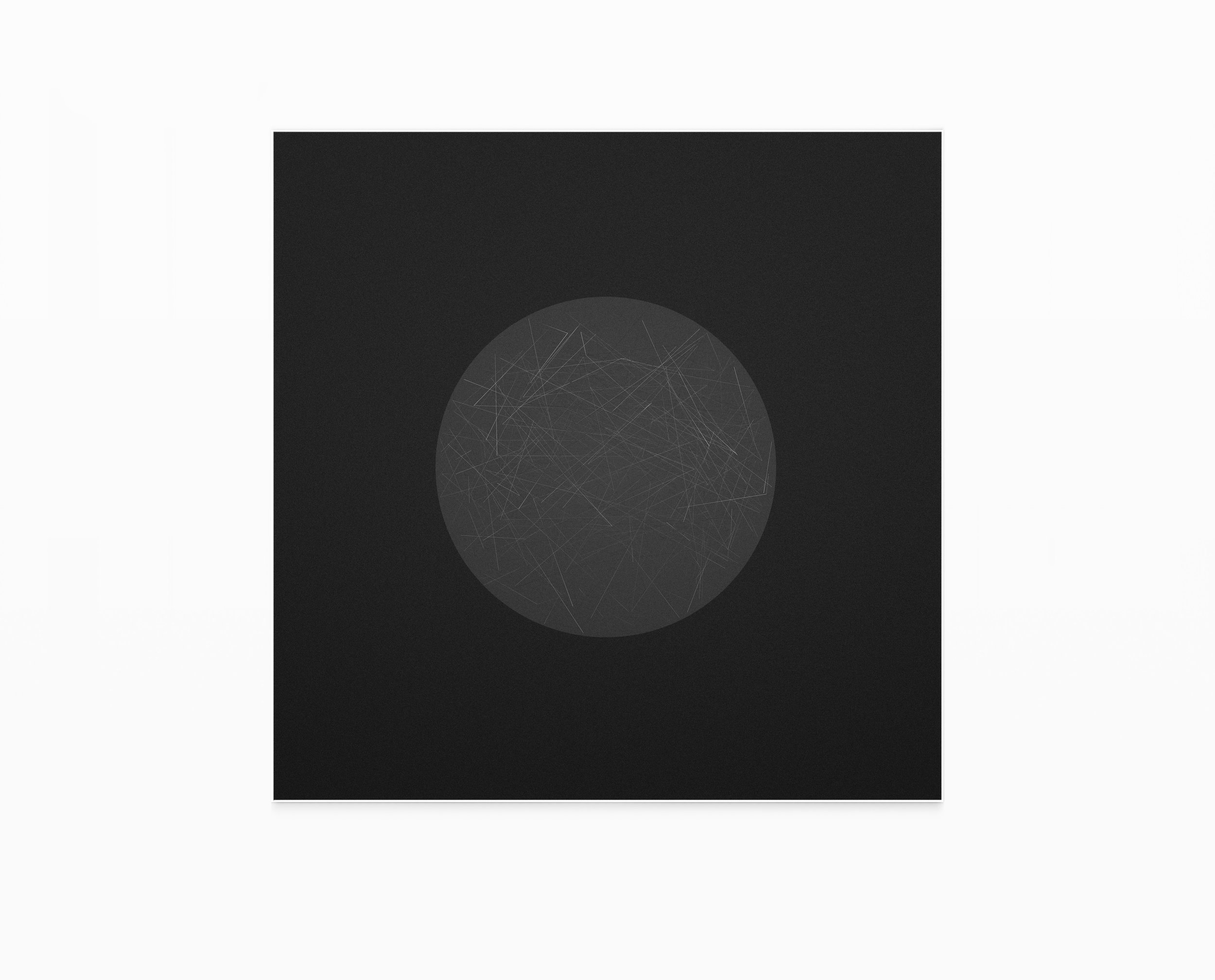
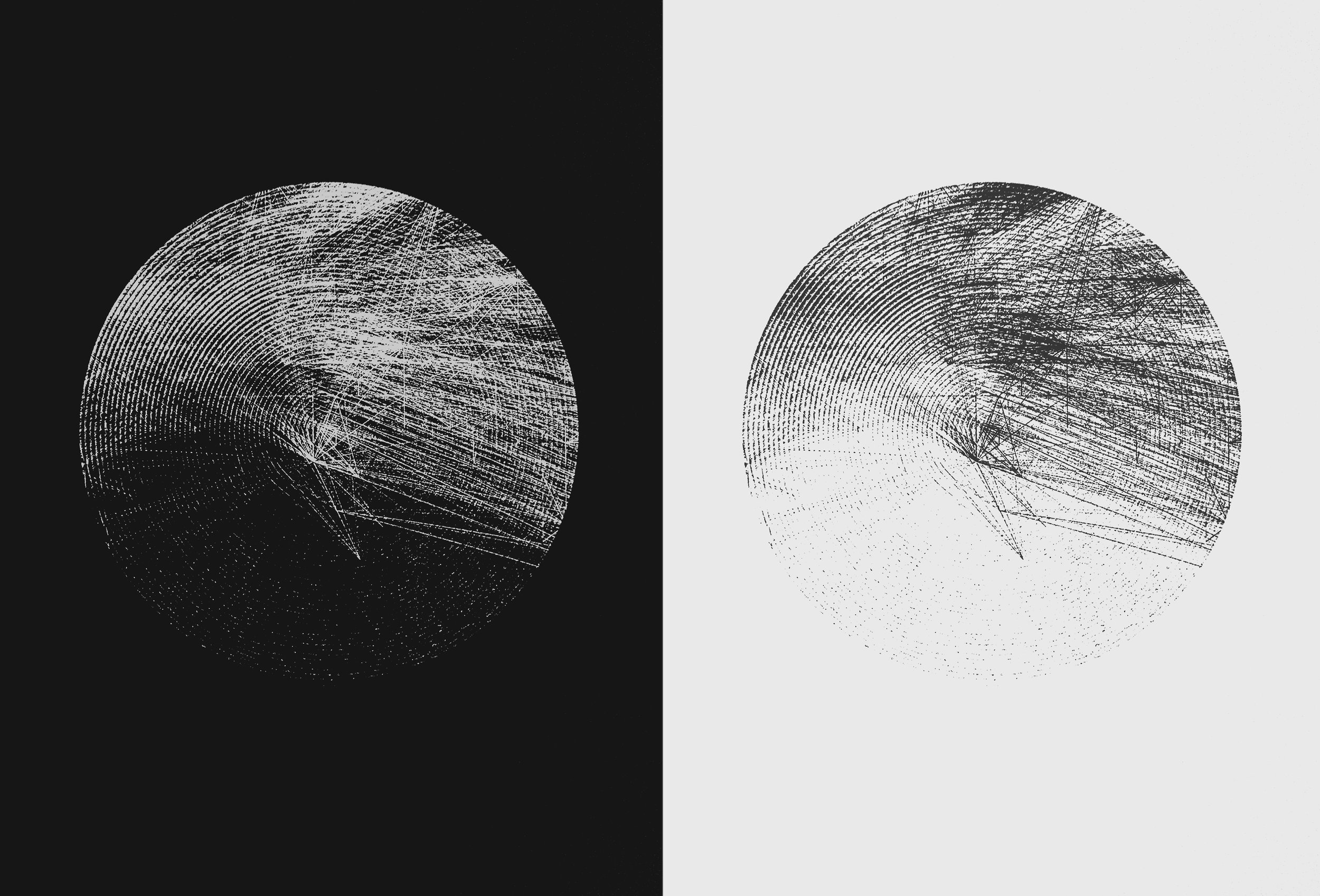
TONE STUDY — SPHERICAL TOPOLOGY TESTS
These studies examine circular and spherical forms as structural metaphors for the global network.
Lines and point clusters behave like signal paths, interference patterns, or collapsed data structures.
Each experiment explores a different relationship between order and noise, forming an early vocabulary for how the system could look when stable, stressed, or breaking down.
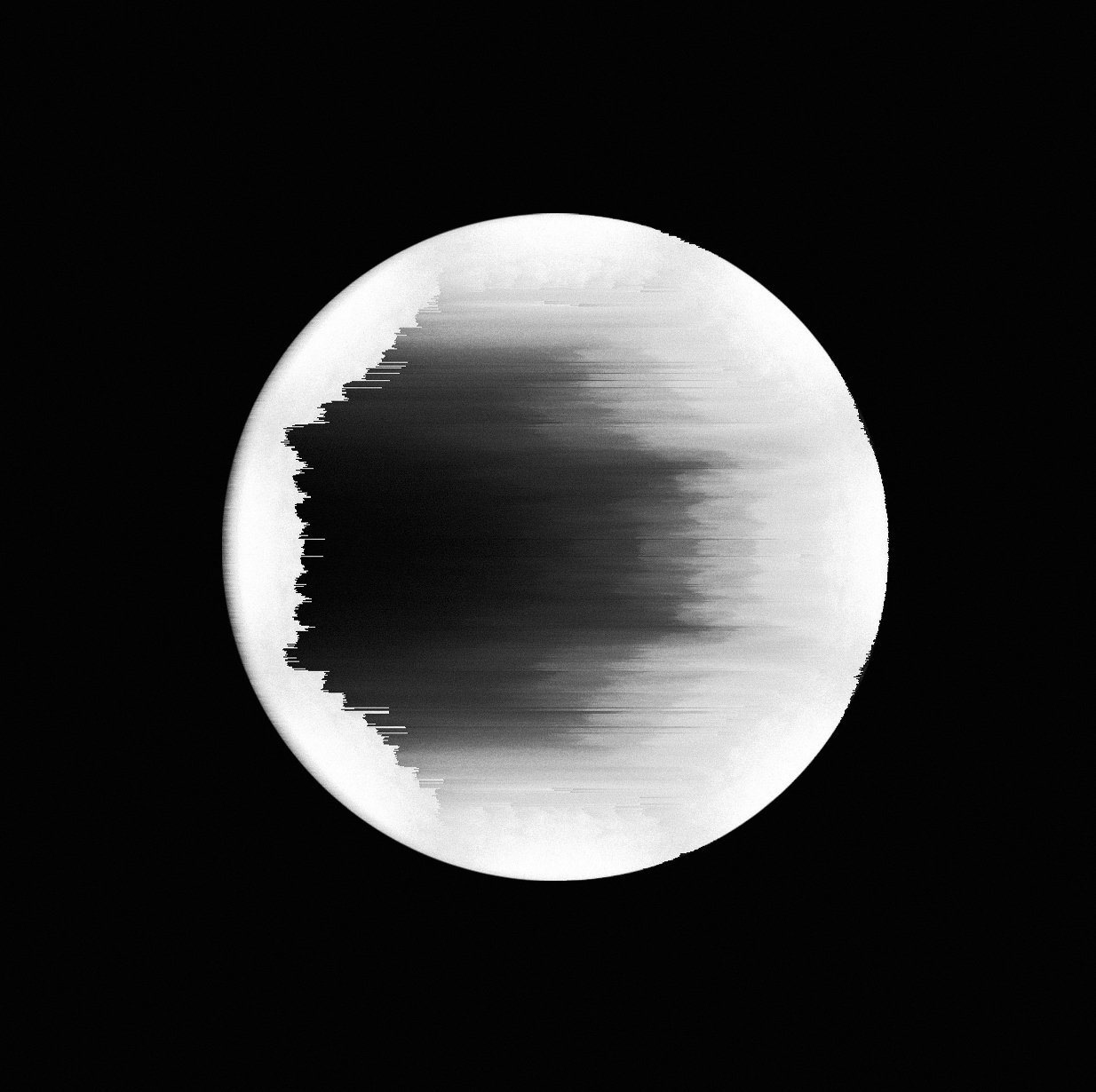
TONE STUDY — LIGHT & FLOW. STRUCTURAL CURVATURE
These explorations focus on how light behaves across curved surfaces, using shadow, falloff, and gradient transitions to evoke the idea of information flowing around invisible architectures.
Rather than depicting literal data, these studies translate the feeling of movement, signal strength, and network curvature into abstract cinematic shapes.
They later informed the project’s decisions around transitions, reveal mechanisms, and spatial rhythm.





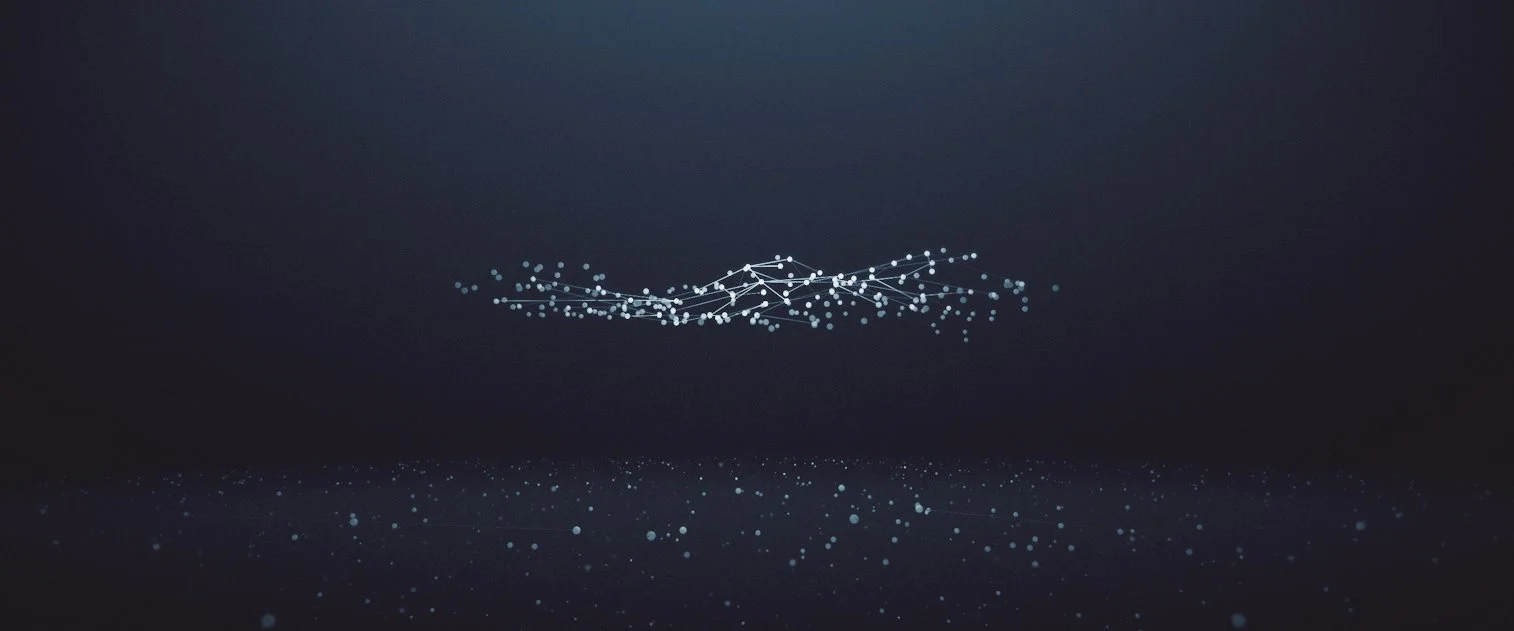
TONE STUDY — MICRO-NETWORK HORIZON
This study explores how information could behave at a macro scale, not as technical nodes or vectors, but as a particulate field stretching toward an unseen horizon.
The low-angle perspective creates a sense of scale and physical presence, suggesting a network that behaves more like weather than graphics.
This became foundational for defining depth, density transitions, and the project’s overall atmospheric tone.

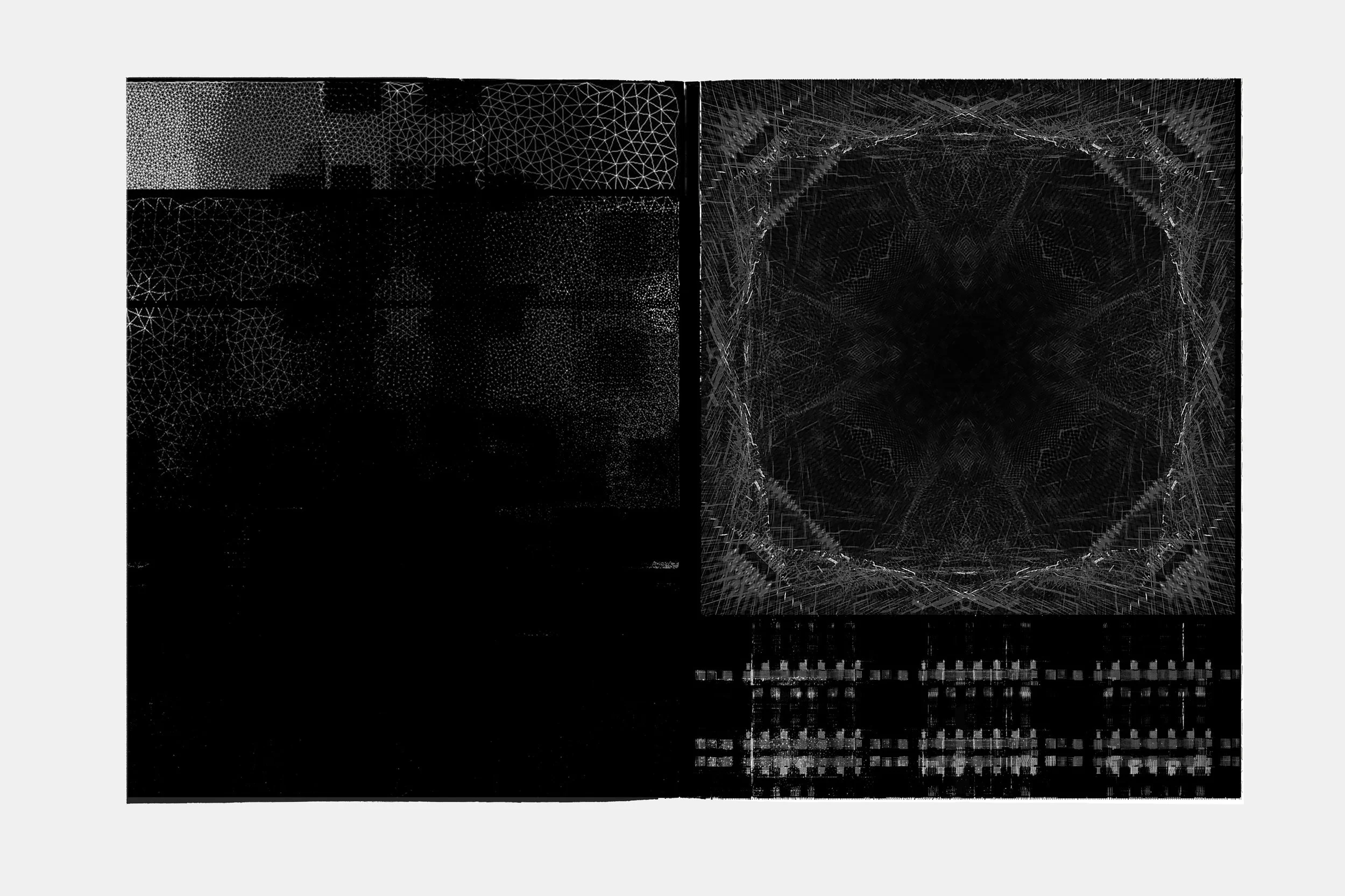
TONE STUDY — SYSTEM FRAGMENTATION & DATA BREAKDOWN
These studies examine how the network behaves under tension: distortion, overload, or structural decay.
The experiments explore breakage patterns, loss of resolution, duplicated structures, and interference noise, all emerging as motifs for moments of narrative stress within the film.
These tests also helped define the visual logic for transitions into “collapse states” within the motion system.
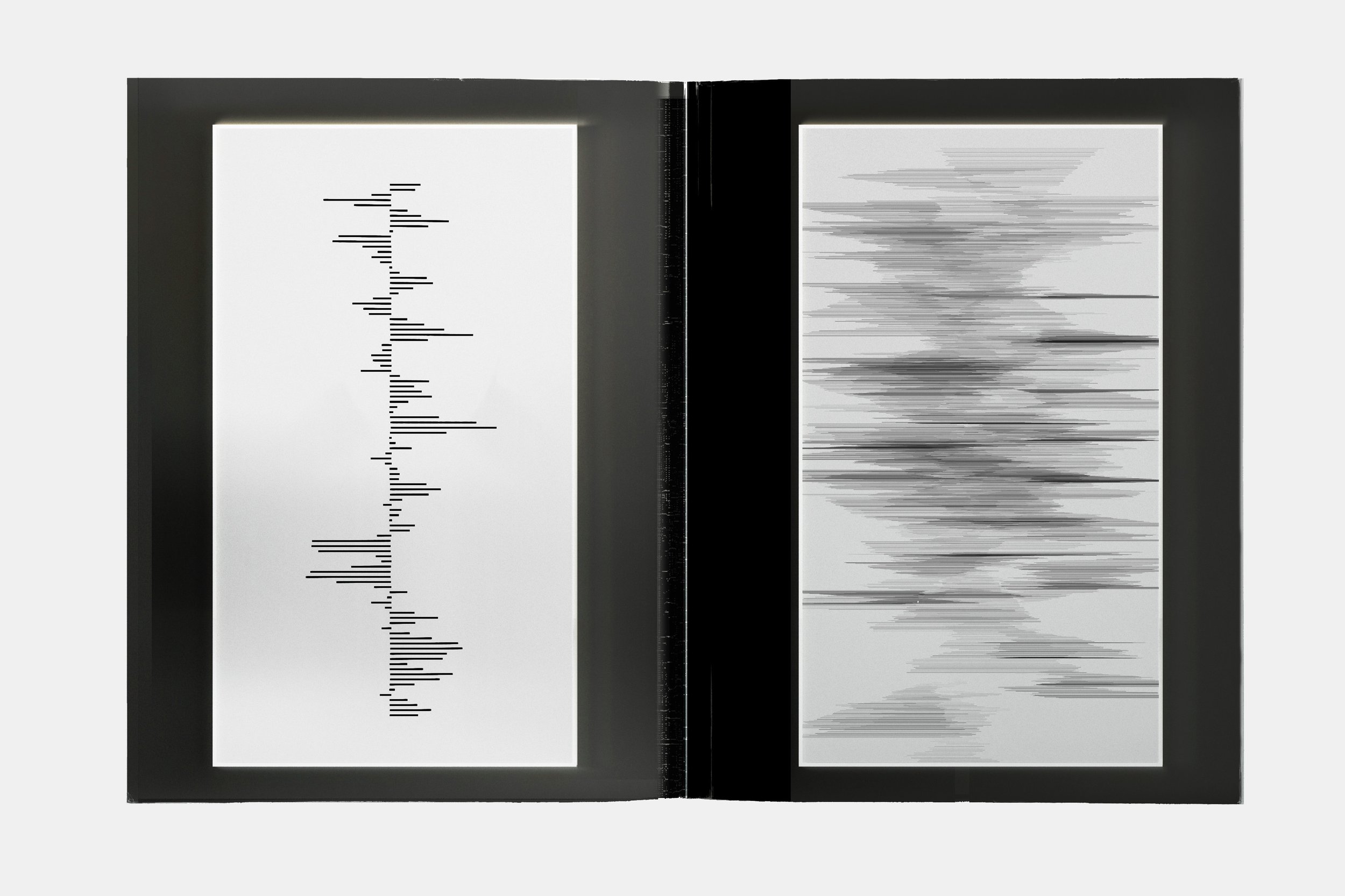
FINAL SYSTEM FRAMES — DOCUMENTARY APPLICATION
The final system was designed to integrate seamlessly into the documentary, supporting the narrative without overwhelming it.
The goal was clarity, restraint, and a sense of structural intelligence, allowing viewers to understand the presence and scale of the data network while maintaining emotional tension.
These frames represent the applied version of the visual language:
a refined network of nodes, particles, and geometric pathways designed to communicate information flow at both micro and macro scales.
The system emphasises:
readability over spectacle
structural rhythm over density
motion rooting the viewer in scale
transitions between stability and tension
By the time these frames appear in the film, the audience should feel the weight and fragility of the network, even without explicit explanation.
The conceptual groundwork shapes the emotional resonance, the final frames deliver the narrative clarity.





RESULT
The visual system became a central narrative device within A Good American, translating vast, invisible data flows into a coherent cinematic language that audiences could intuitively grasp. Abstract network forms, spatial compositions, and motion principles helped transform complex intelligence concepts into something legible, tense, and humanly comprehensible.
The work supported the film’s investigative structure without overwhelming it, remaining restrained, analytical, and atmospheric. Visuals were designed to feel embedded in the story world rather than illustrative overlays, reinforcing themes of surveillance, scale, and systemic consequence.
The project was well received for its clarity and seriousness of tone, with the visual language extending beyond the film itself. Design elements were adapted for the official poster and promotional materials, ensuring a consistent identity across screen and print.
The result was a visual framework that strengthened the film’s impact, quietly amplifying its questions rather than answering them, contributing to the lasting resonance of A Good American.
CREDITS
Project · A Good America
Studio · UP Creatives
Role · Conceptual Direction & Visual Development
IMDB · https://www.imdb.com/title/tt4065414/
Foals — Life Is Yours TOUR
LARGE-SCALE PERFORMANCE VISUALS
Collaboration with FRAY Studio
OVERVIEW
For Foals’ 2022 Life Is Yours tour, I developed a live visual concept designed to extend the emotional language of the record into physical space.
The aim was to create a visual environment that could move with the music, shaping atmosphere, rhythm, and scale in real time while giving the performance a stronger sense of coherence and emotional lift.
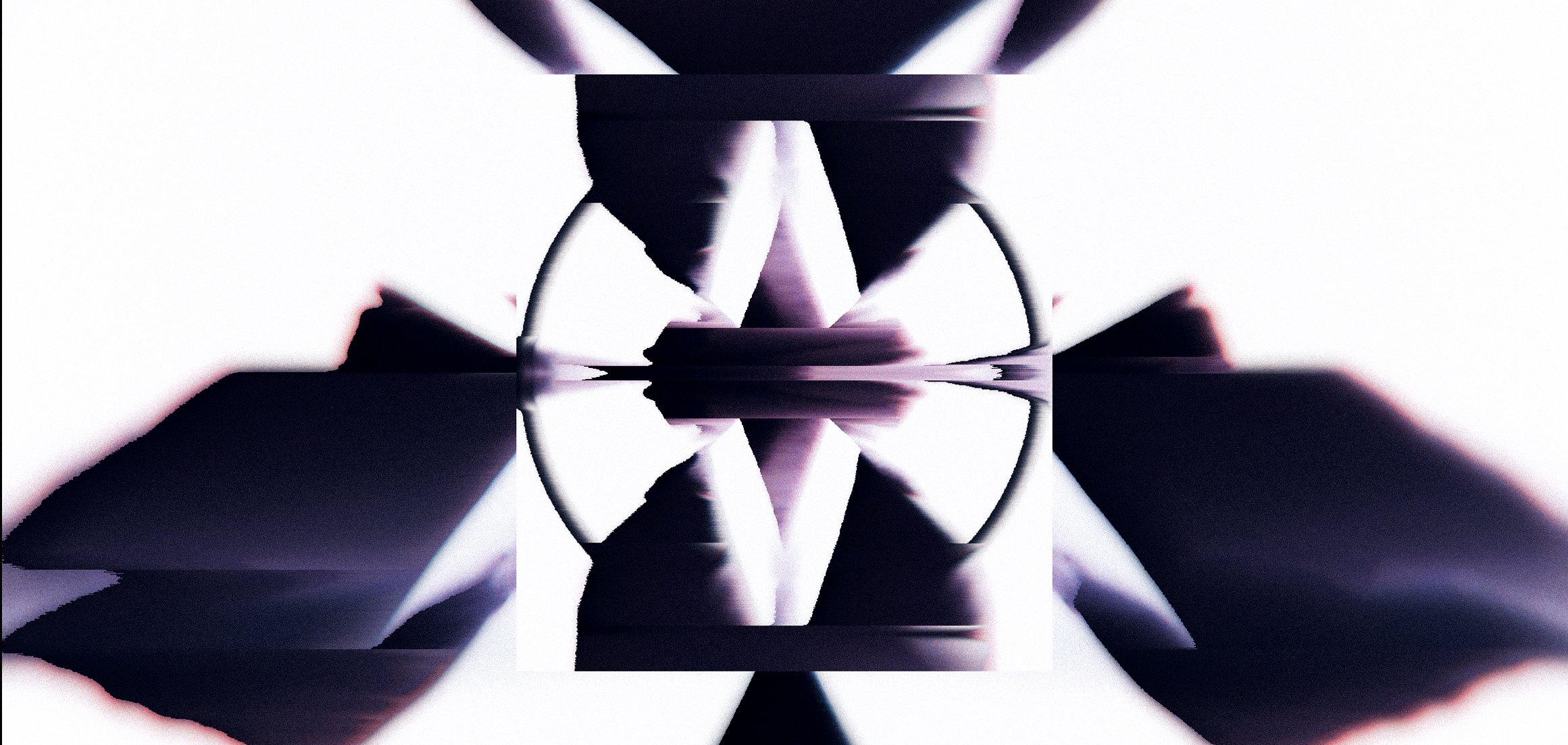
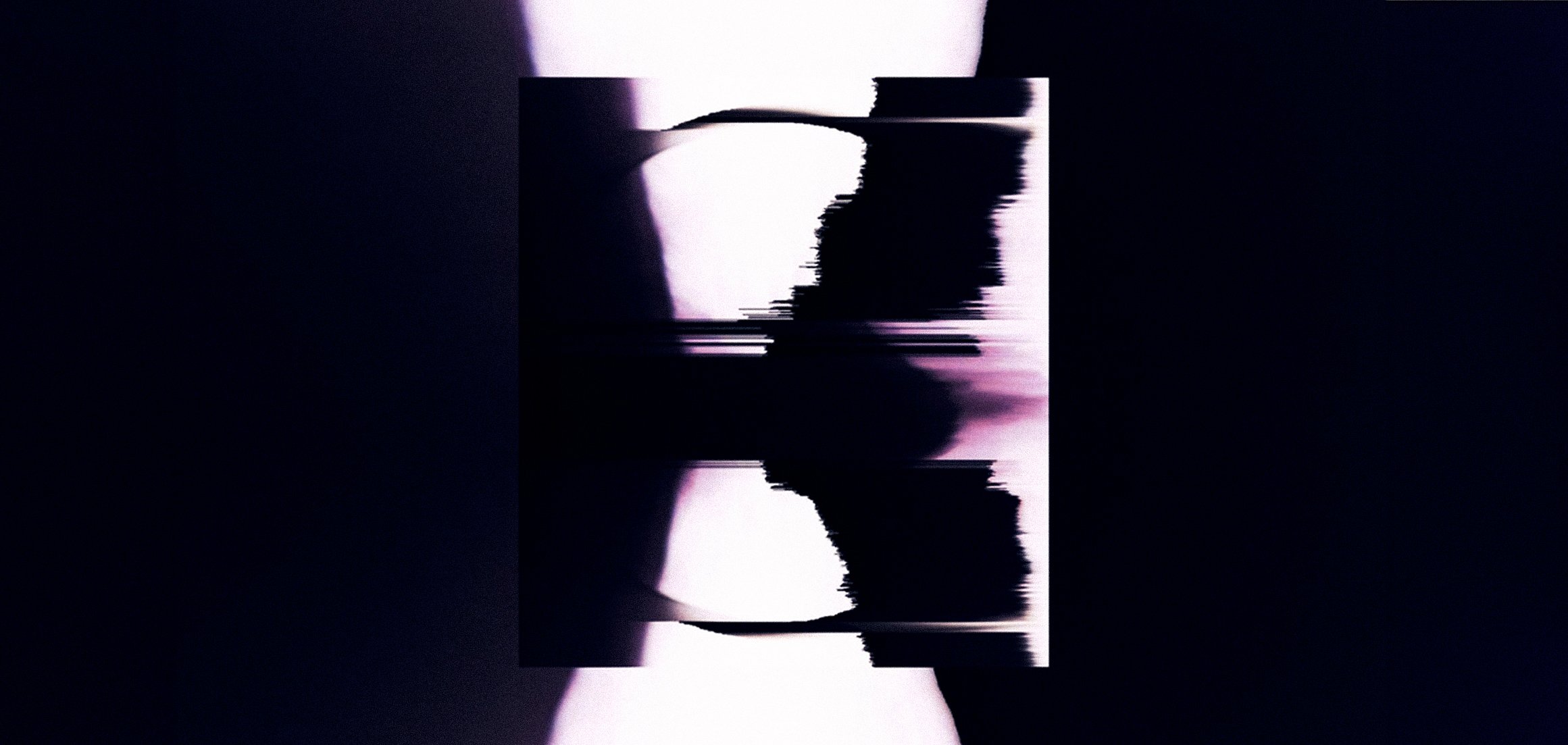
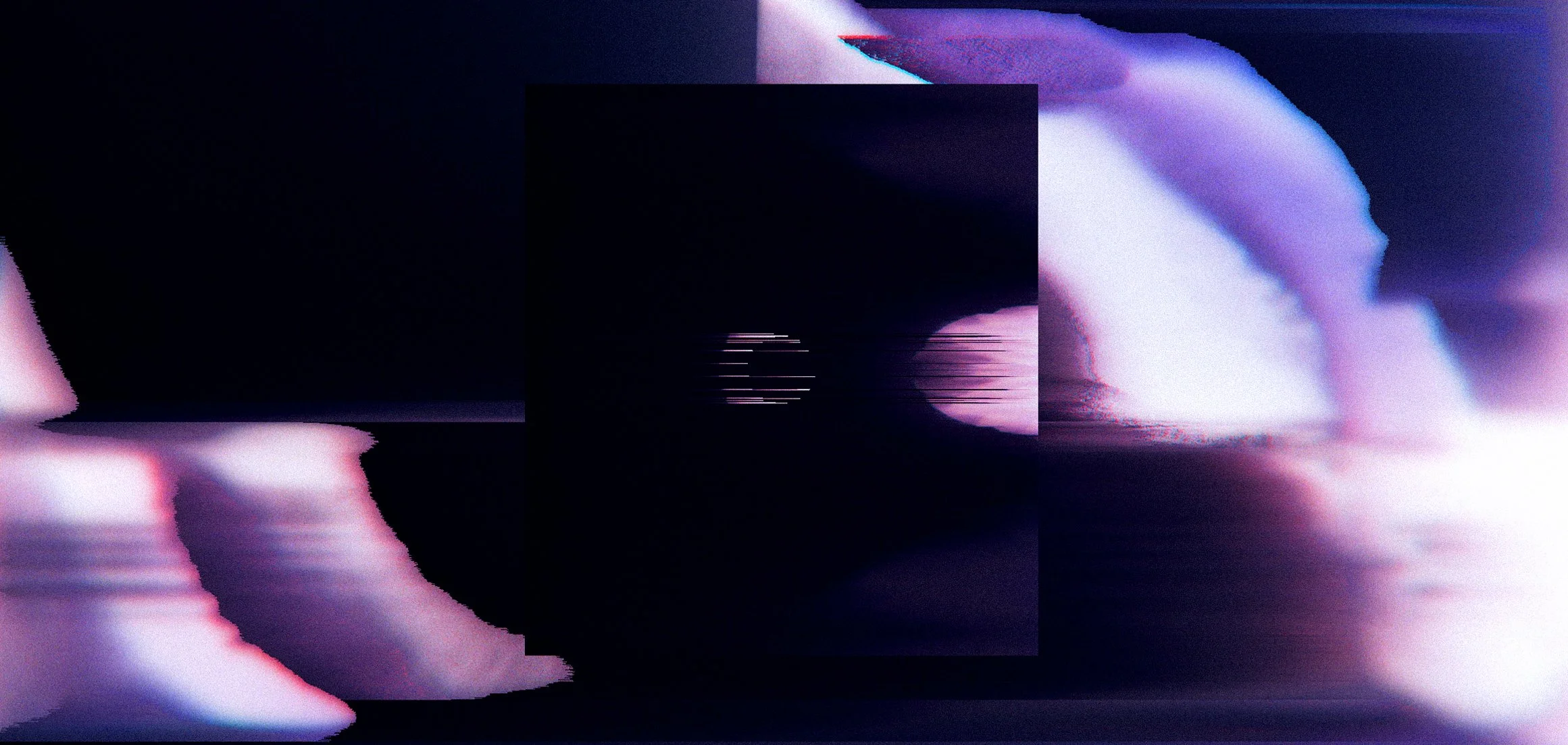
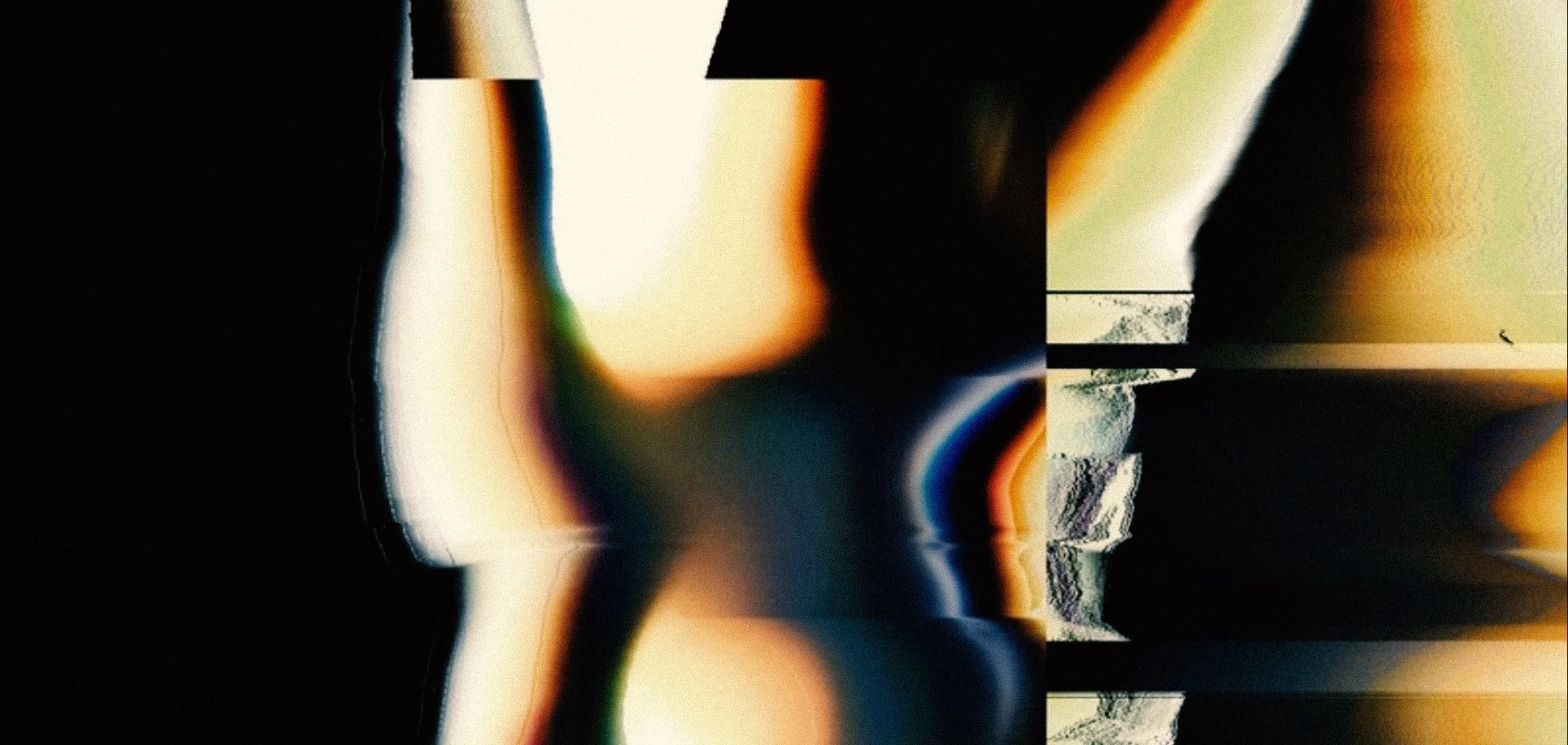
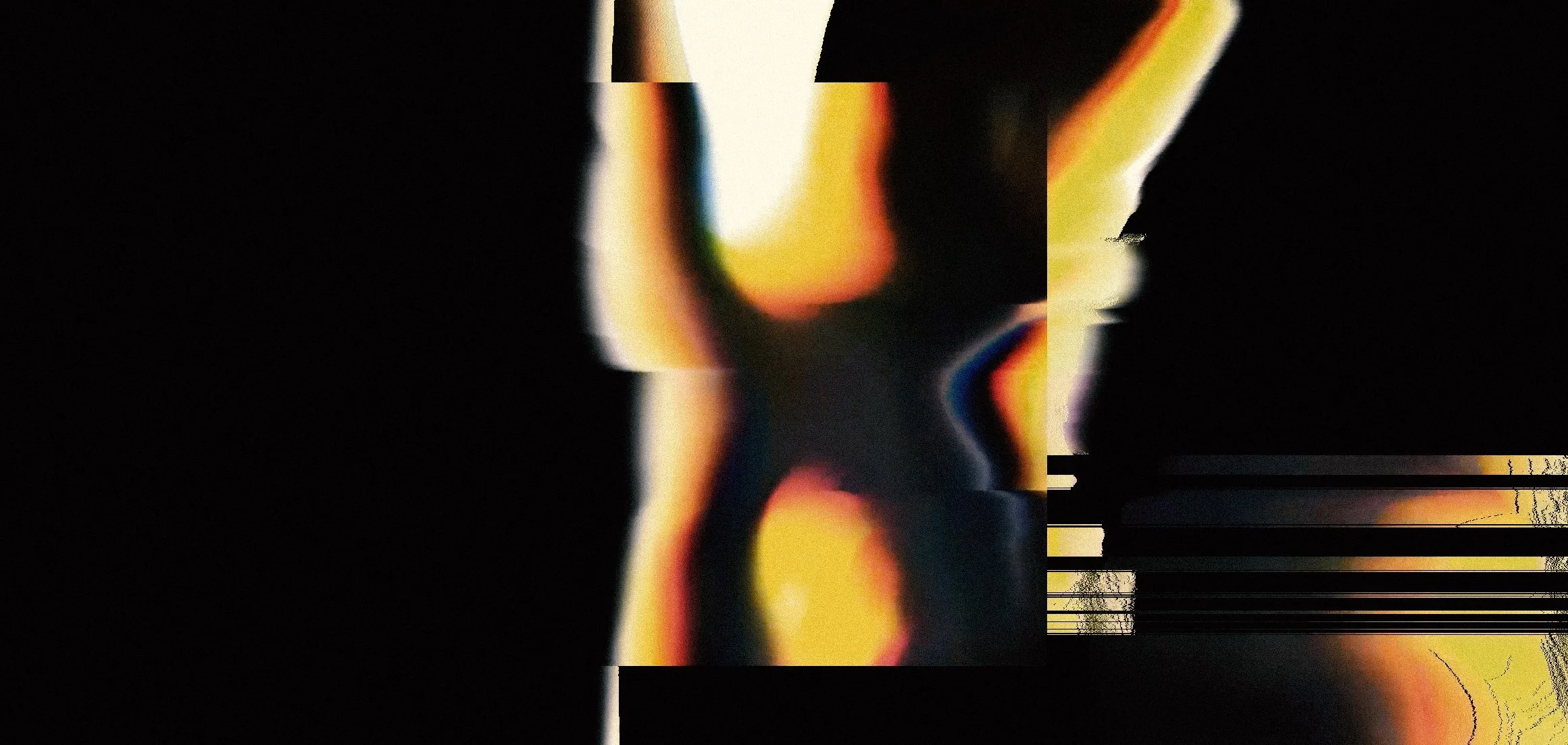
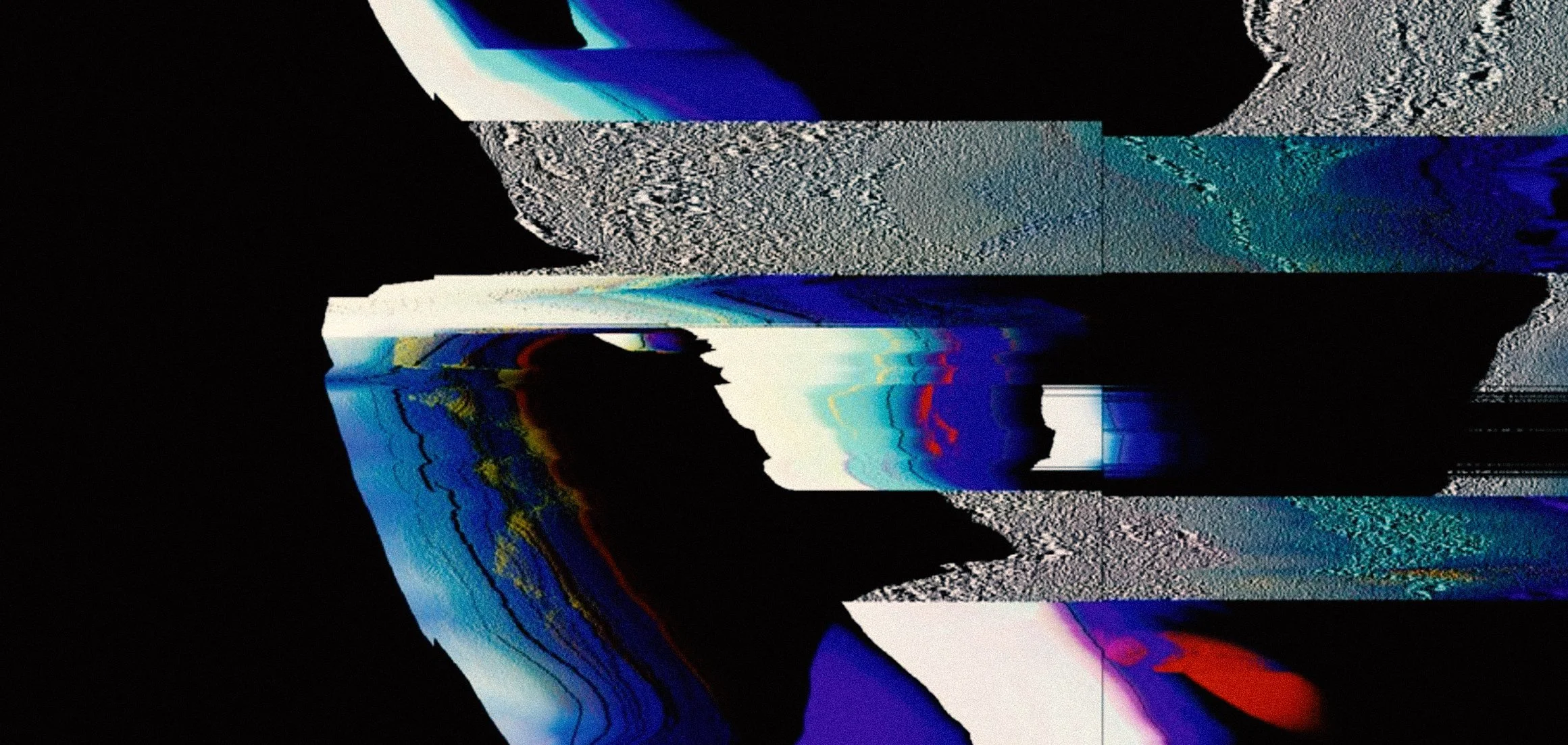
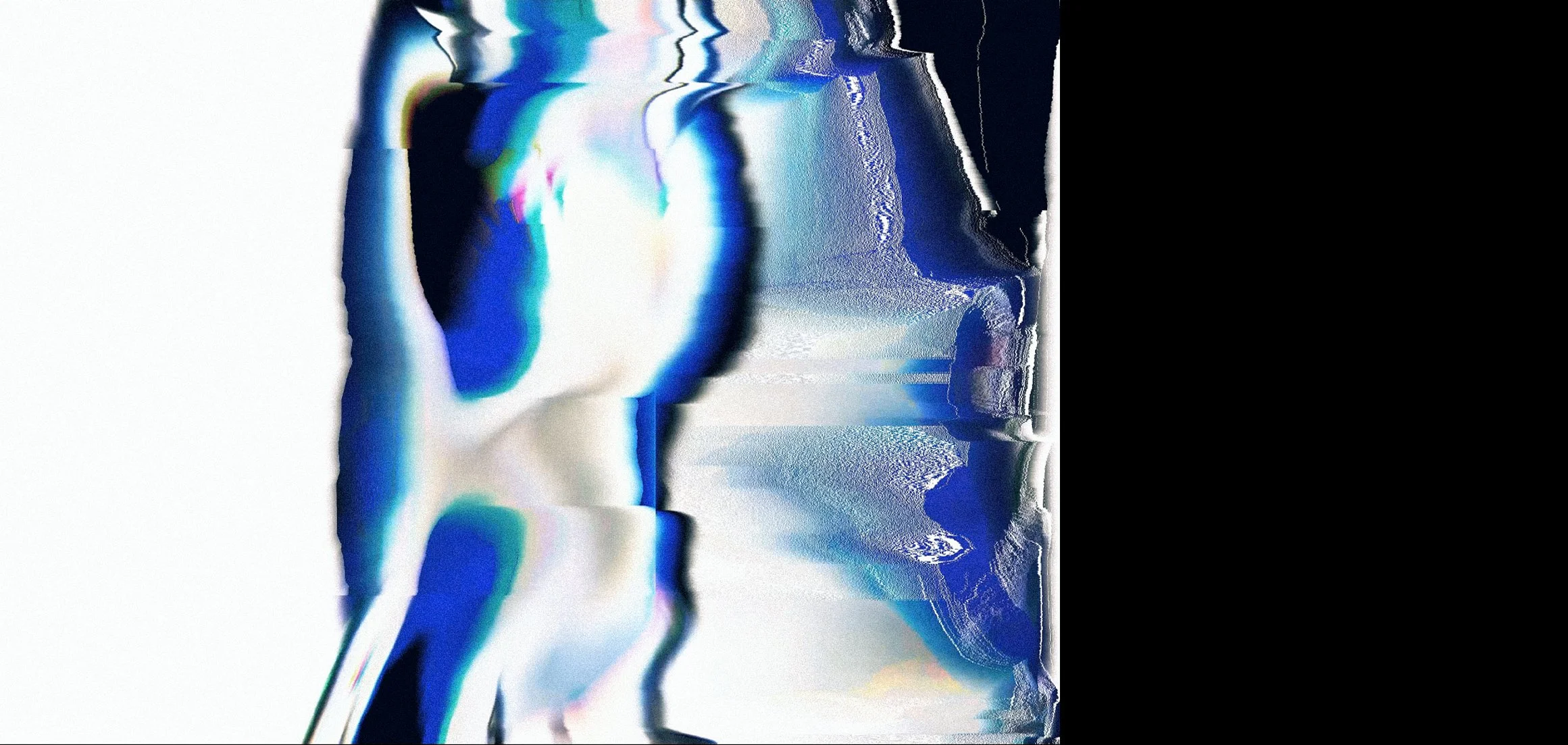
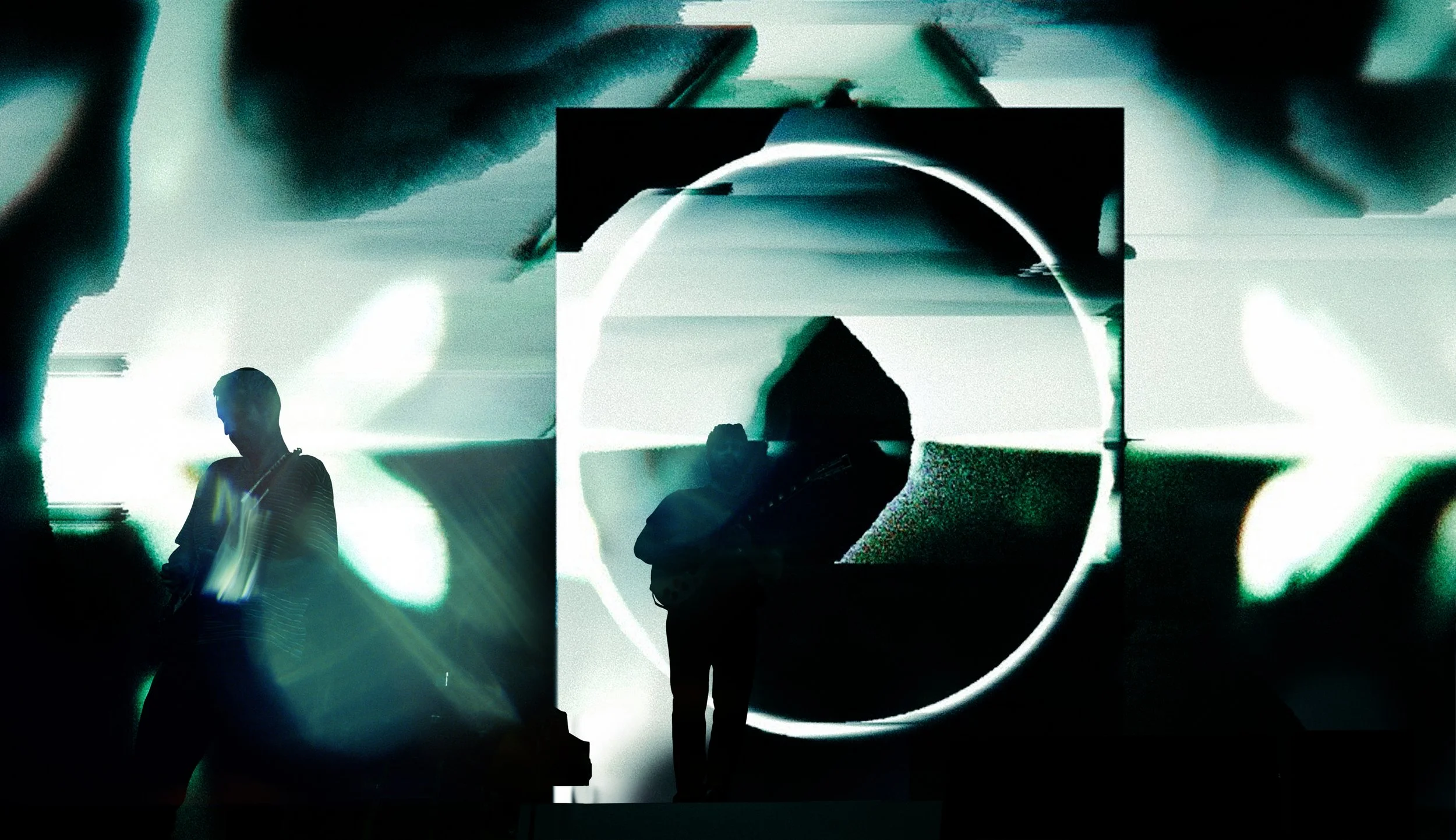
Built around fragmentation, light interference, and recurring forms, the work explored tension between release and containment, echoing the record’s movement between intimacy, euphoria, and pressure.
CONCEPT
The approach treated live visuals not as background content, but as an extension of the music itself, a shifting floral environment built from rhythm, tension, and release.
The design needed to:
amplify the emotional lift of the performance
create scale without losing intimacy
move fluidly between tension and release
respond to rhythm without becoming illustrative
support the live experience as a coherent visual world
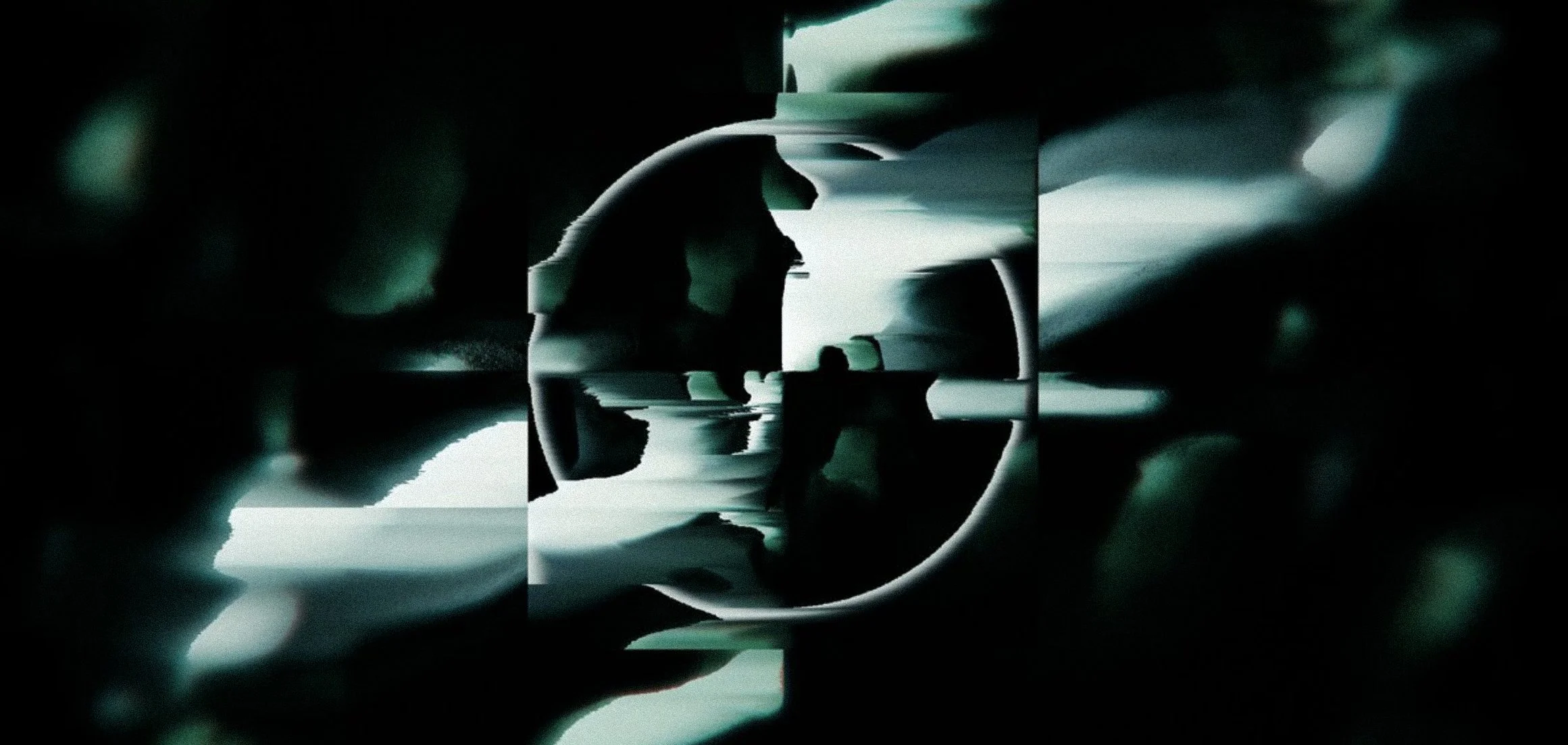
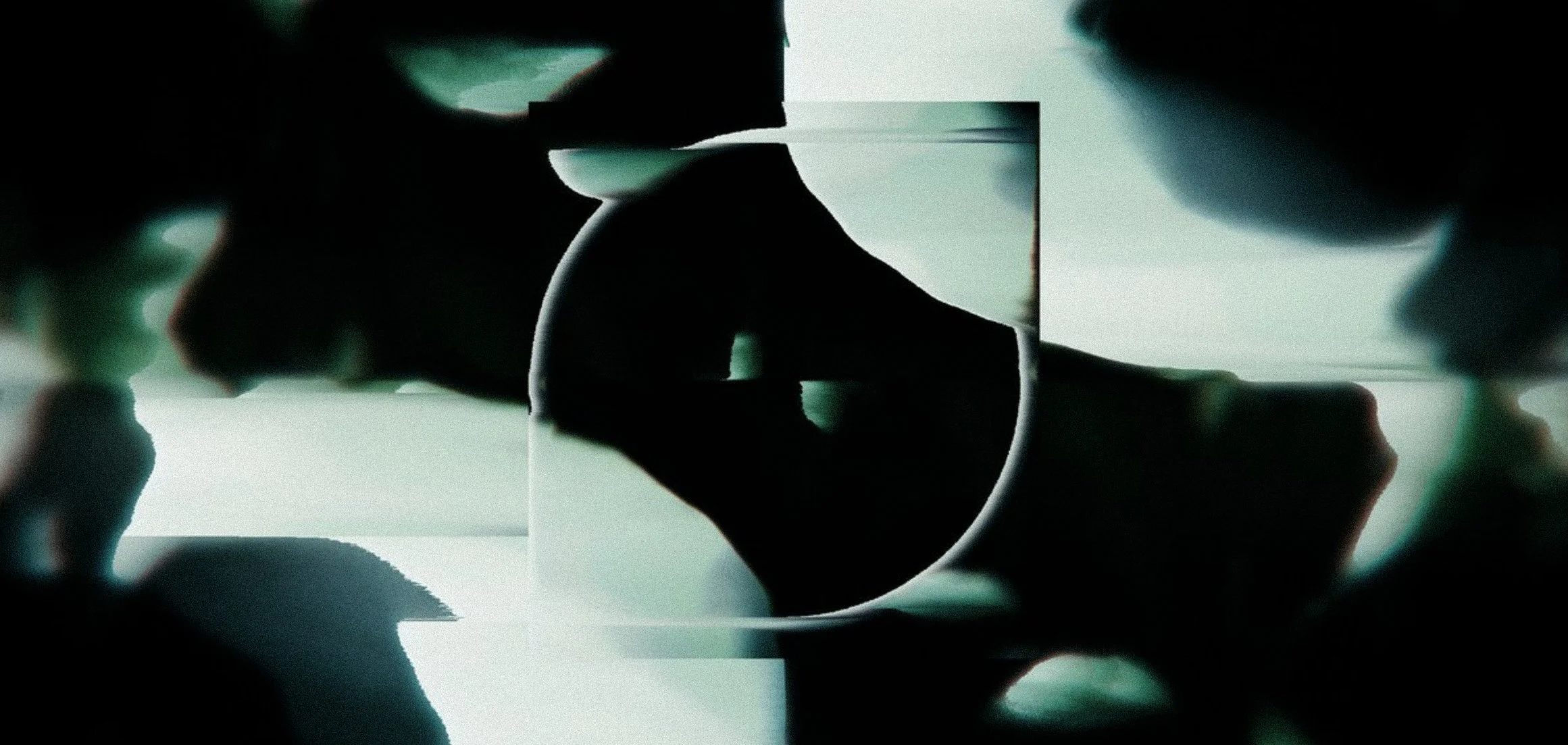
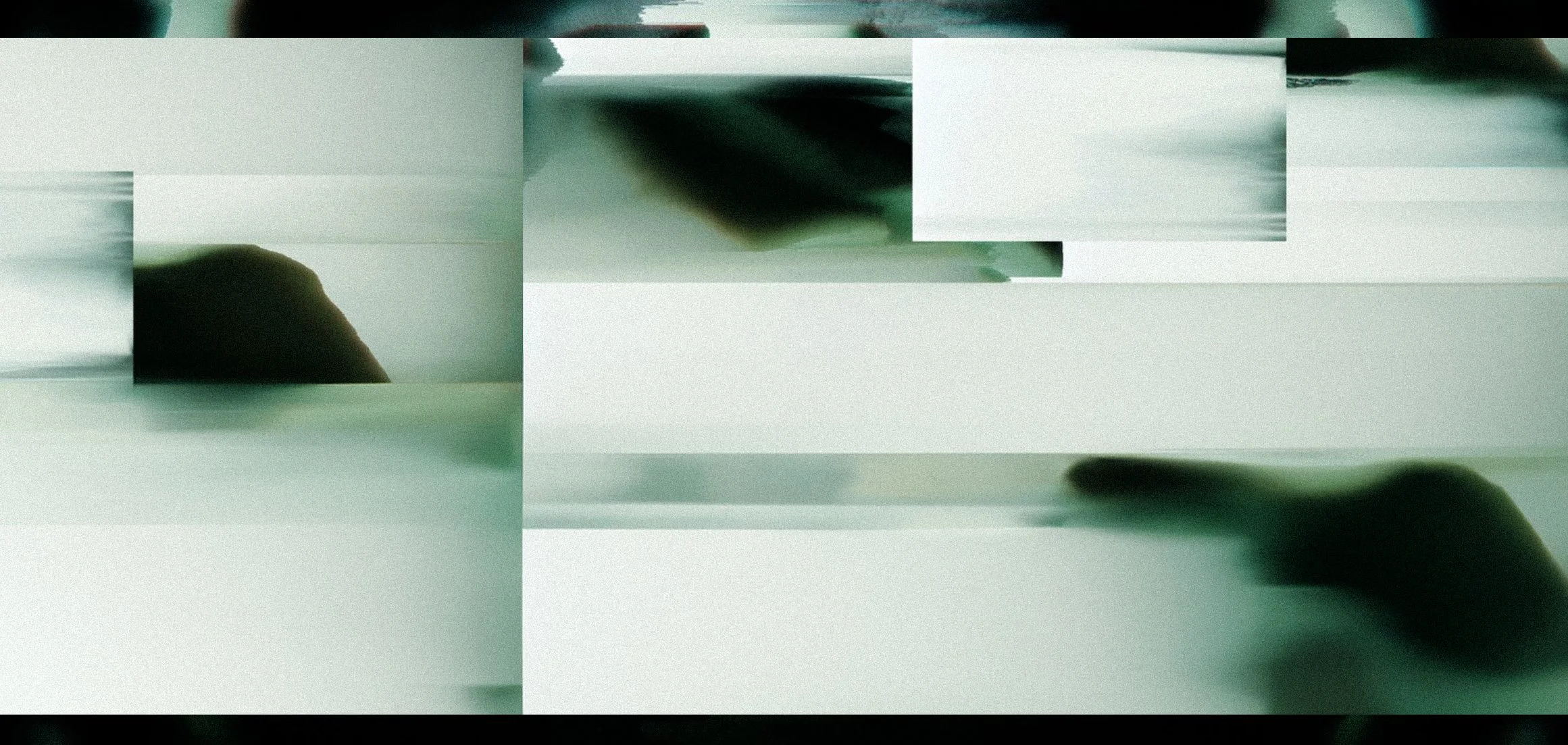
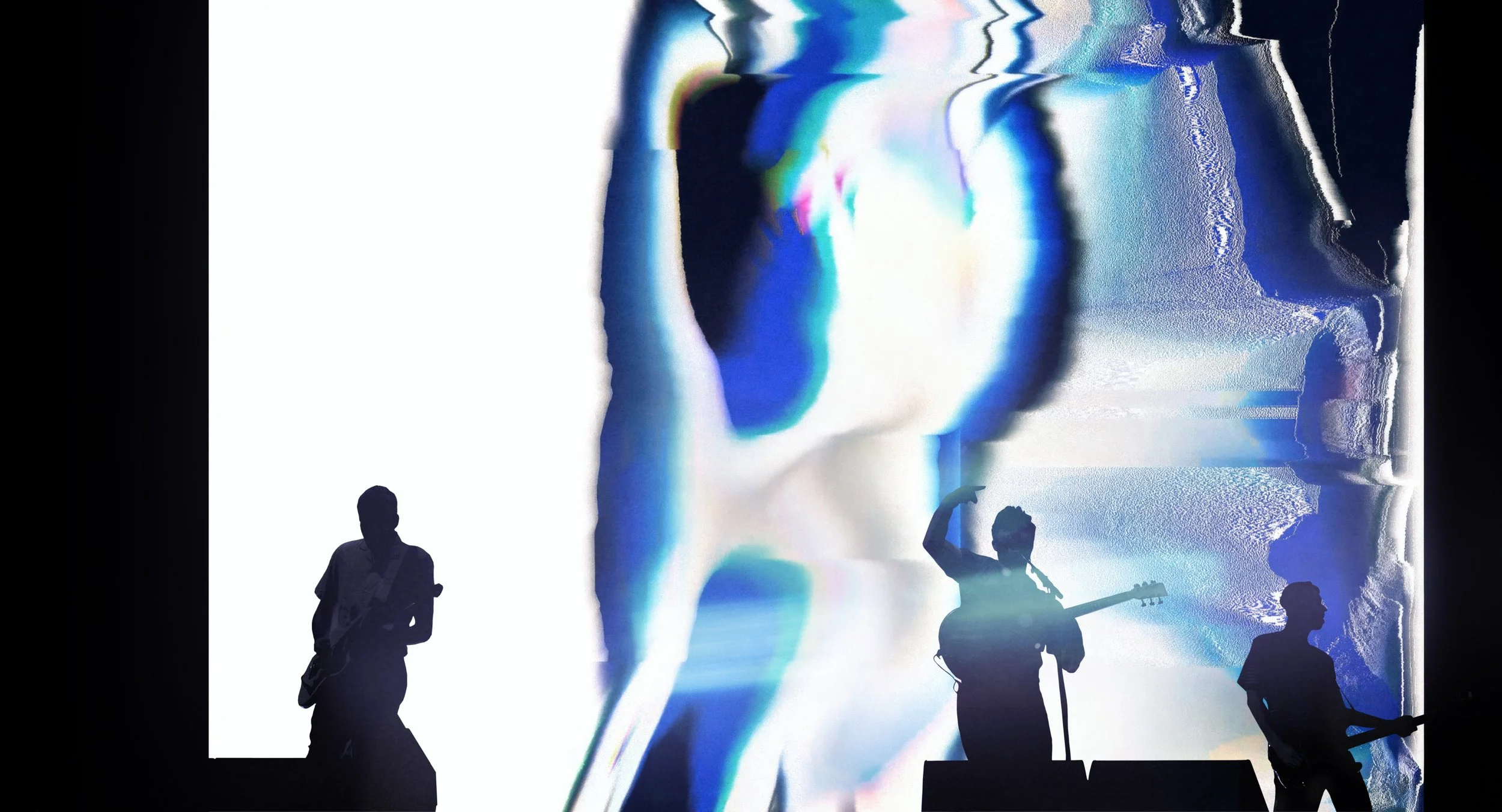
The resulting visual language drew on fragmentation, light distortion, and spatial rhythm to create imagery that felt immersive, unstable, and alive.
VISUAL LANGUAGE
The visual language was built from a small set of recurring behaviours rather than fixed imagery.
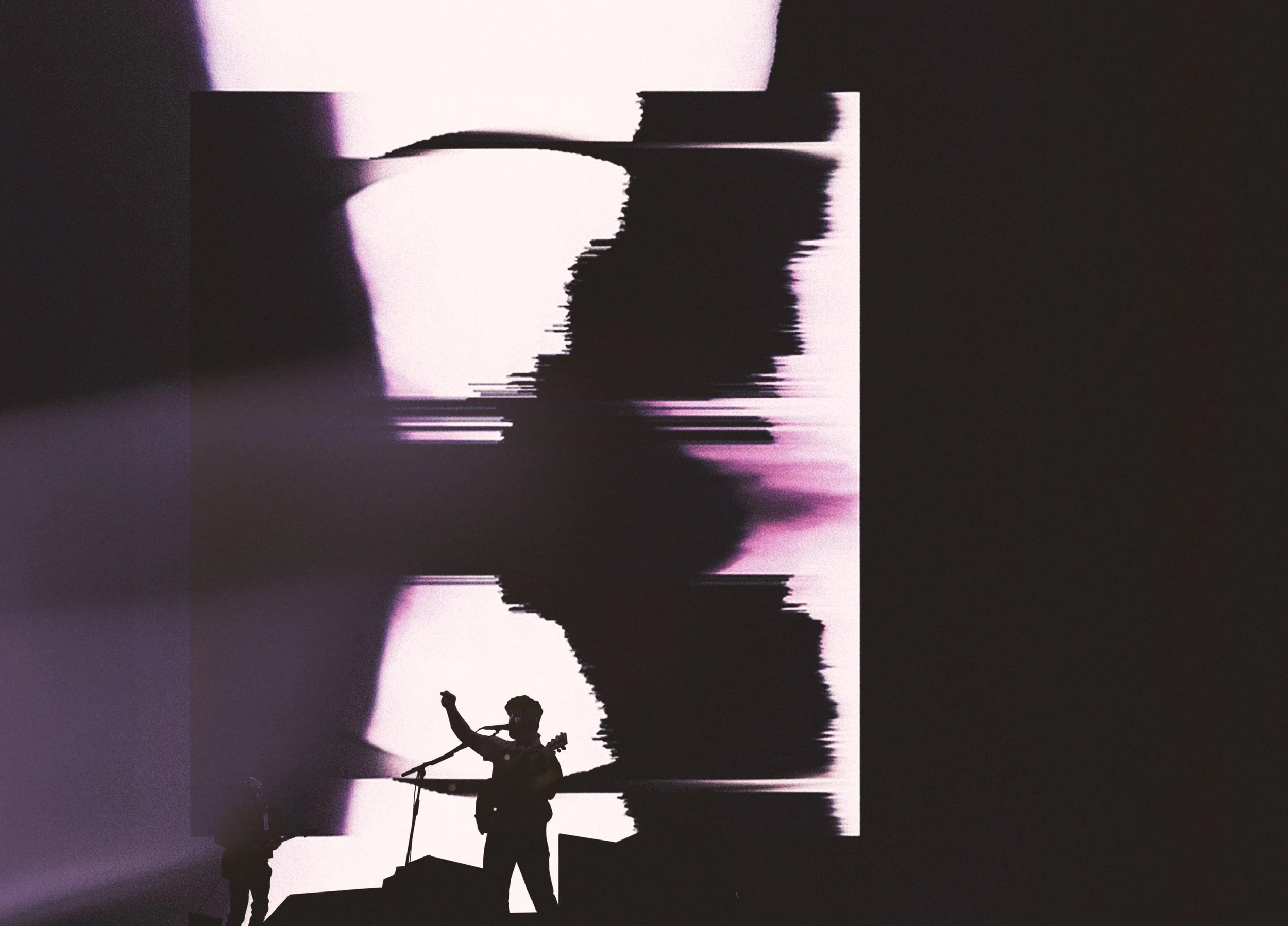
Fragmentation disrupted stable forms, creating a sense of movement and instability, while circular structures acted as points of focus, release, and orientation within the system.
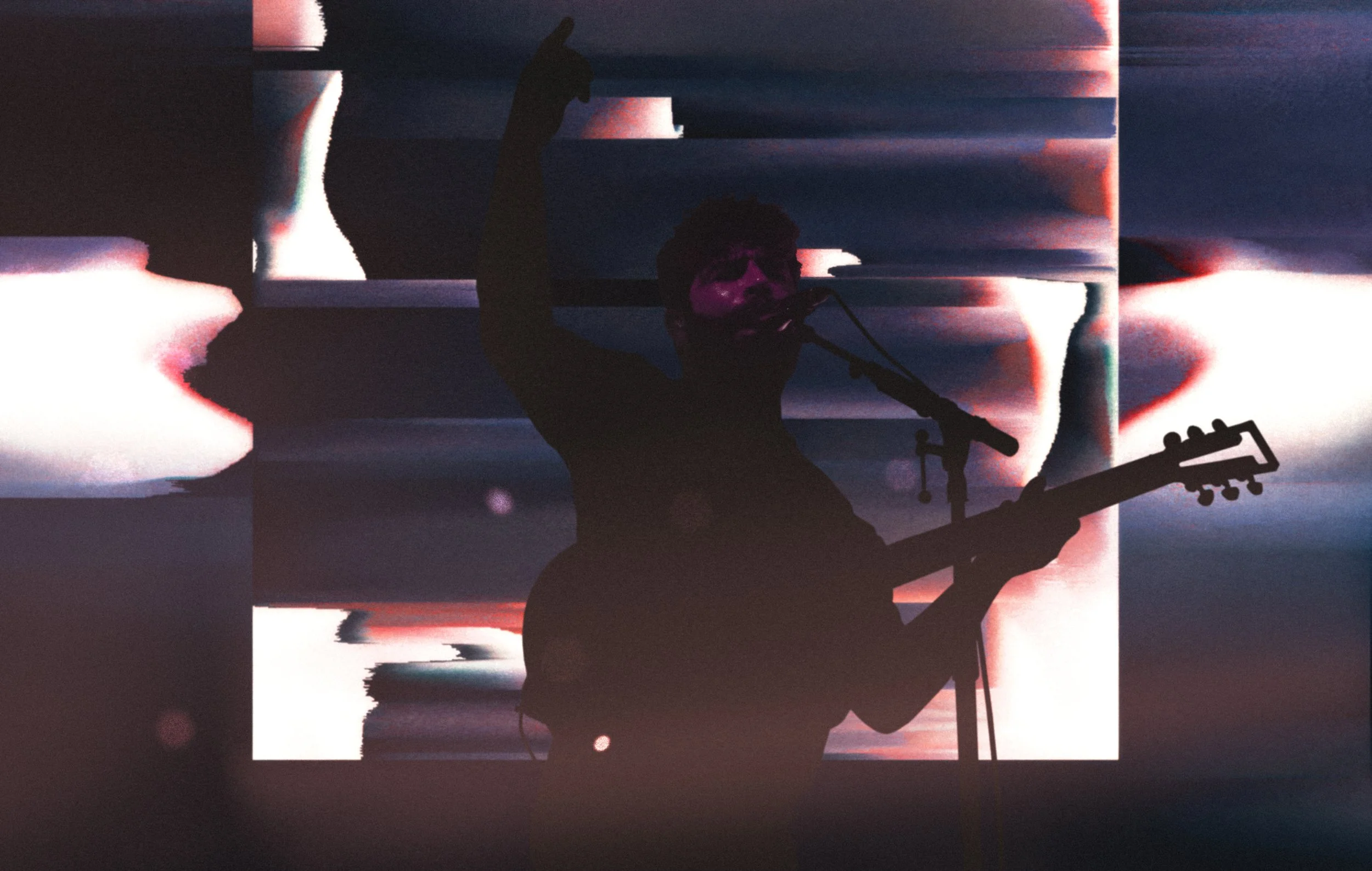
Light functioned as both atmosphere and structure, shifting between moments of clarity, interference, and distortion.
Through repetition and variation, these elements formed a flexible visual language capable of evolving across different songs, moods, and scales of performance.
VISUAL DEVELOPMENT


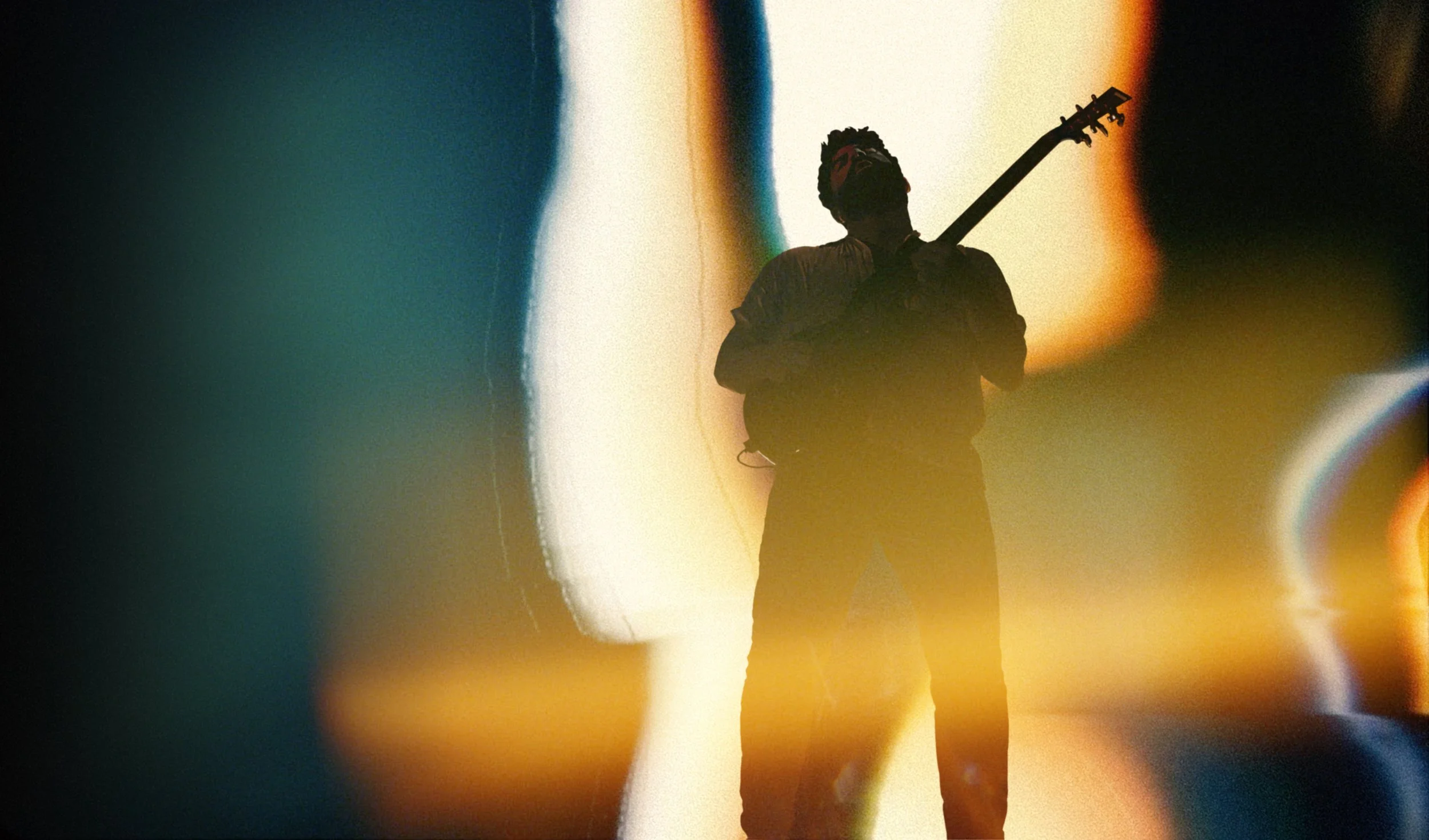
PERFORMANCE VISUALISATION
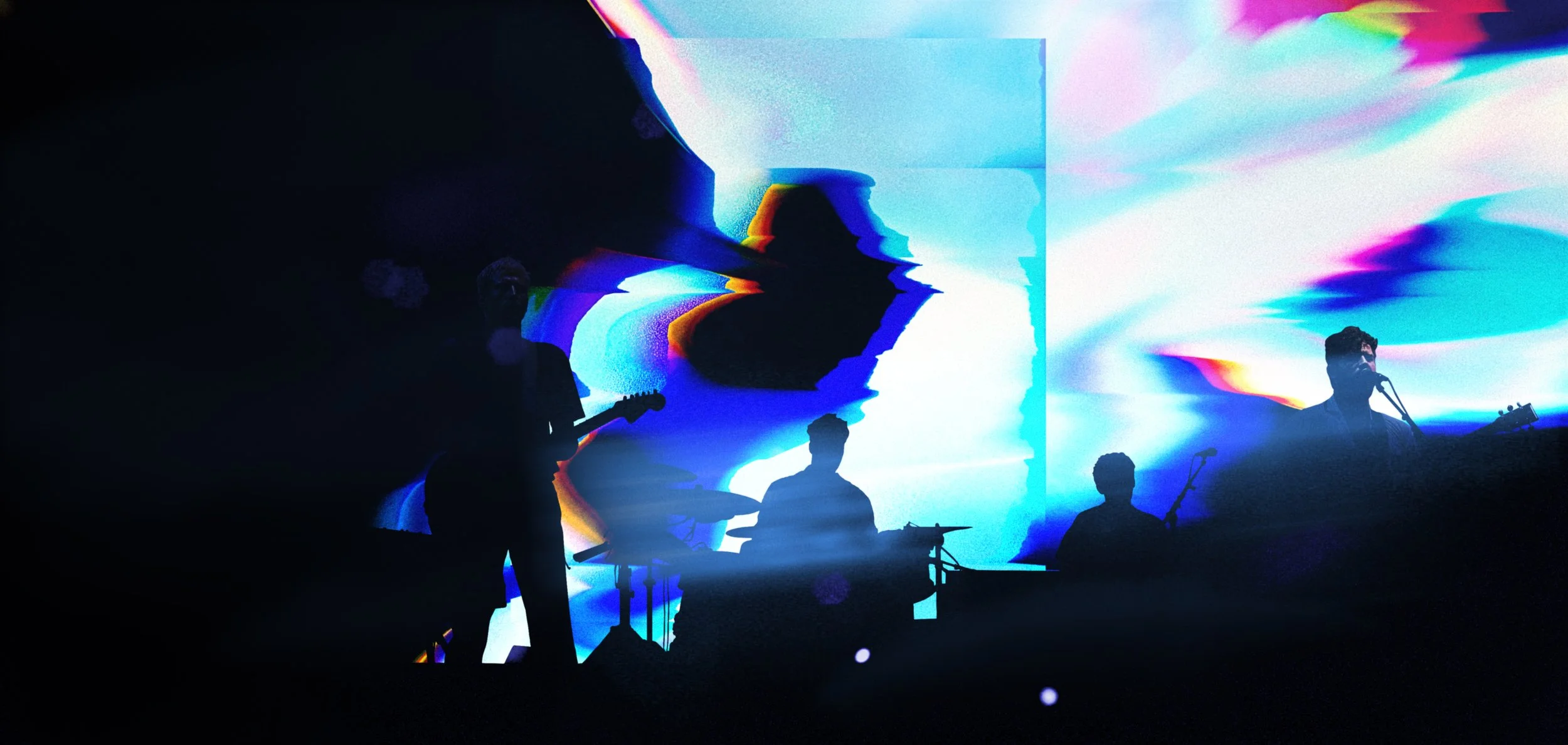
The visual language was explored through a series of performance visualisations, testing how the system might operate at architectural scale and within a live musical environment.
The focus was on creating an immersive visual framework capable of supporting different emotional states across the performance.
RESULT
The project established a visual language capable of operating across both intimate and large-scale moments of performance, translating the emotional character of Life Is Yours into a coherent visual environment.
Through fragmentation, light distortion, and recurring geometric forms, the system created a flexible framework that could evolve with the music while maintaining a consistent visual identity. The imagery balanced immersion and disruption, moving between moments of clarity, tension, release, and euphoria.
Rather than functioning as decorative accompaniment, the visuals were designed to become part of the performance itself, extending the atmosphere of the record into physical space and reinforcing the relationship between sound, light, movement, and audience experience.
The result was a visual framework that demonstrated how a focused design language could shape the emotional tone of a live environment, creating a stronger sense of coherence, scale, and collective experience.
CREDITS
Project · Foals — Life Is Yours Tour
Studio · FRAY Studio
Role · Conceptual Direction & Visual Development
© THE CIRCLE THE SQUARE 2026. All rights reserved.